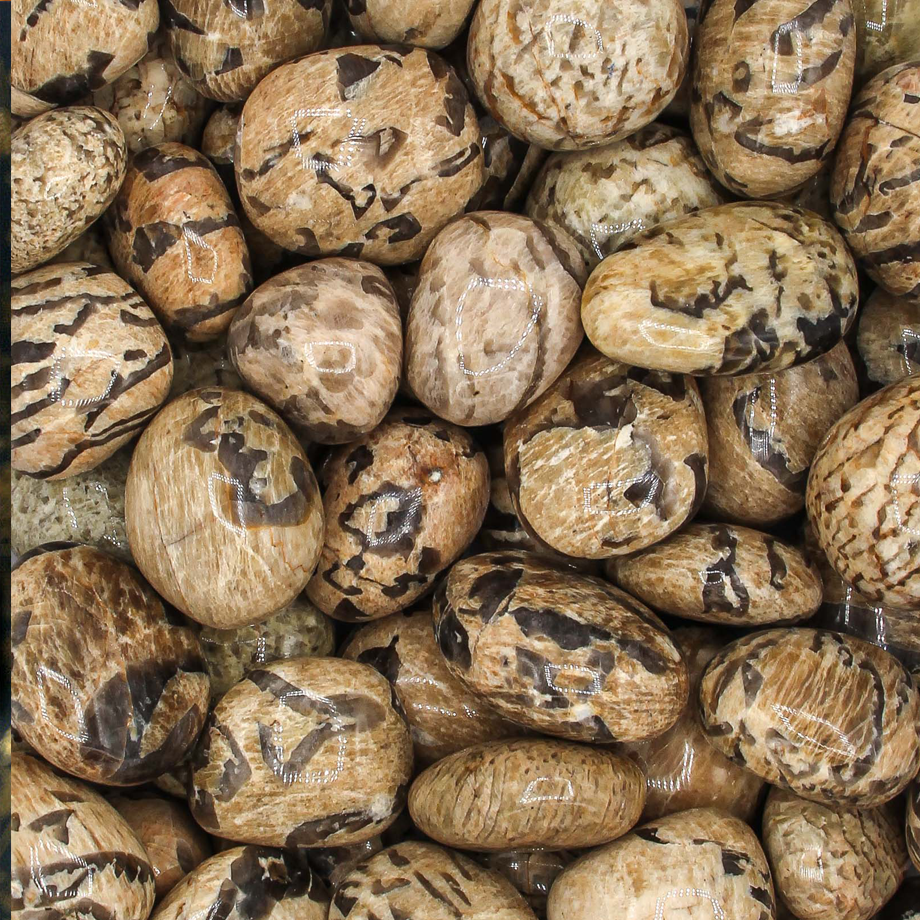
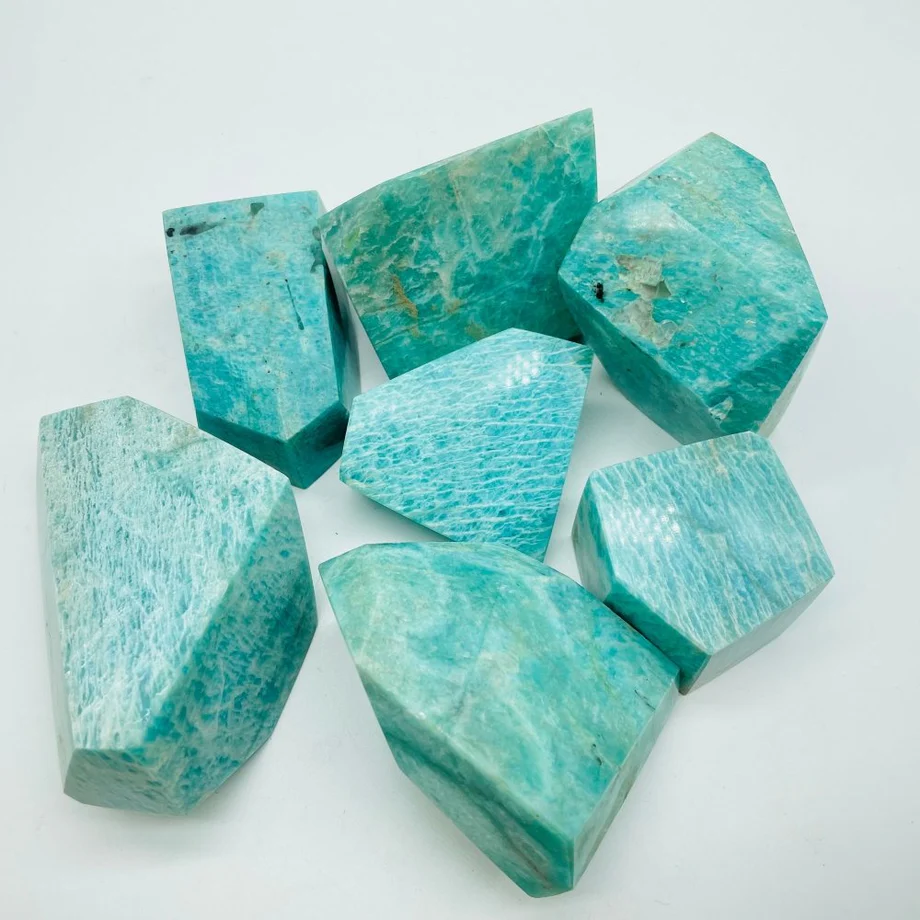

The polished gemstone Amazonite is a green microcline feldspar. It is named for the Amazon River of South America, where the first deposits were found. The stones shown here are a light green, an Amazonite,
which was mined in Mozambique.
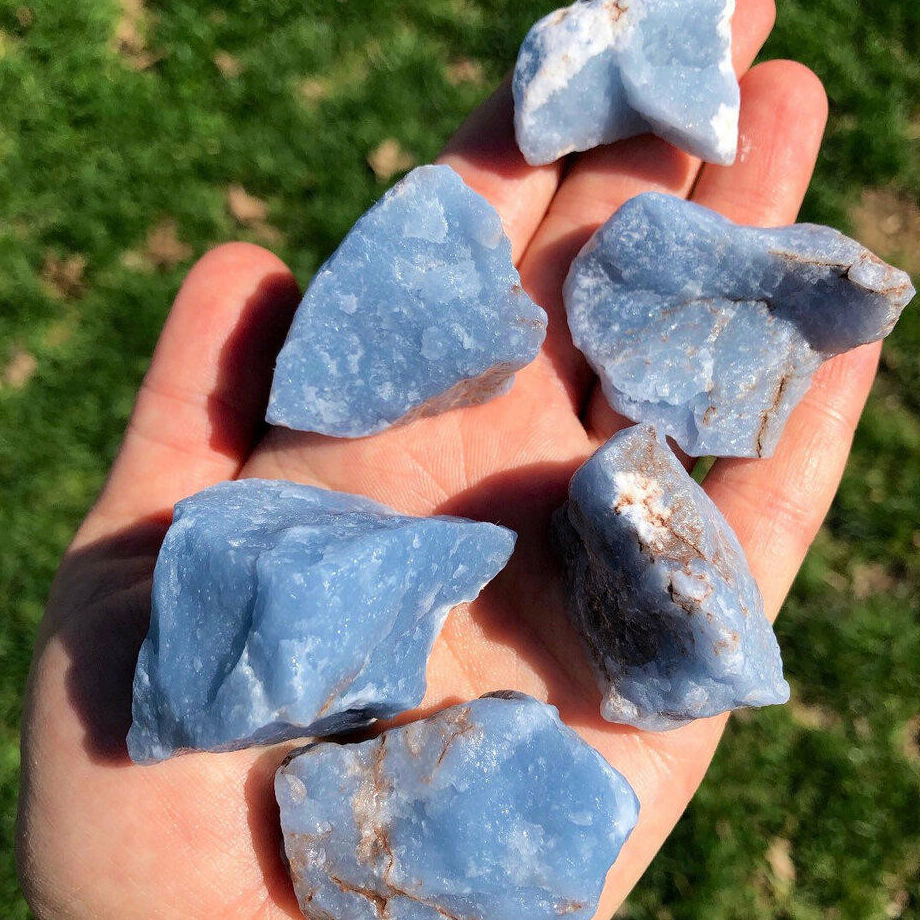


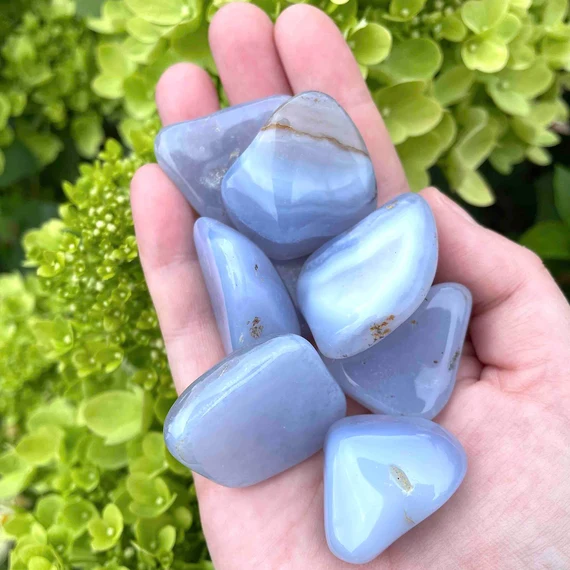



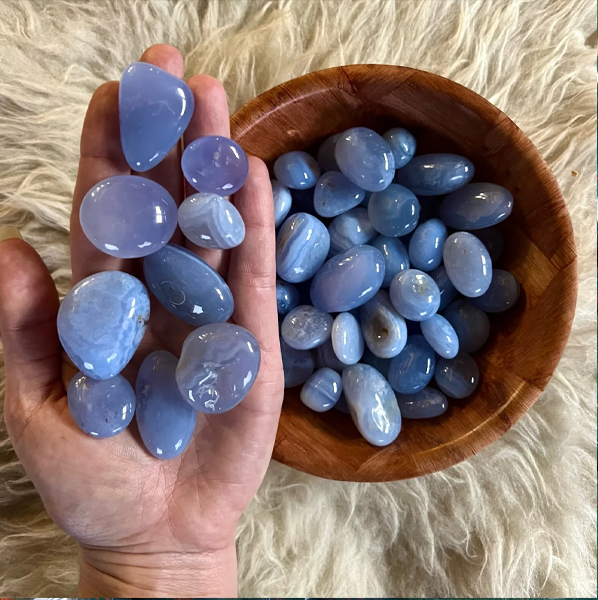
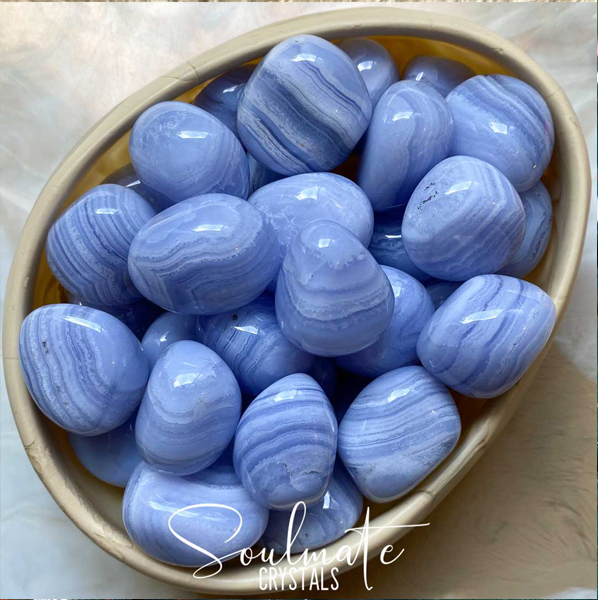 The polished gemstone Blue Lace Agate is the name given to a chalcedony that consists of alternating bands of white agate and subtle blue to transparent agate. The result is a lacy appearance that looks like blue lace. The Blue Lace Agate shown here was produced from material found in Namibia (Africa).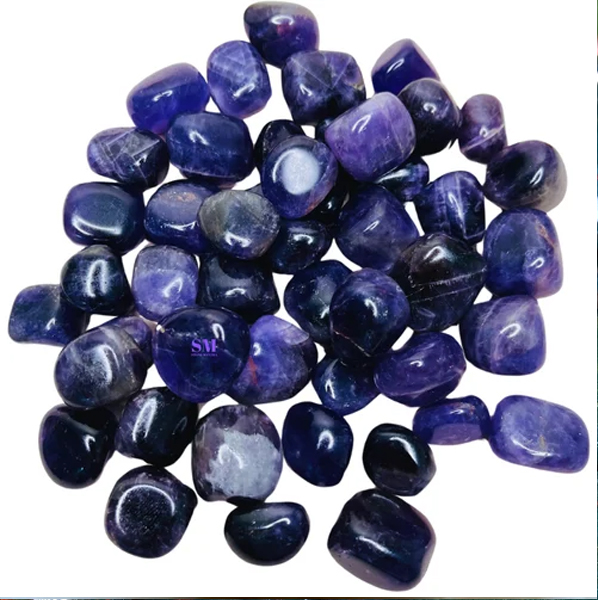
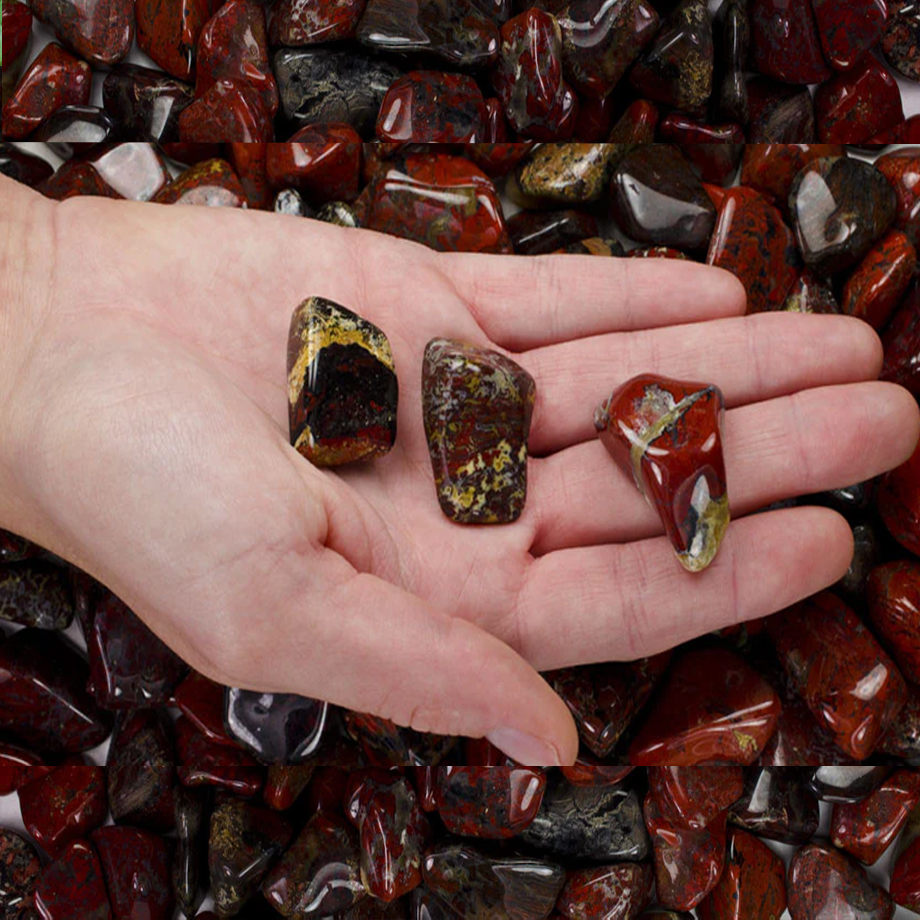
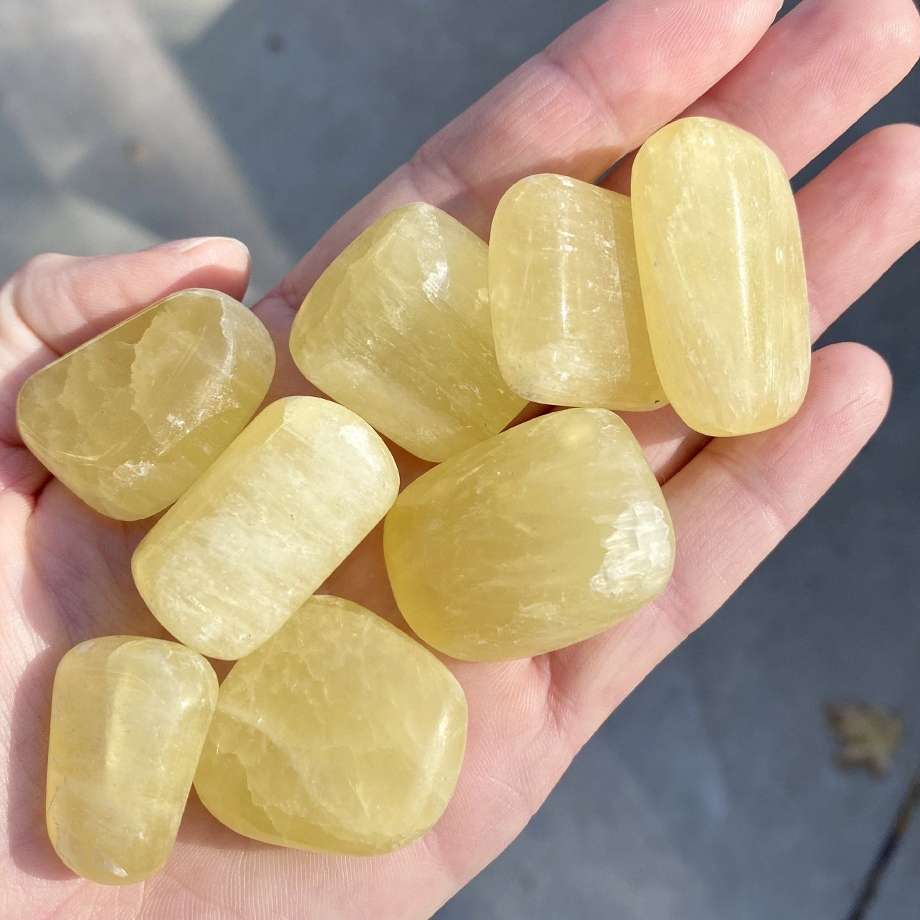
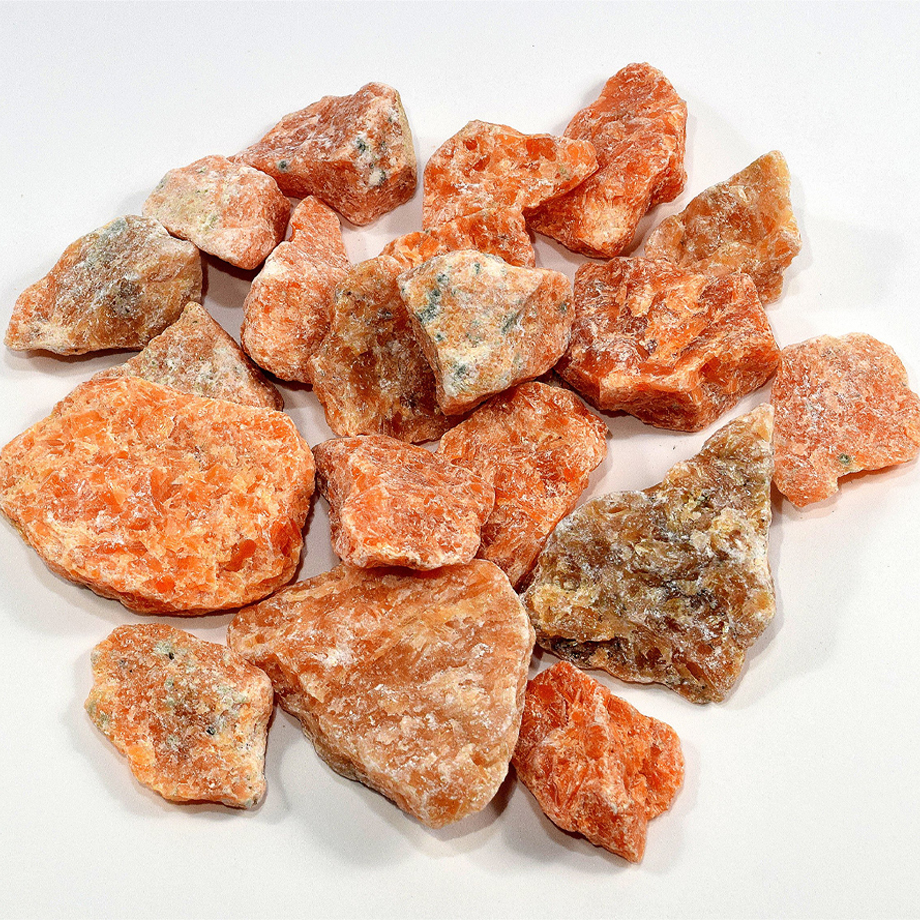
 Calcite is one of Earth's most abundant minerals, but it is rarely seen as a tumbled stone because it has perfect cleavage (which makes it break during tumbling) and because it is very soft and very difficult to polish. These pieces of tumbled calcite have a spectacular translucent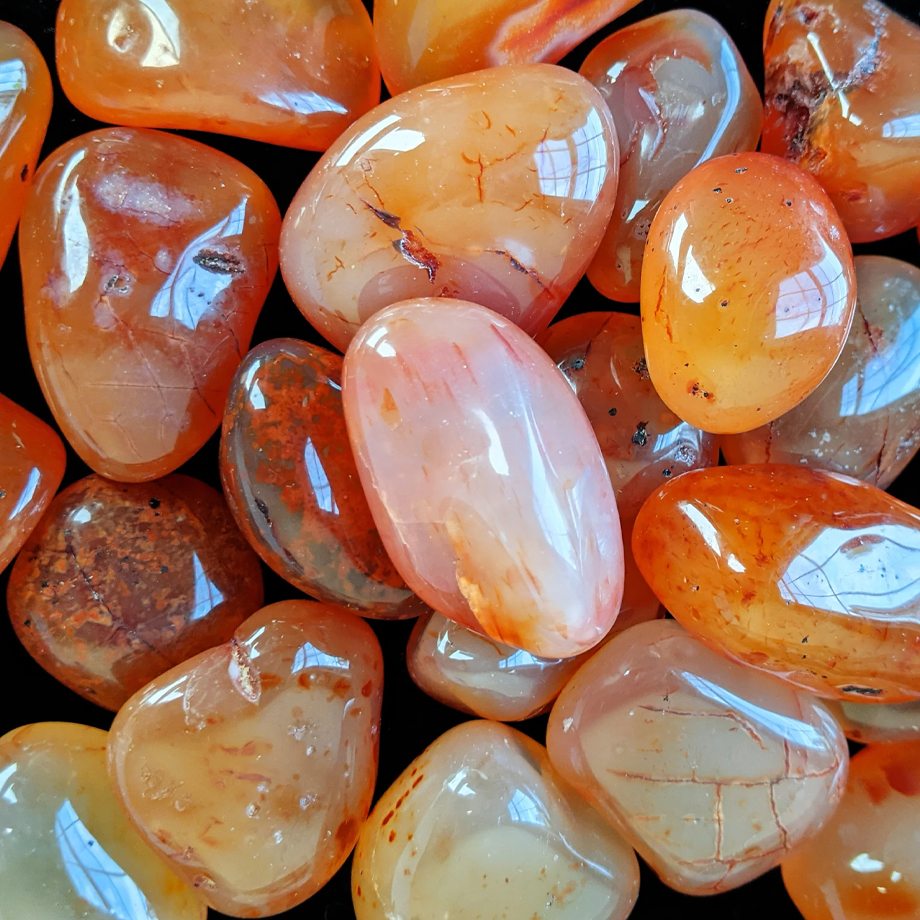
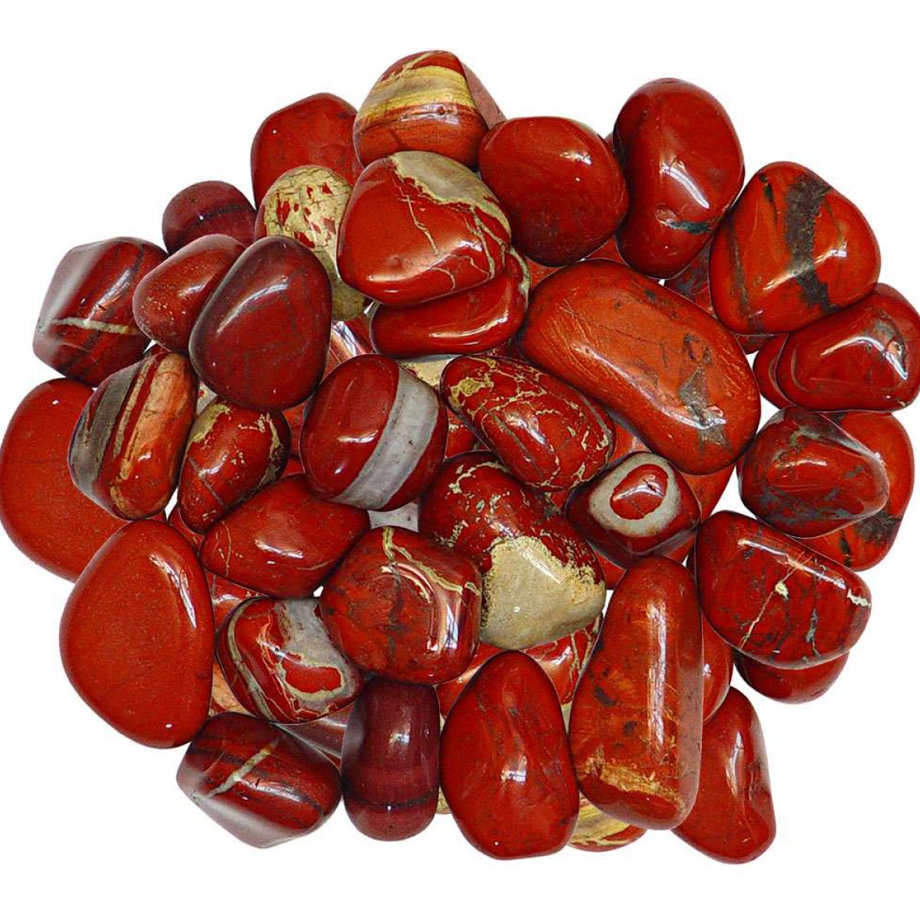
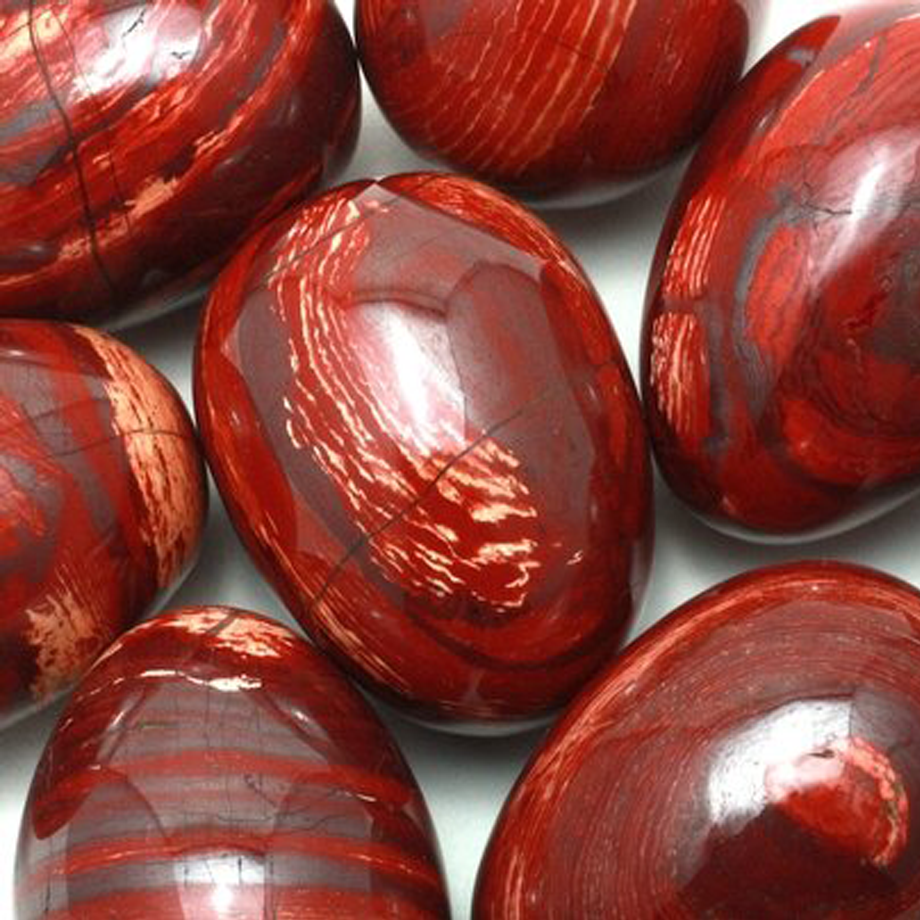
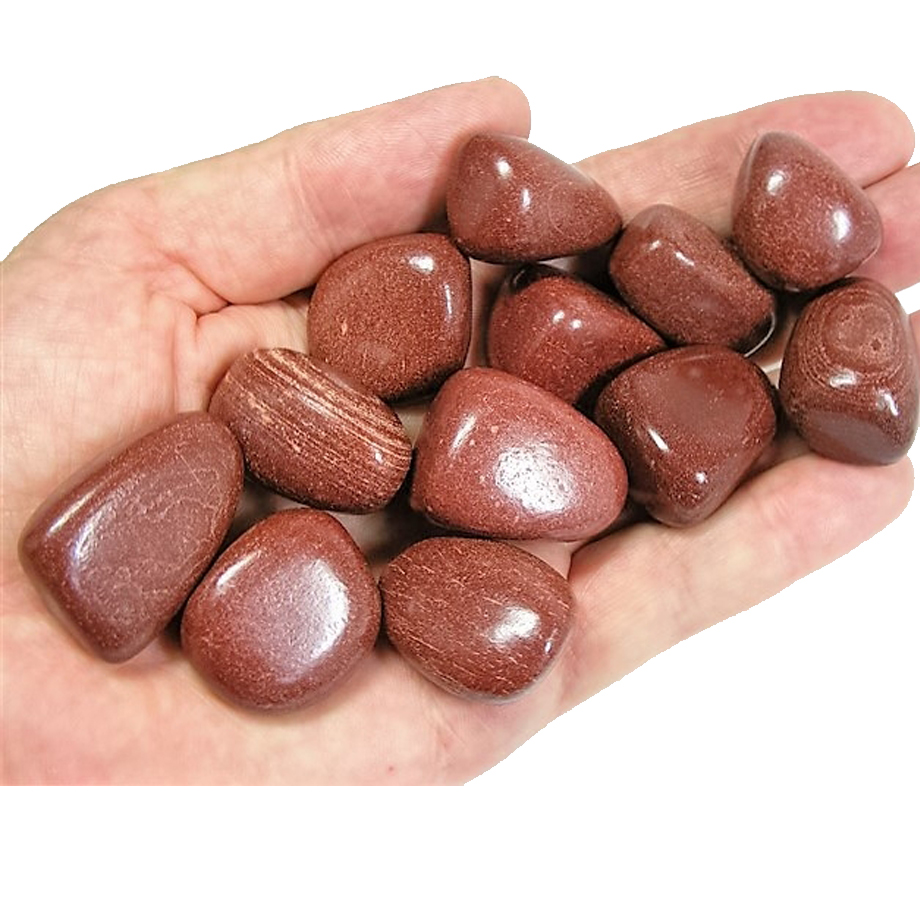 Catlinite is a brownish red variety of mudstone that has been slightly metamorphosed. It is soft and can be easily carved without metal tools. Native Americans have made ceremonial pipes from catlinite for hundreds of years - and for that reason, the material is also known as "pipestone".
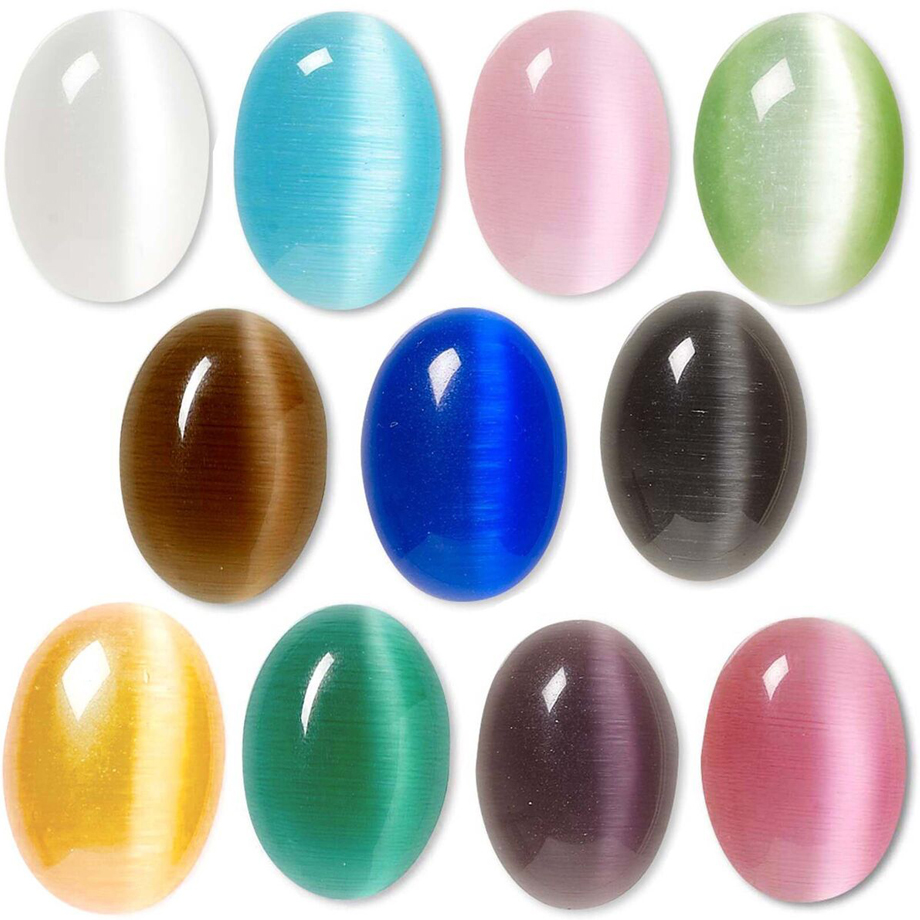
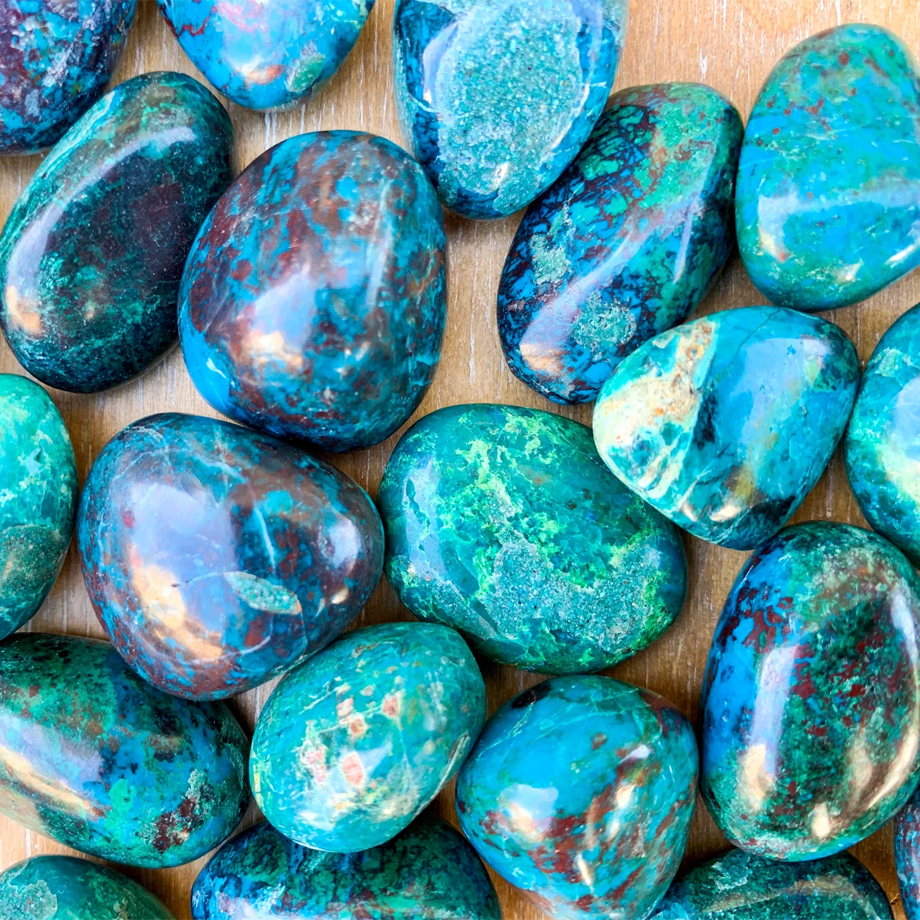
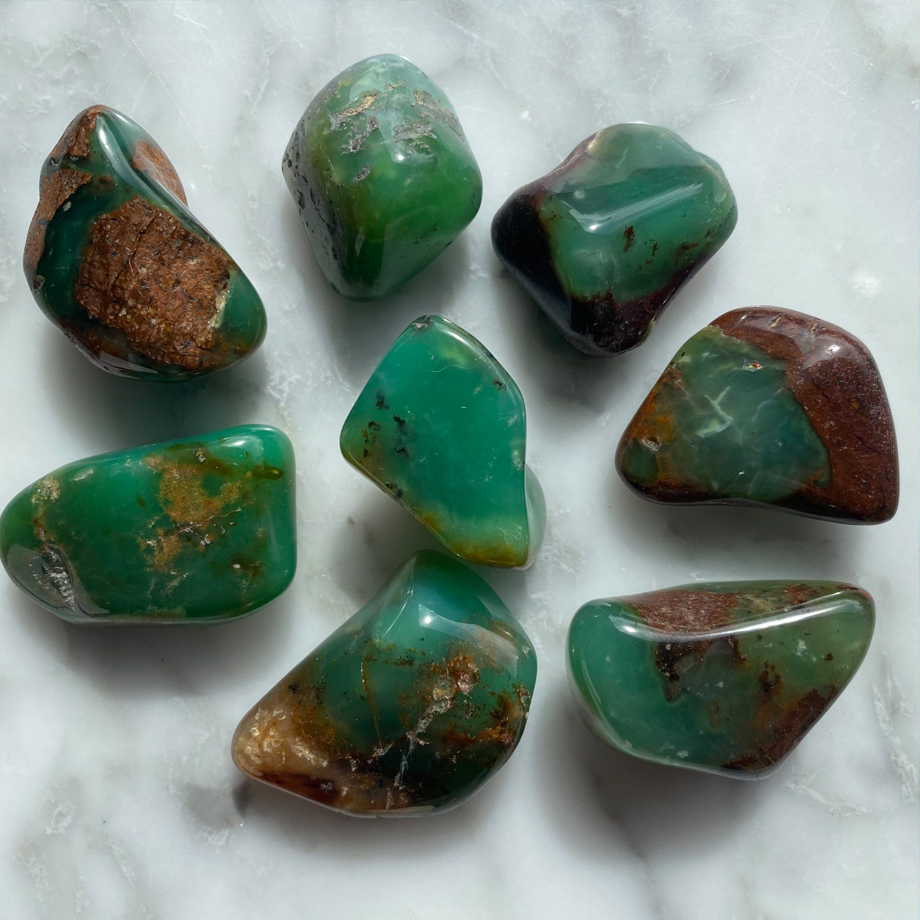
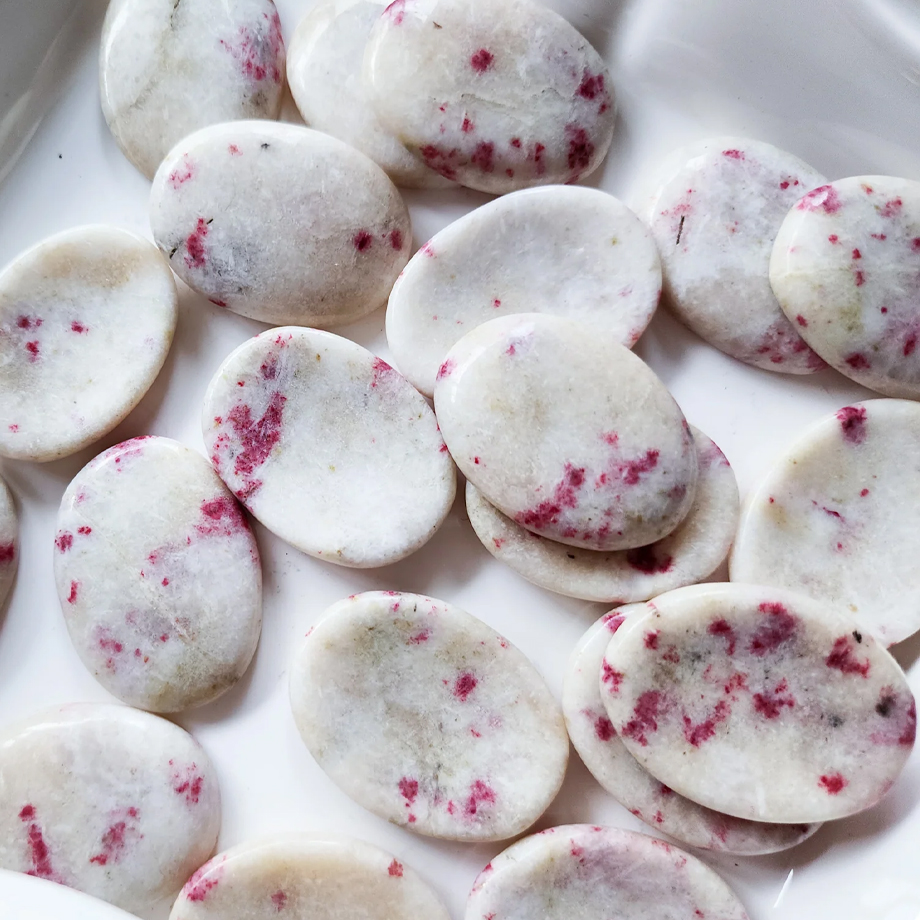 Cinnabrite is a powerful stone associated with the Root, Sacral, and Third Eye chakras. Its color ranges from deep red to brownish-red, and it is found in Scapolite and Quartz Matrix. Cinnabrite aids in manifestation, spiritual and personal transformation, healing, and grounding visions in physical reality.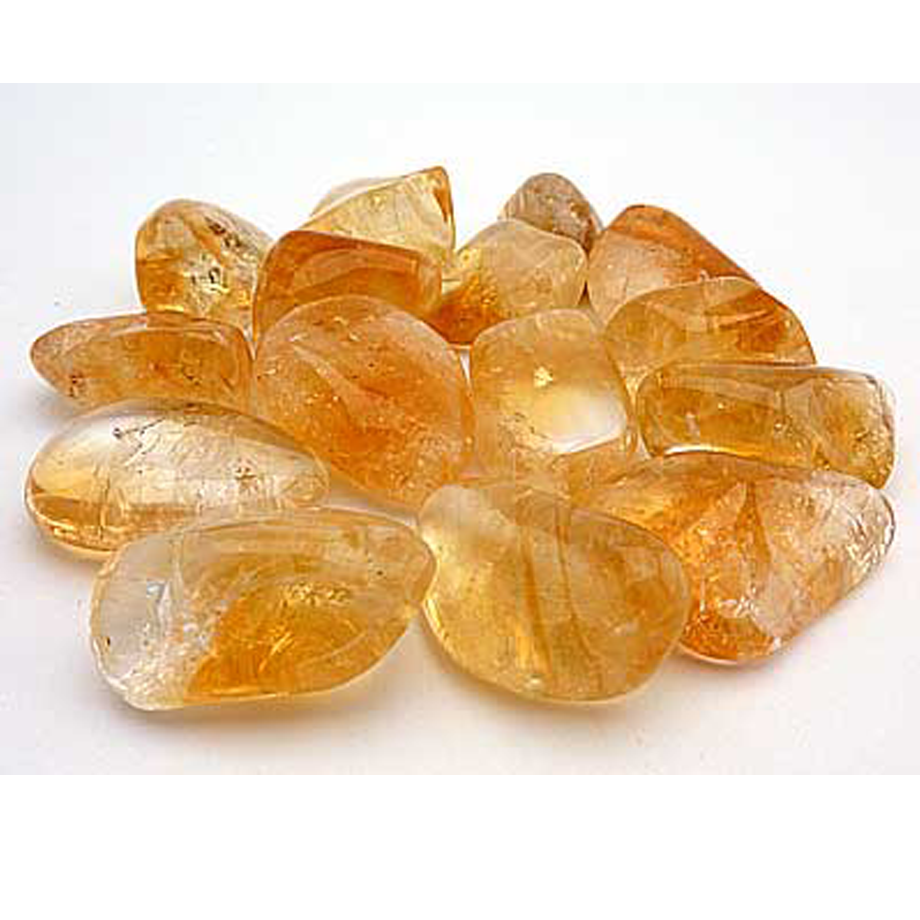
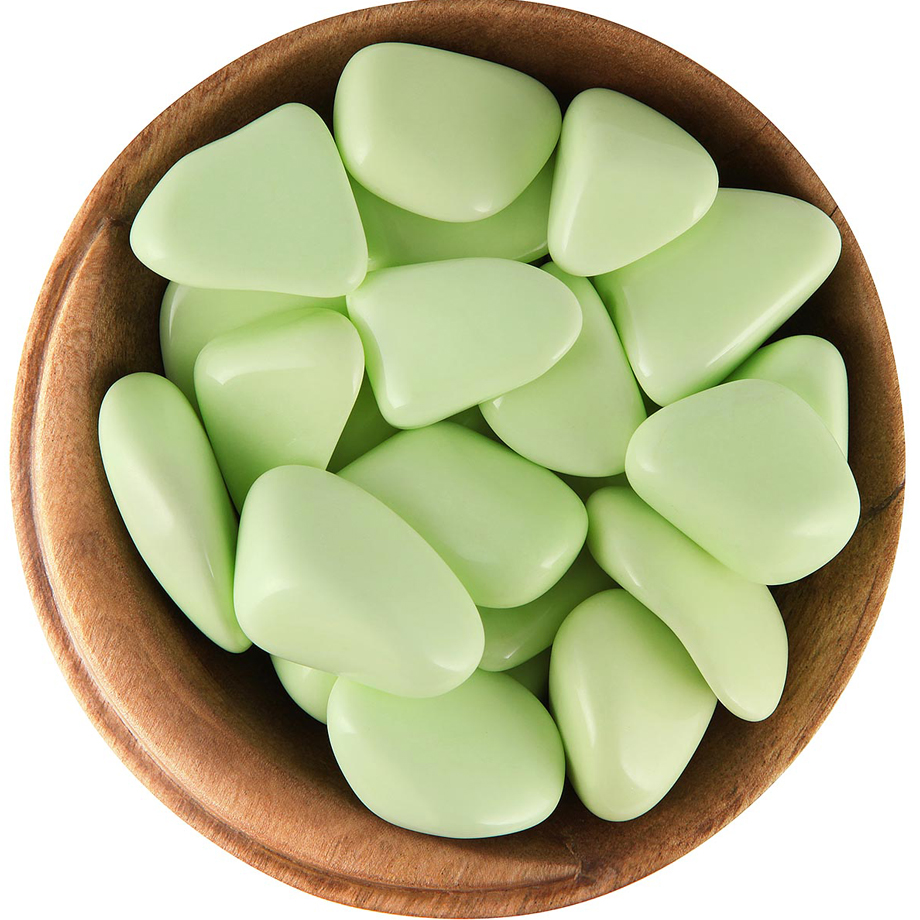 Citron Magnesite is a pale green to bright green magnesium carbonate with a color similar to ripening citrus fruit. That's the source of the name "citron". These stones have a soft luster polish and were produced from material found in Australia.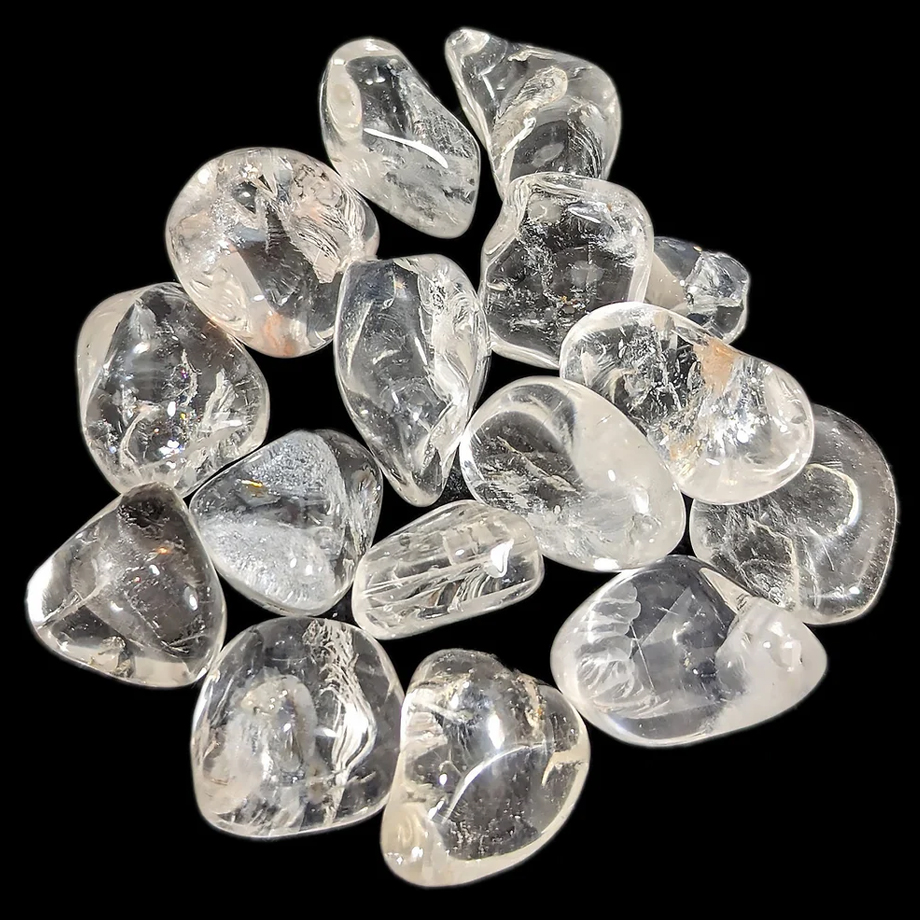

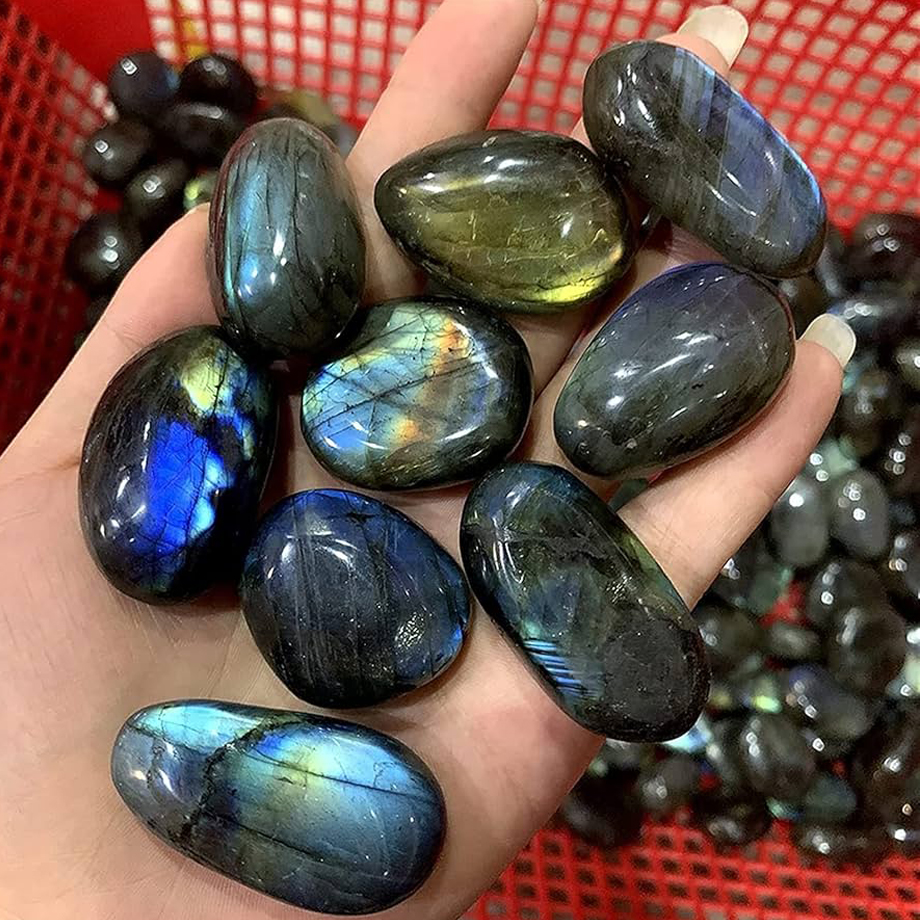
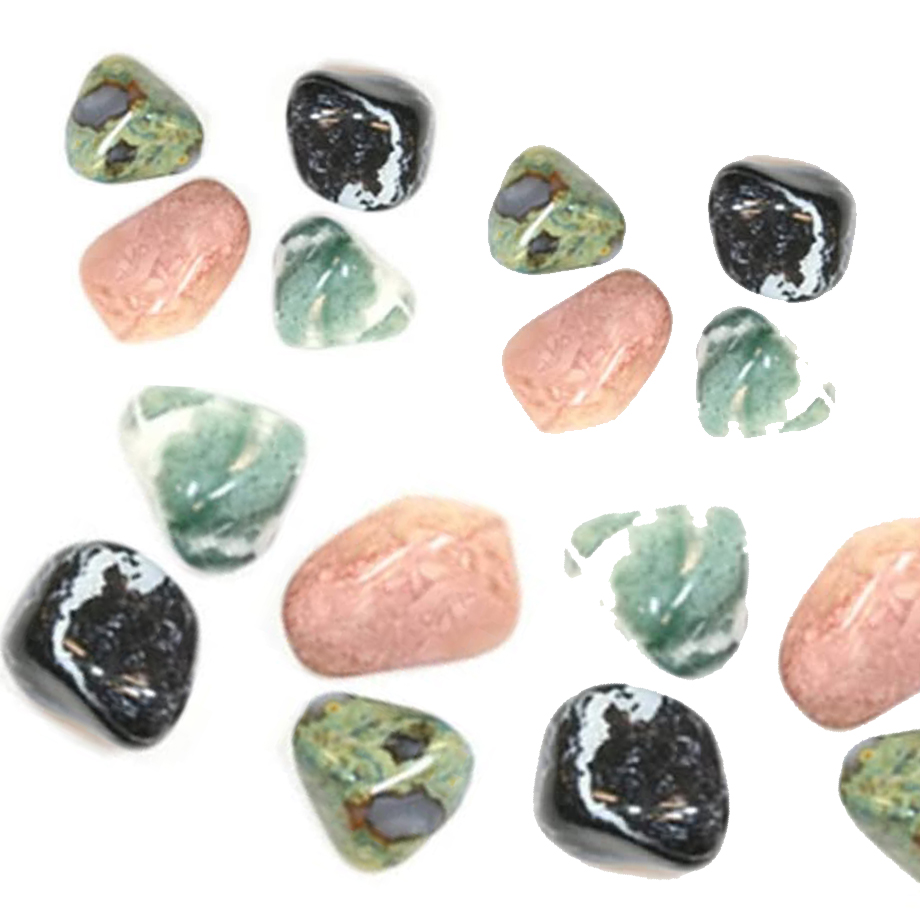
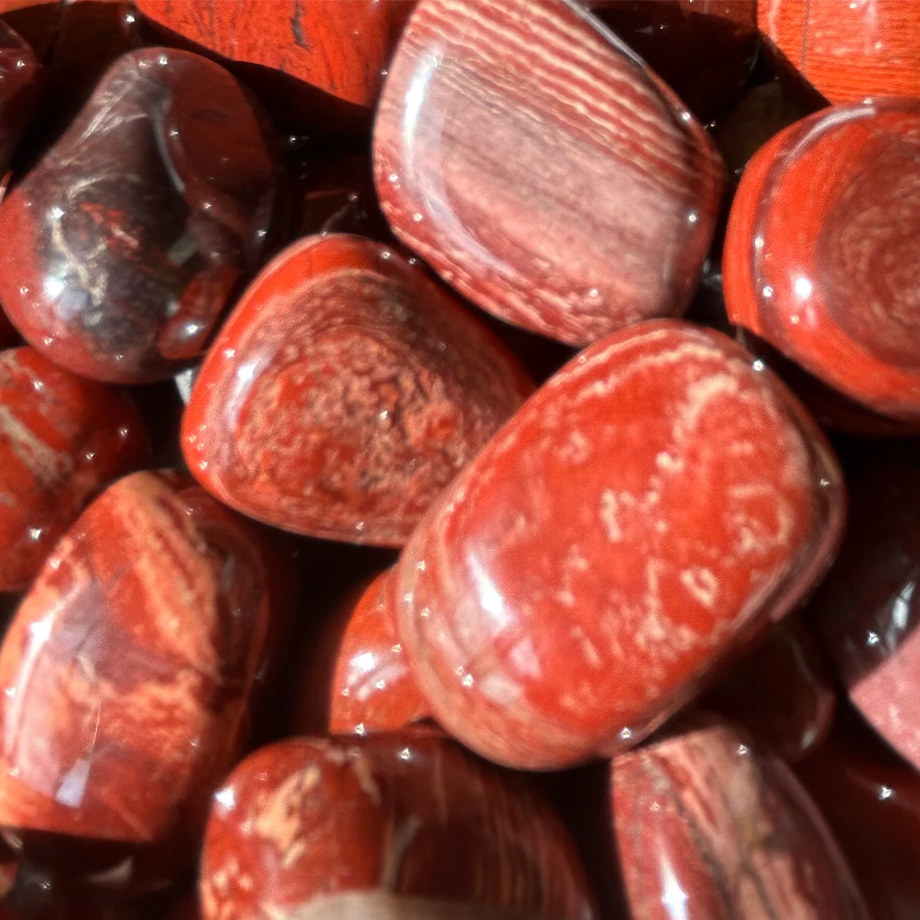
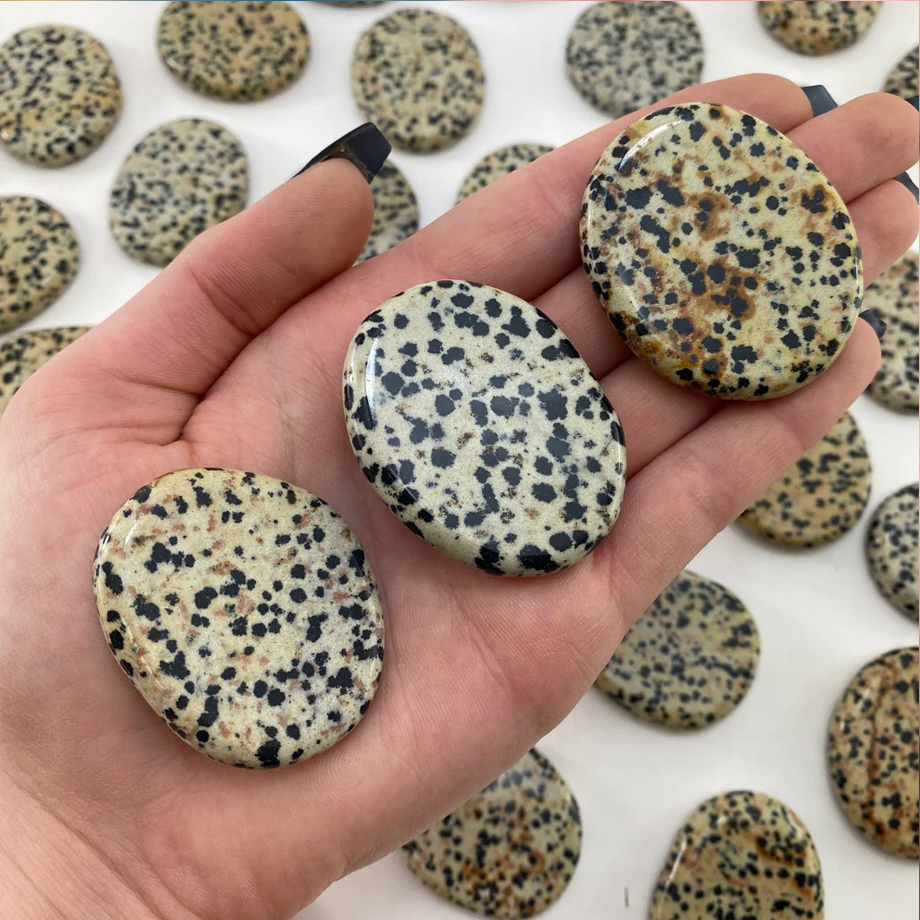
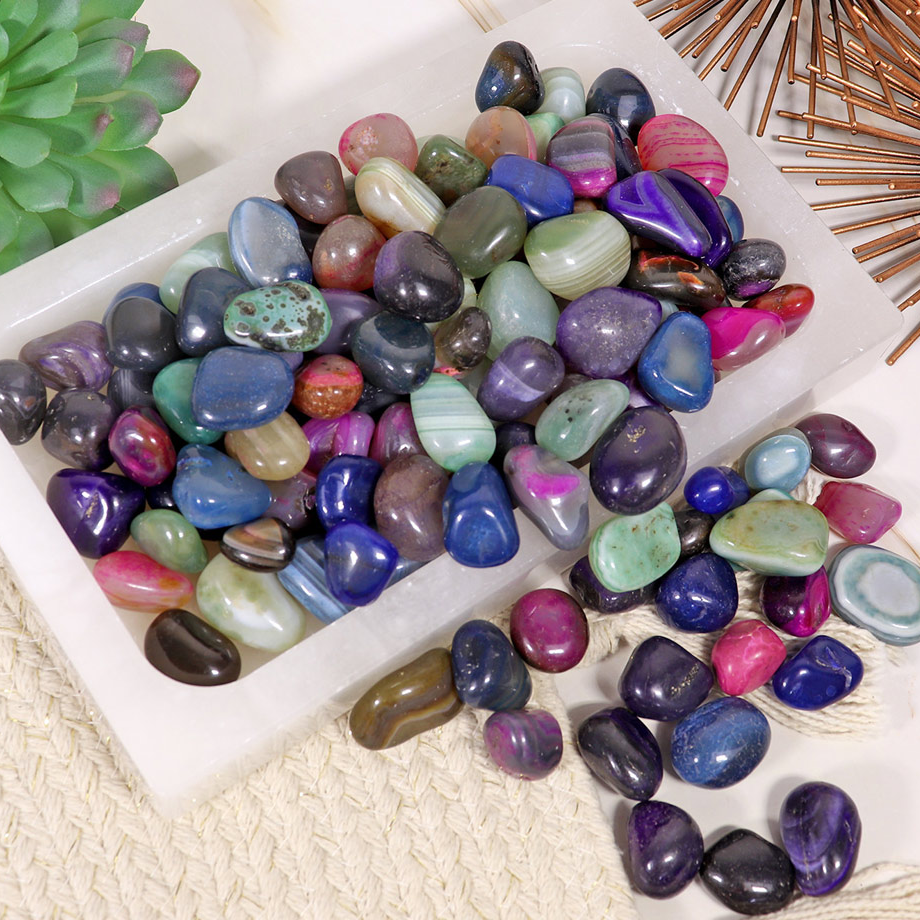
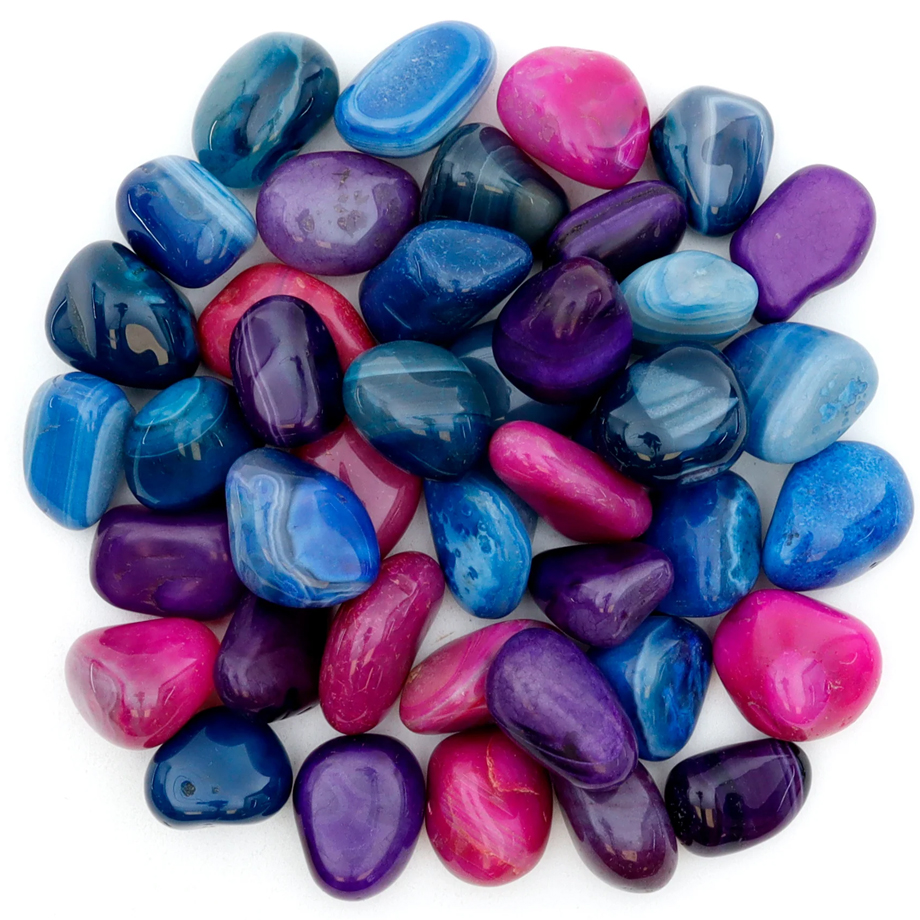
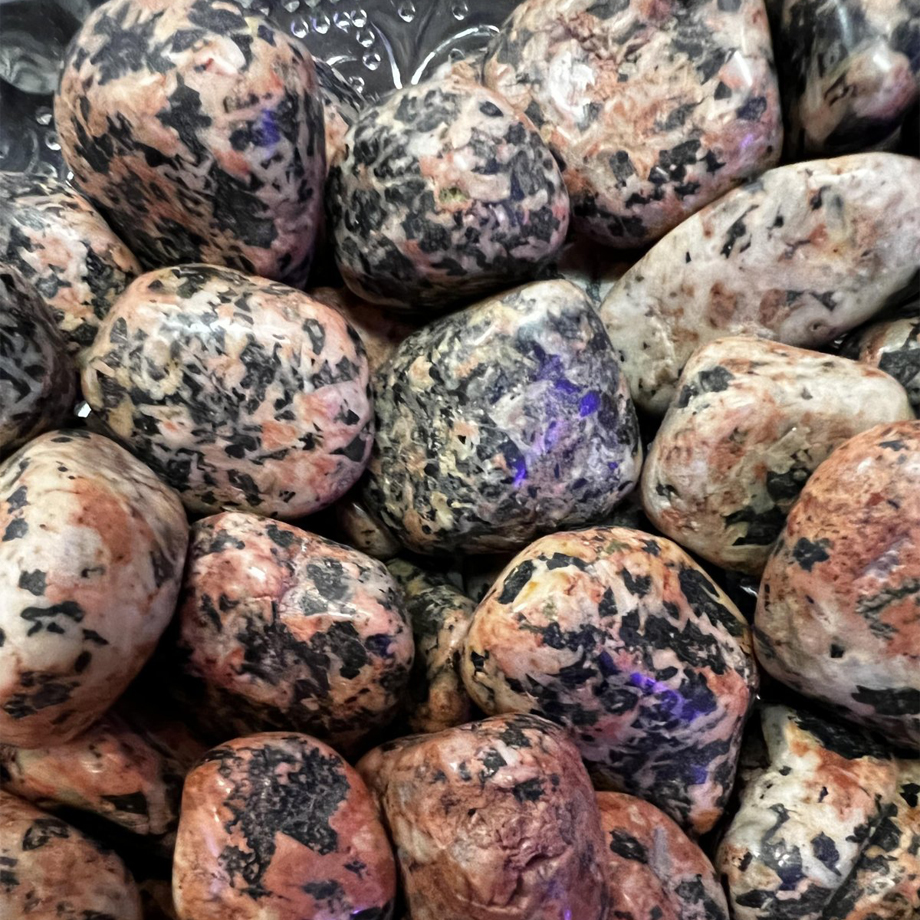
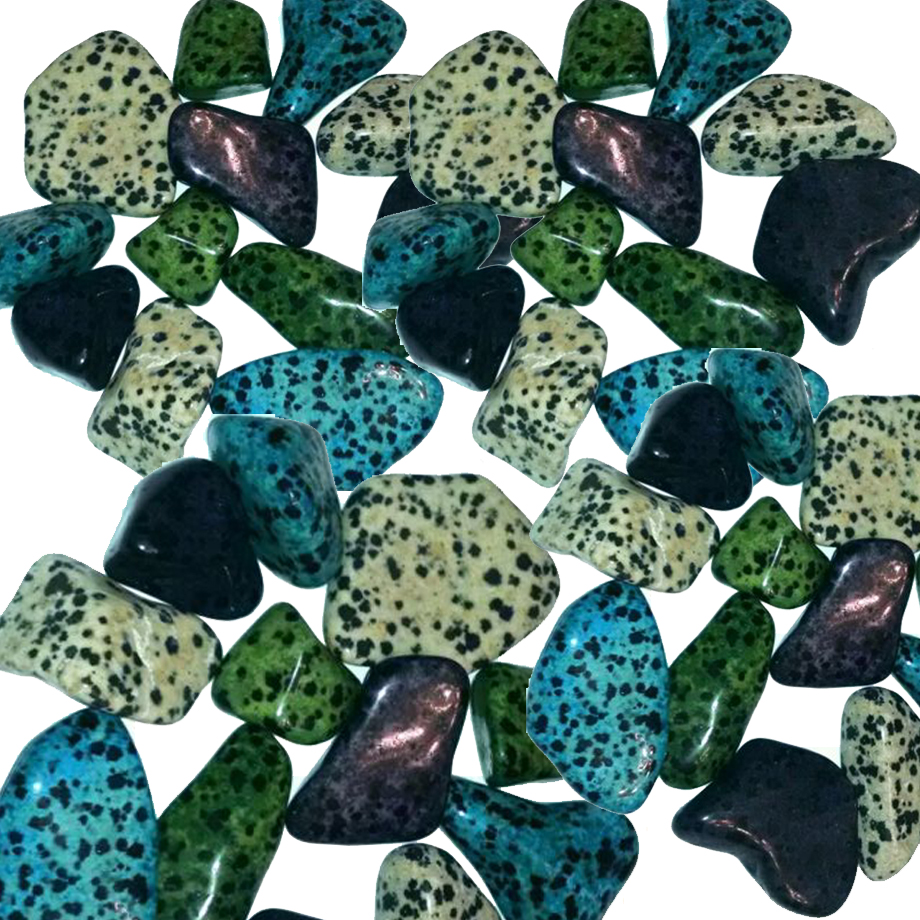 Dalmatian Stone (Dyed) - Dalmatian Stone is a white to gray igneous rock with black spots. Dalmatian Stone readily accepts dye, and it is often dyed a variety of colors. Manufacturers can transform this inexpensive and easily worked material into colorful beads and tumbled stones with great sales appeal.
 -
-
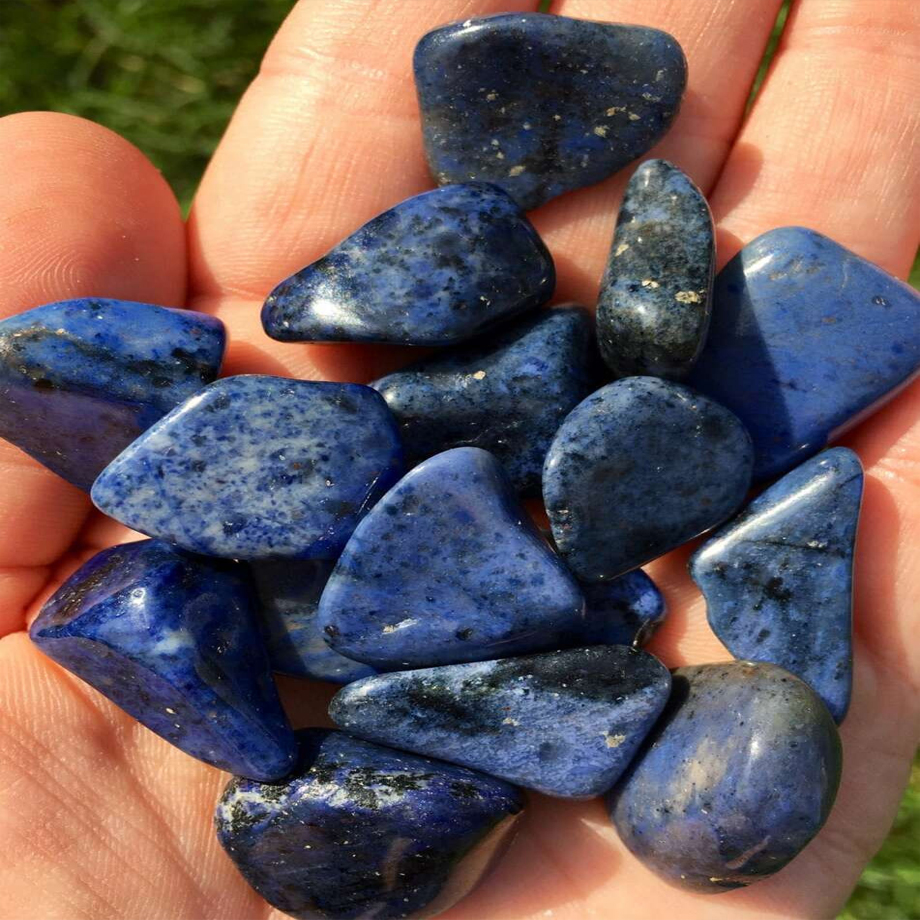
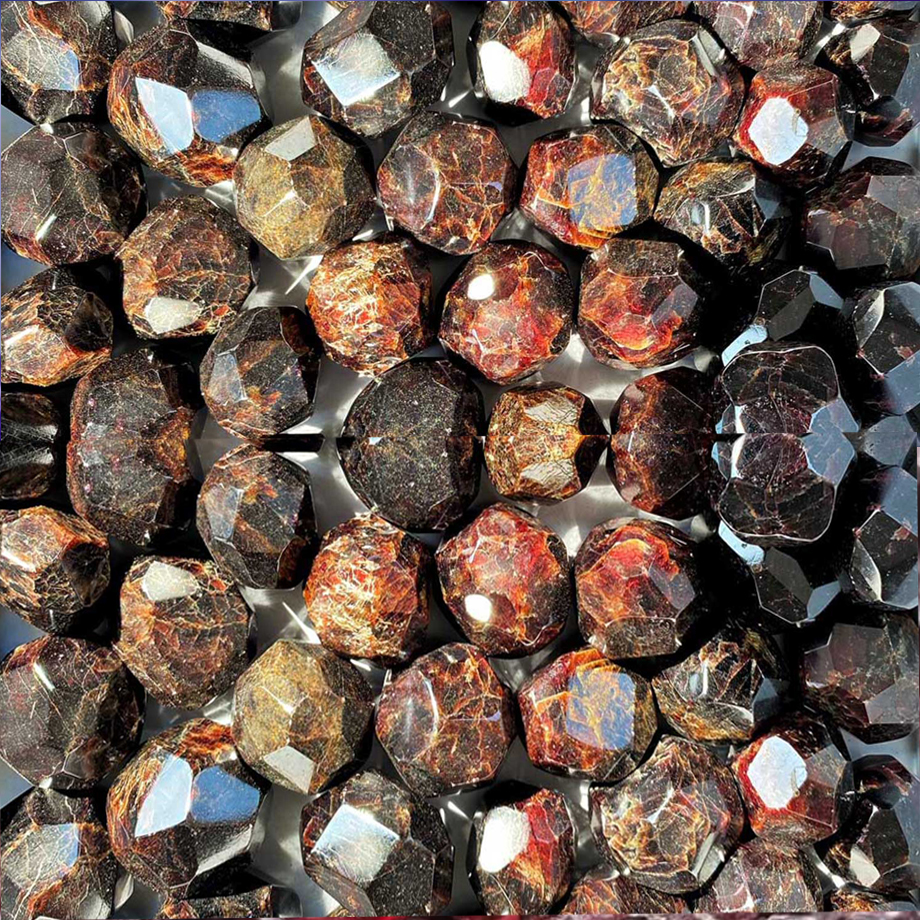 Garnet Crystals in Marble - This is a metamorphic rock that contains reddish brown garnet crystals in a grayish marble. In some stones, you can clearly see the geometric outline of the crystals. Other stones contain so many garnet crystals that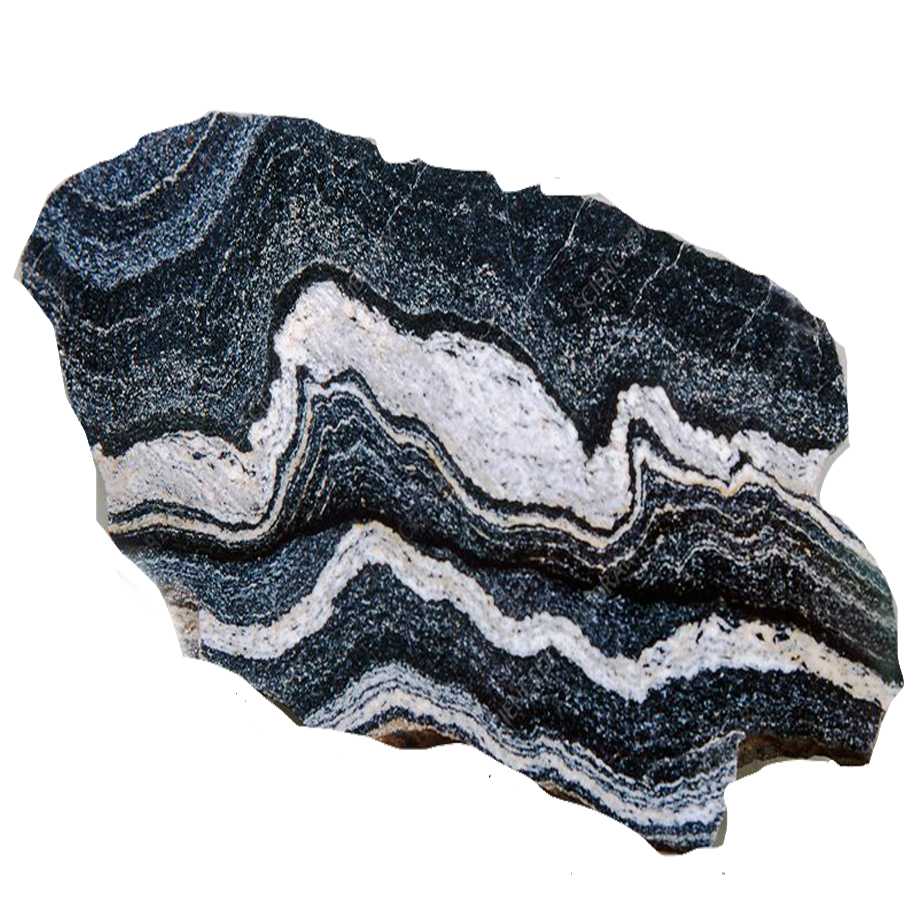
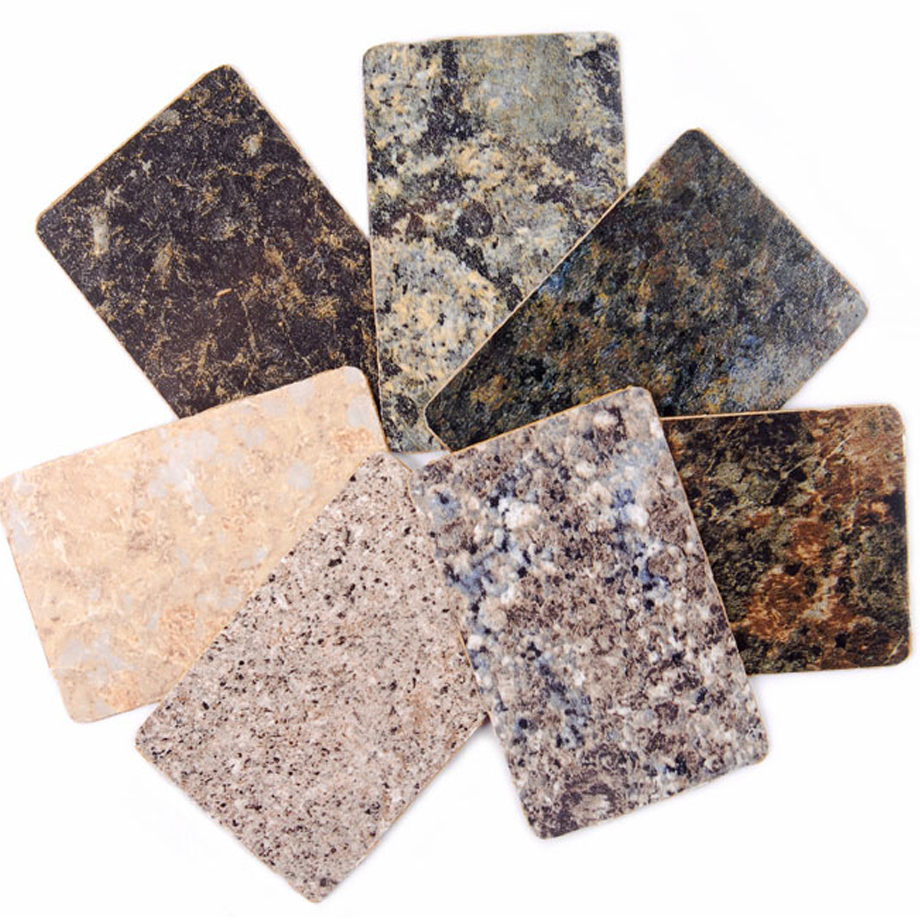

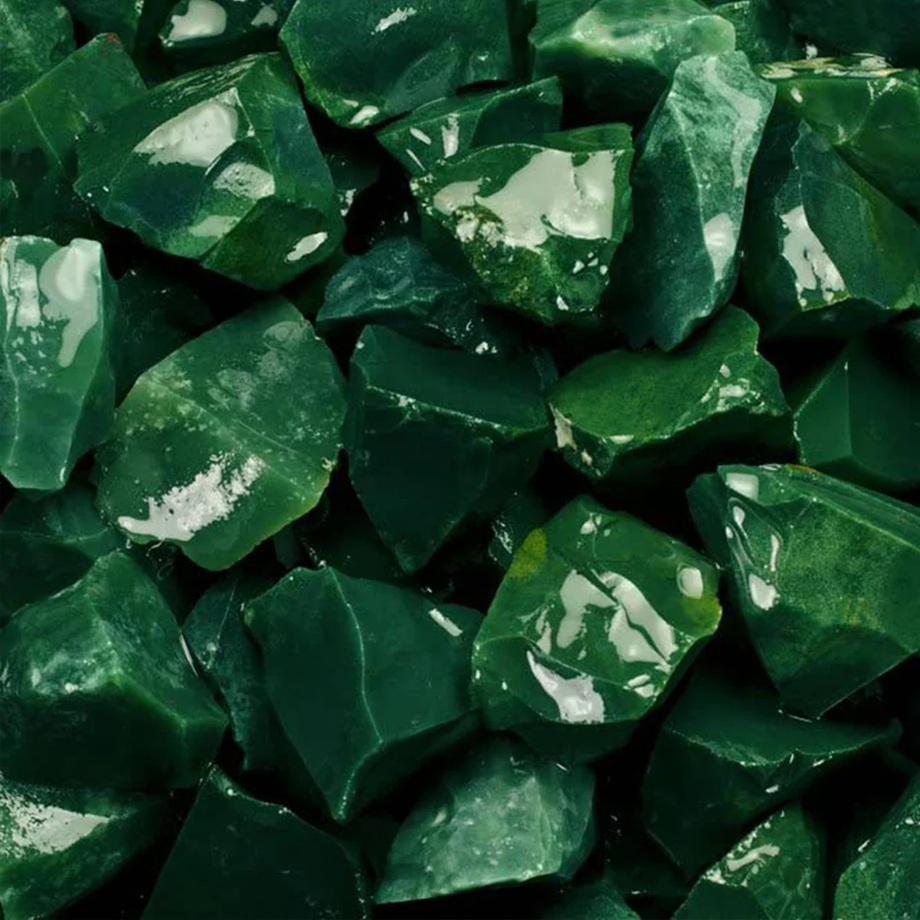
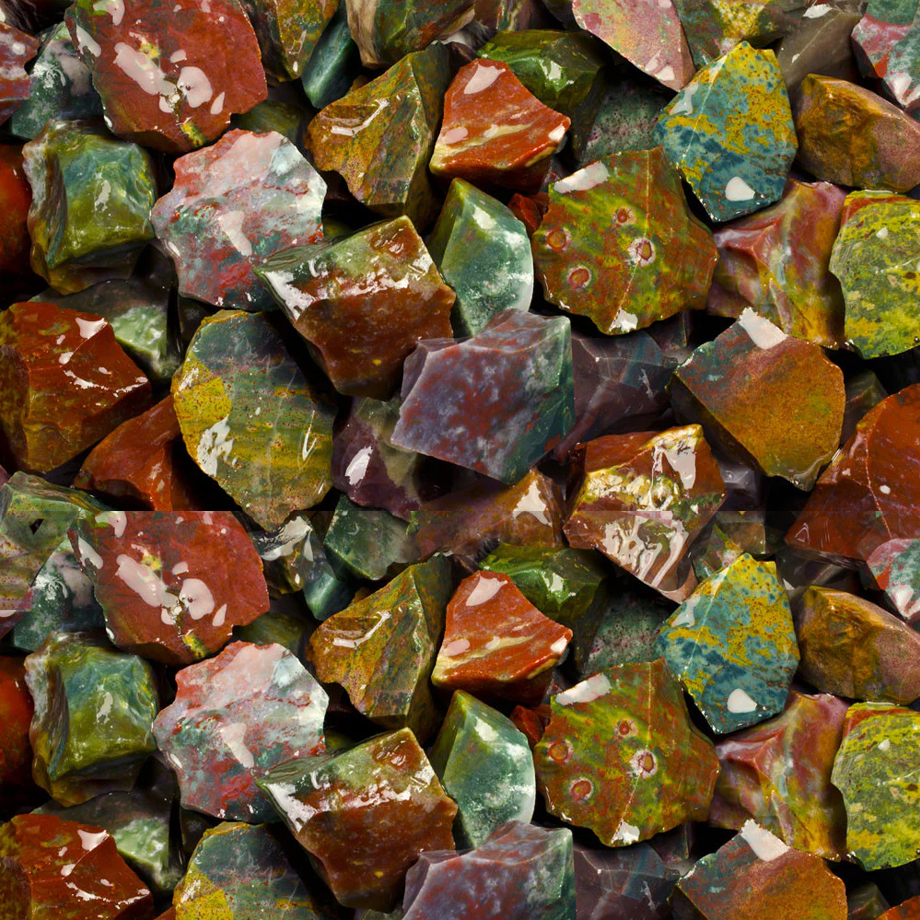
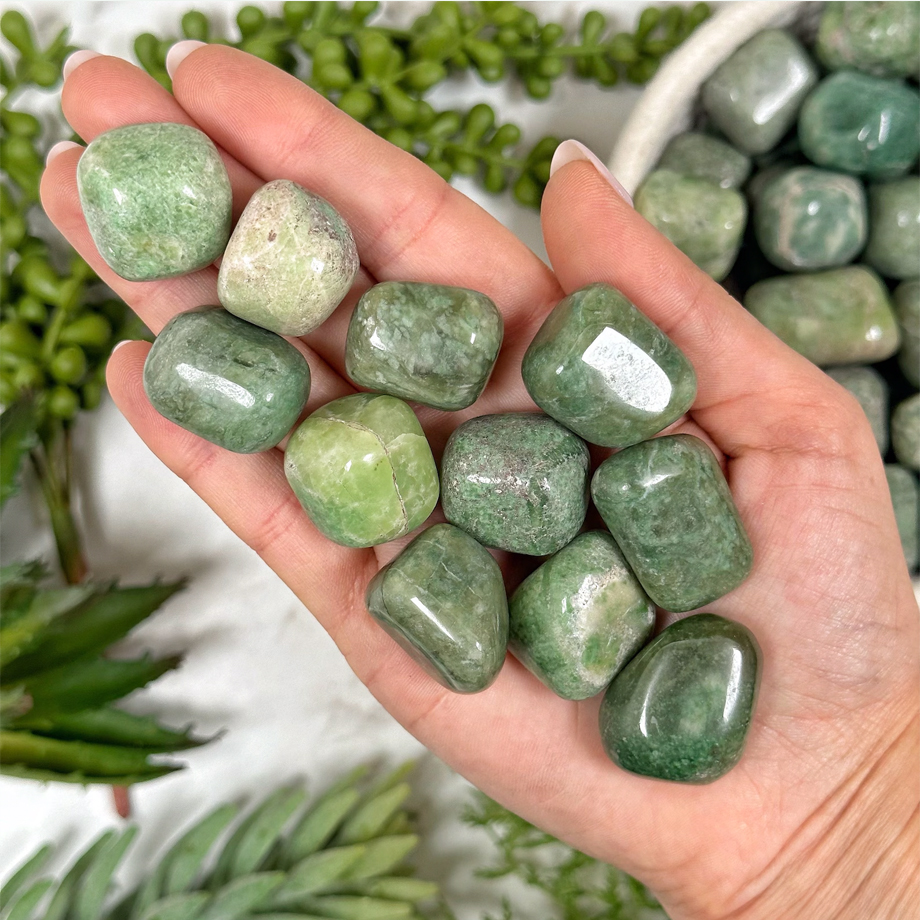 Grossularite Garnet - The grossularite garnet used to make tumbled stones, beads and carvings is an opaque, massive garnet that often has an attractive green color. It is found in South Africa, where it has been incorrectly called "Transvaal Jade" (it has no mineralogical relationship
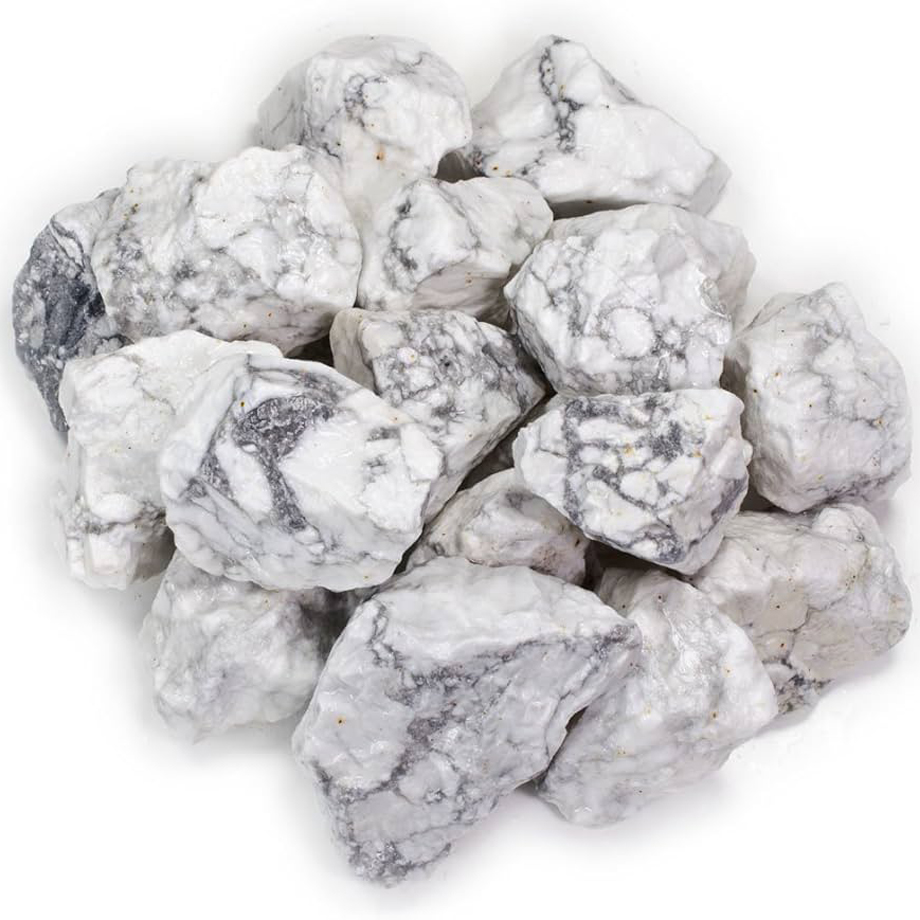
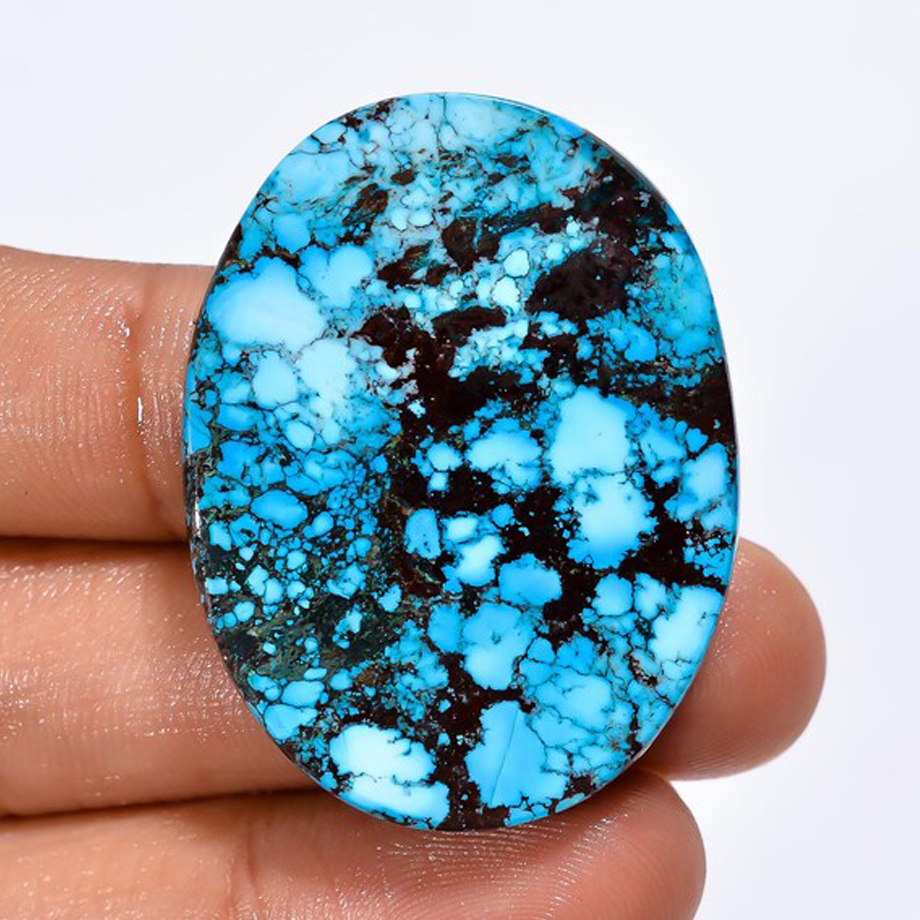
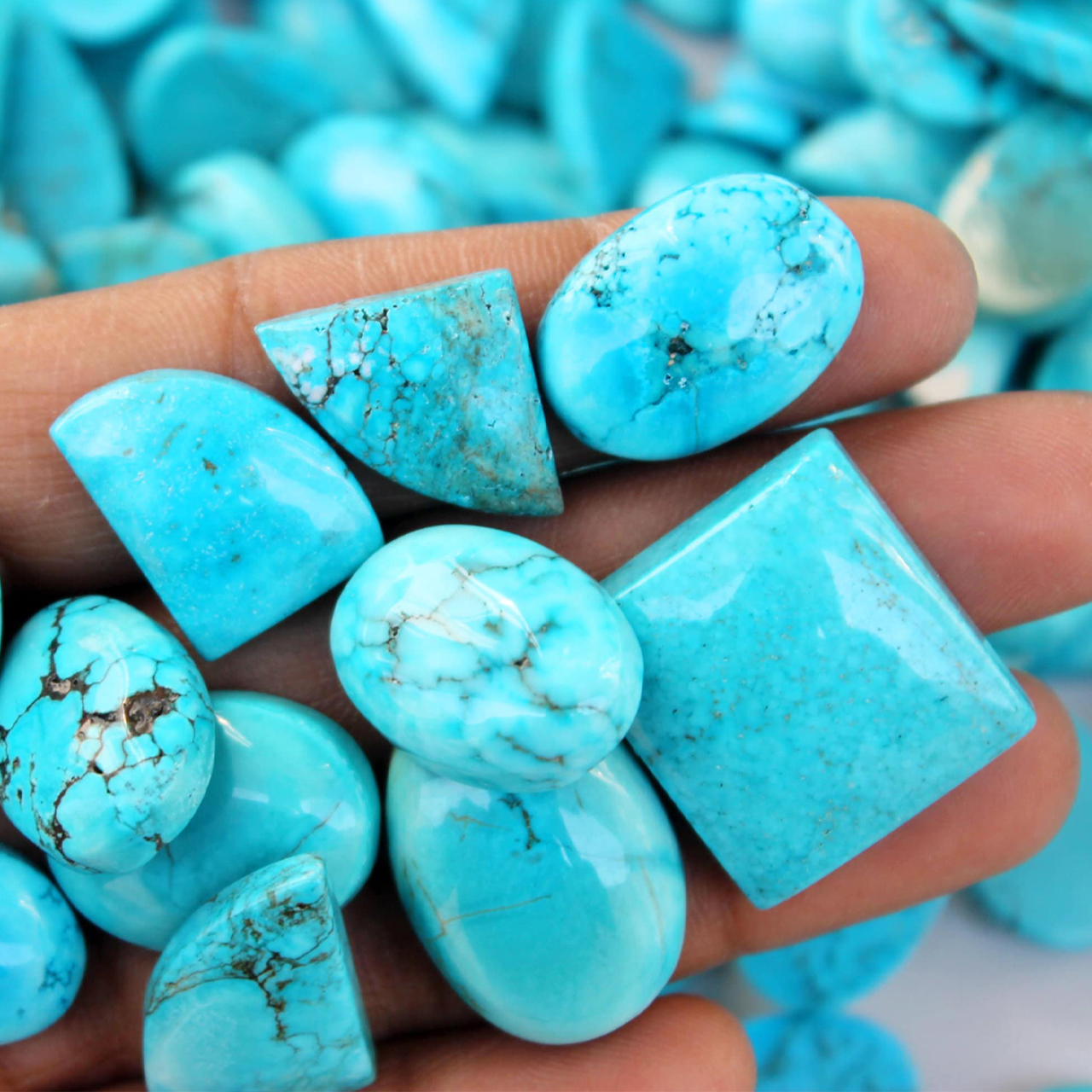 Howlite is an inexpensive white mineral, often marked with gray to black spider webbing. In the 1950s someone dyed some howlite a nice blue color, and WOW! they had a turquoise look-alike. Since then it has fooled millions of people in tourist shops throughout the Southwestern U.S.
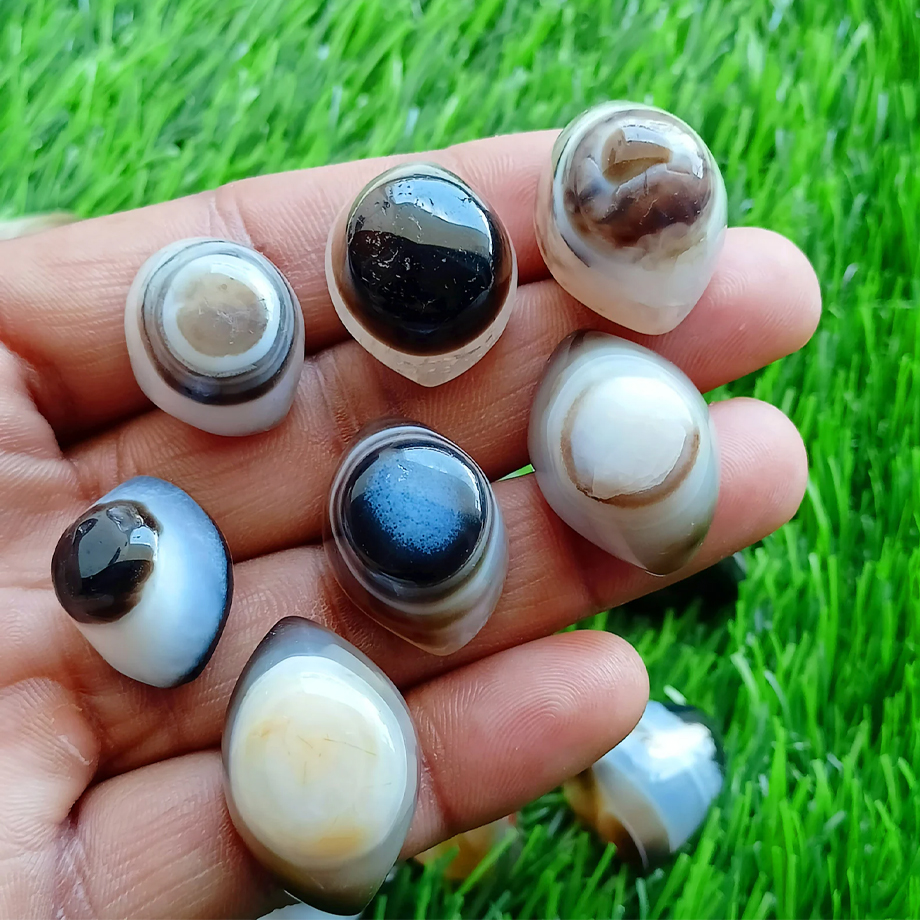
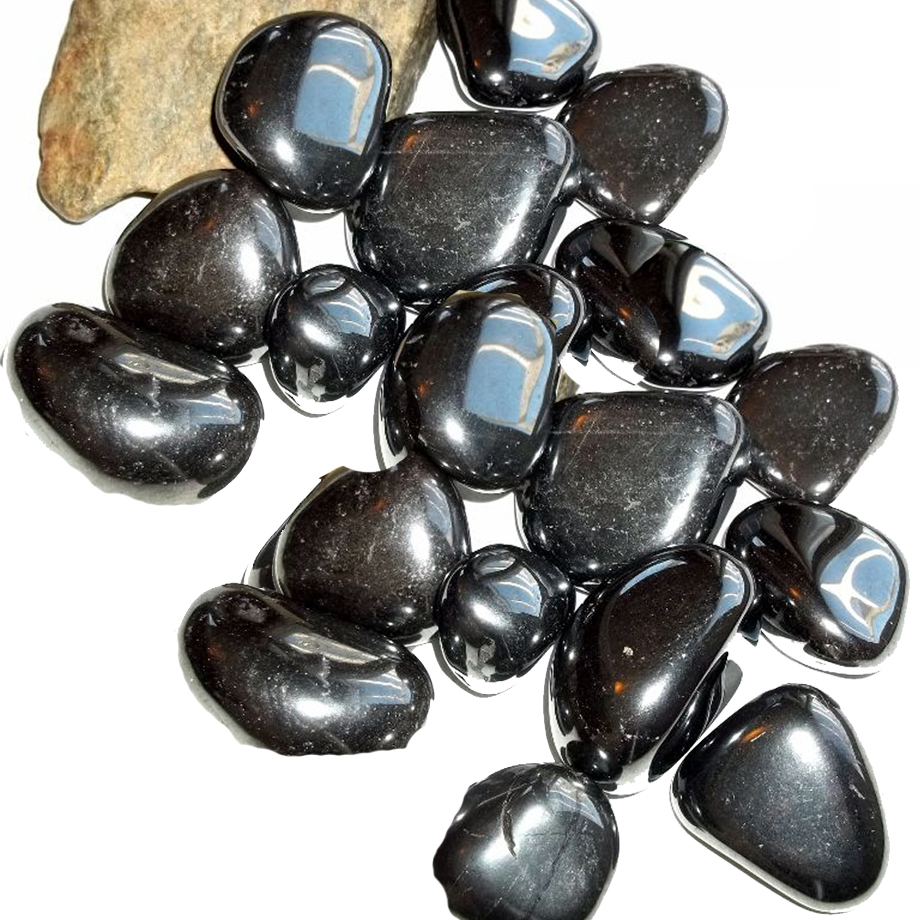
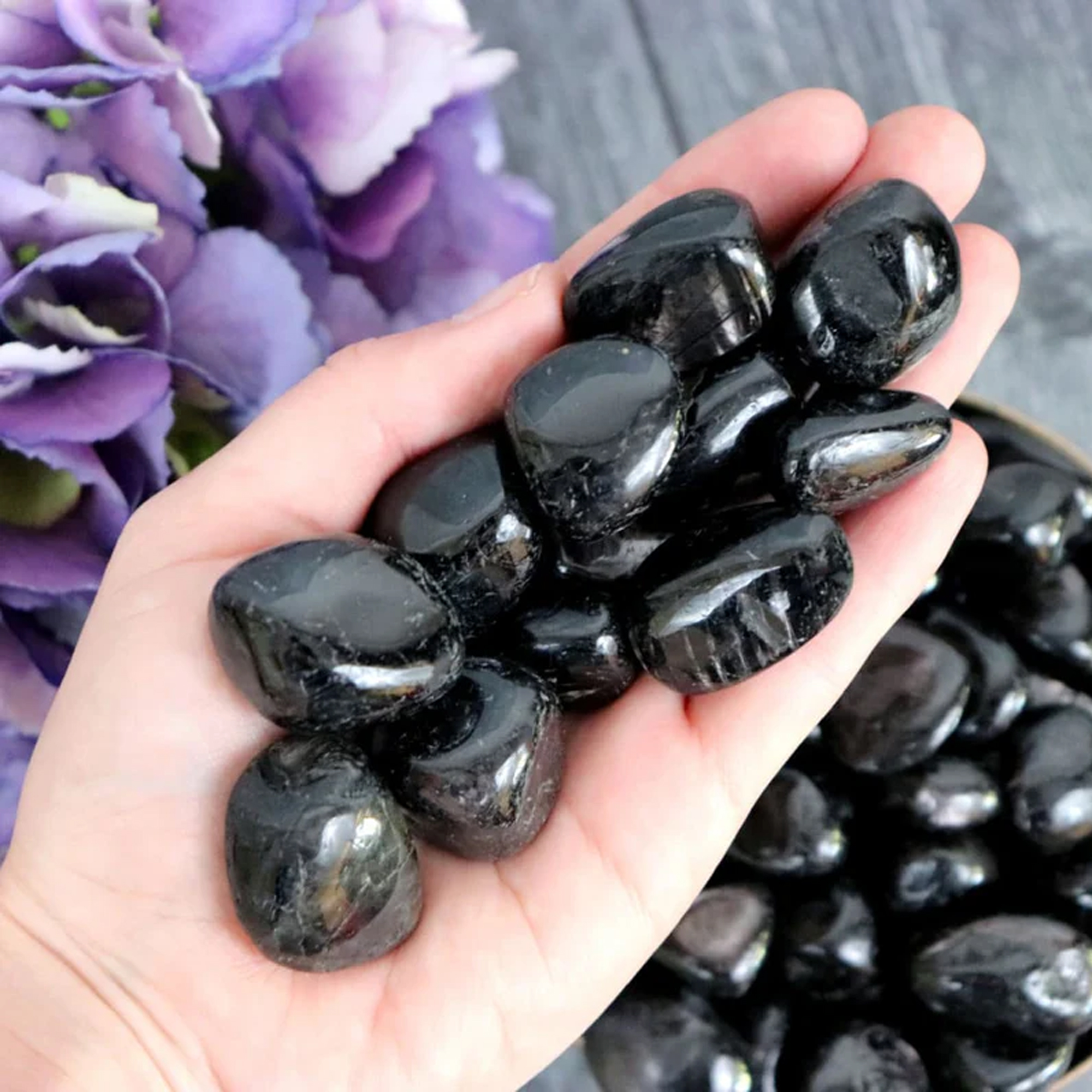 Hypersthene is a black silicate mineral occasionally found in igneous rocks such as gabbro, basalt and andesite. It accepts a bright polish which sometimes reveals zones and bands of a phenomenon that seems transitional between chatoyance and play-of-color.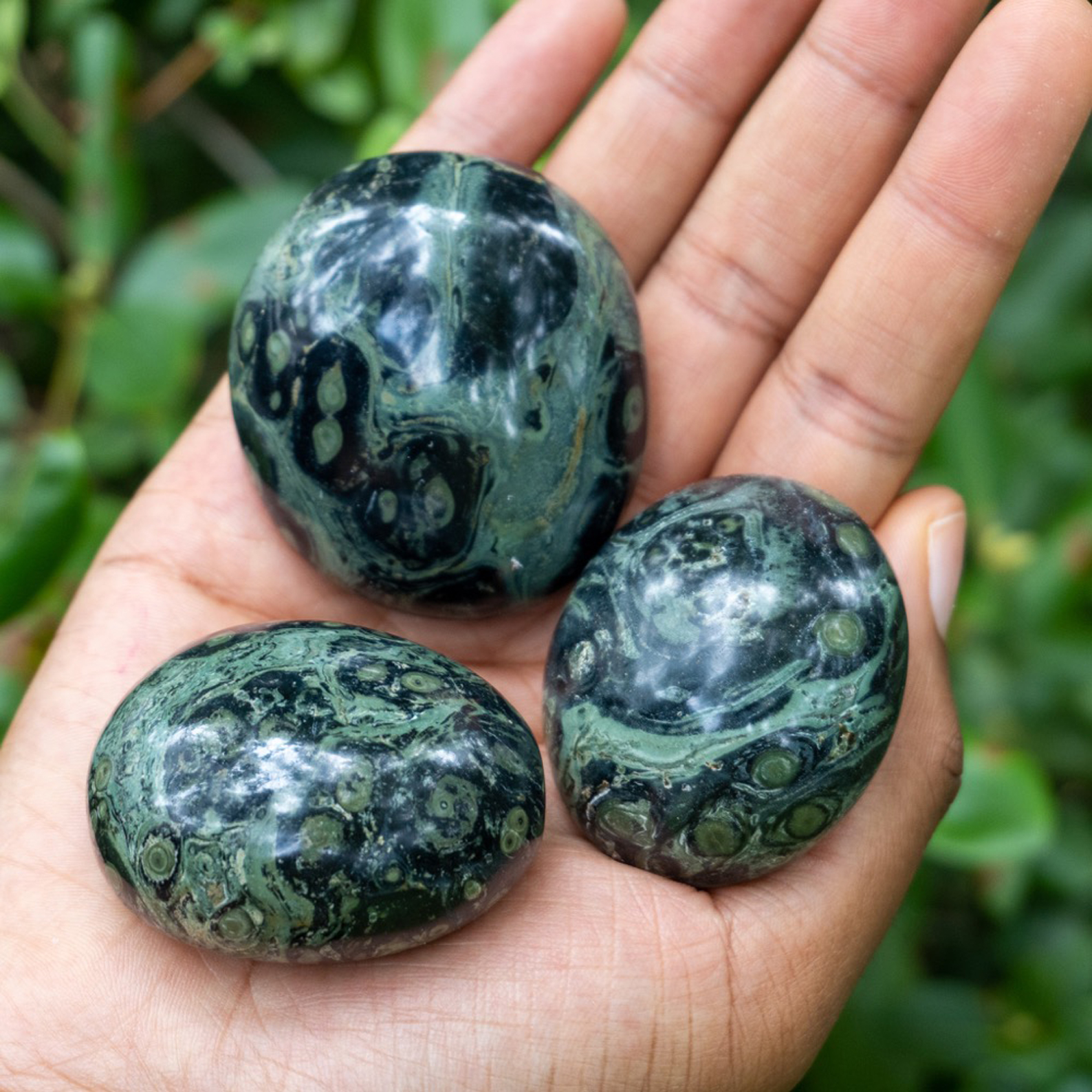
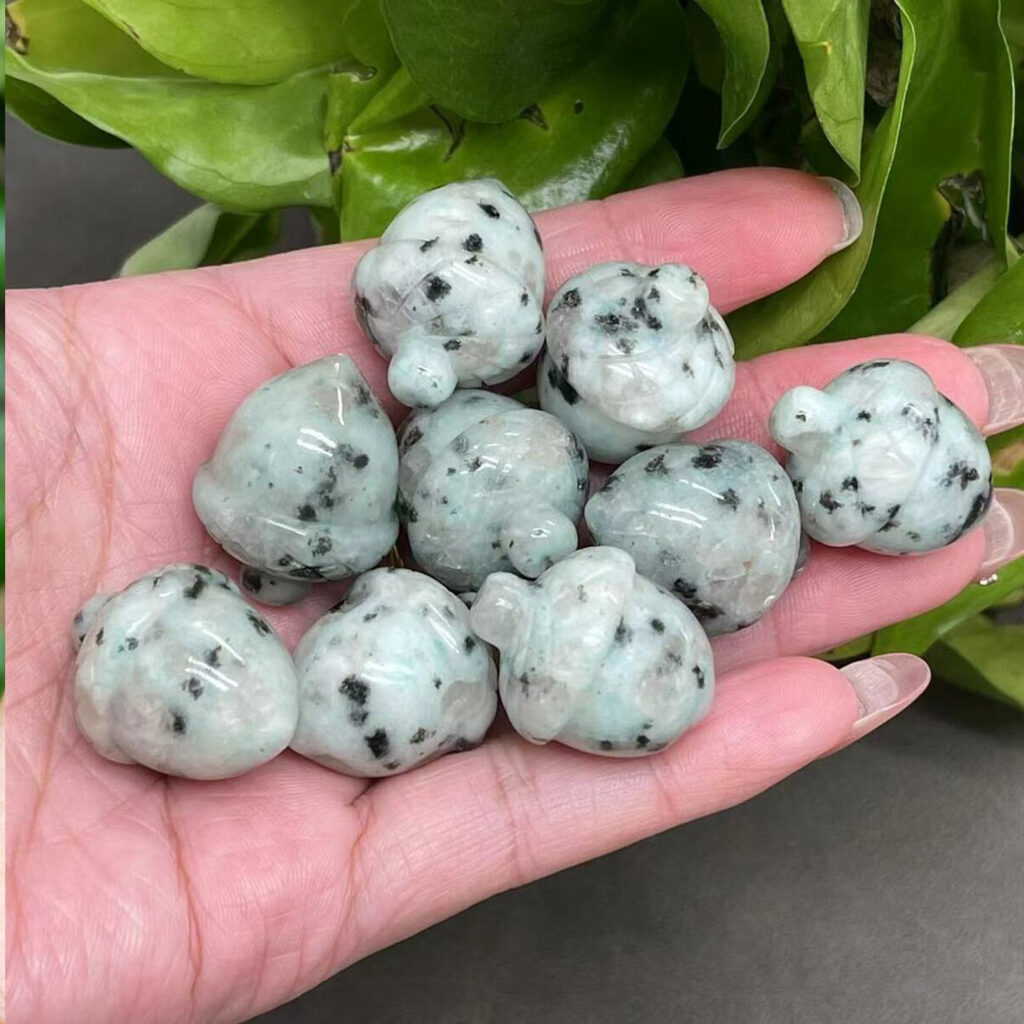
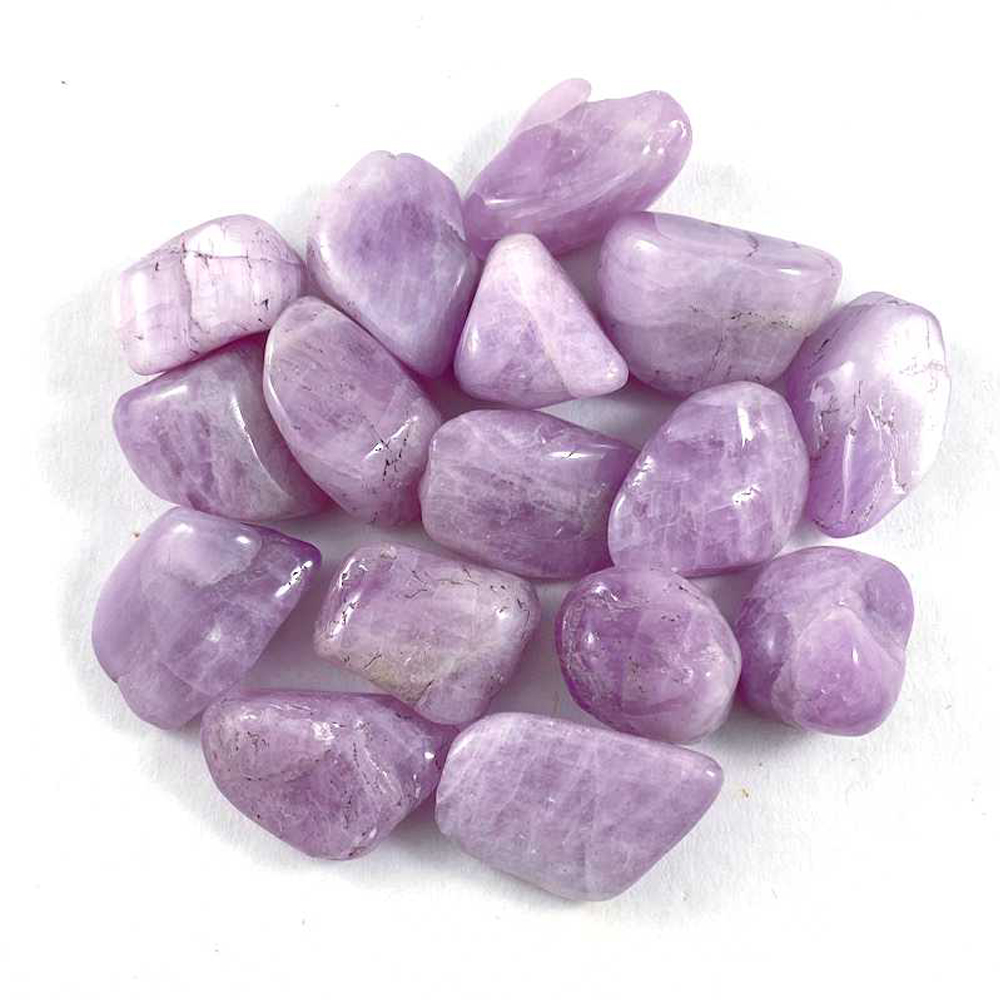
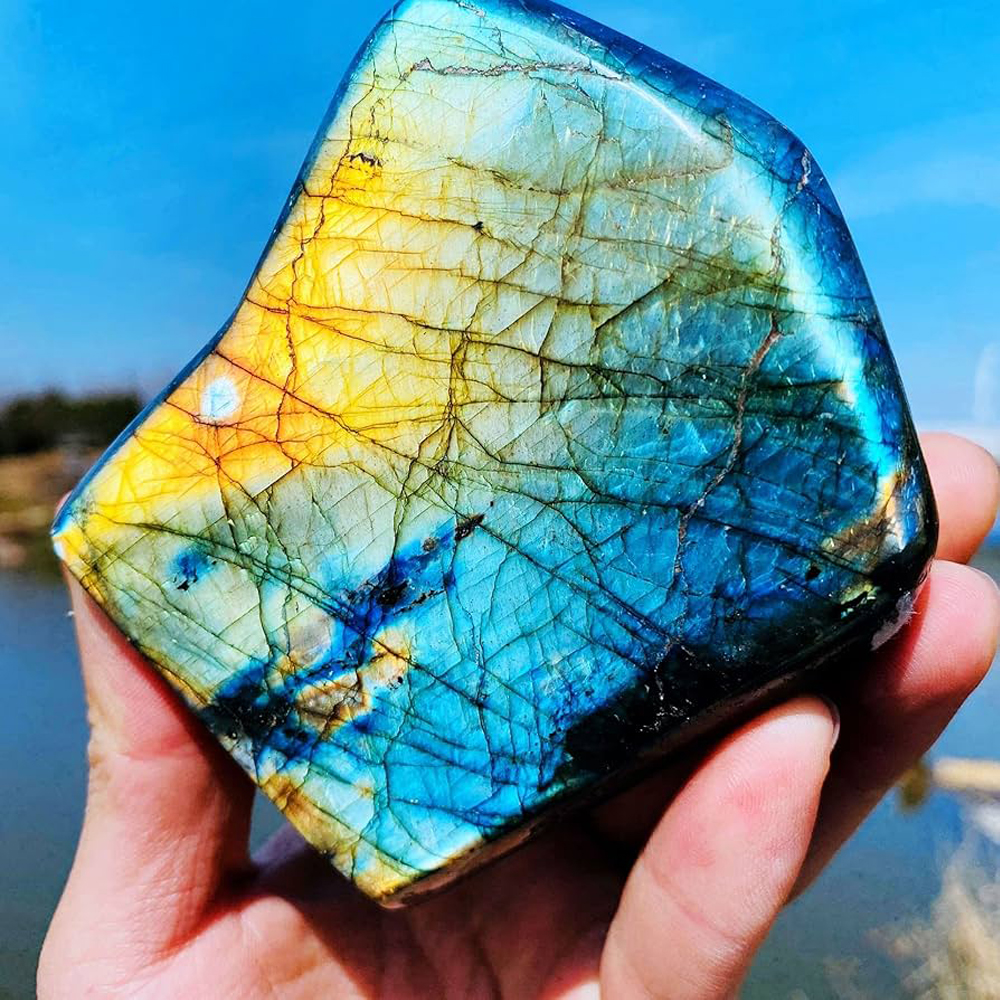
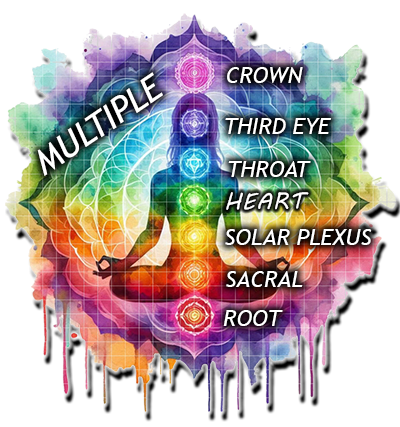
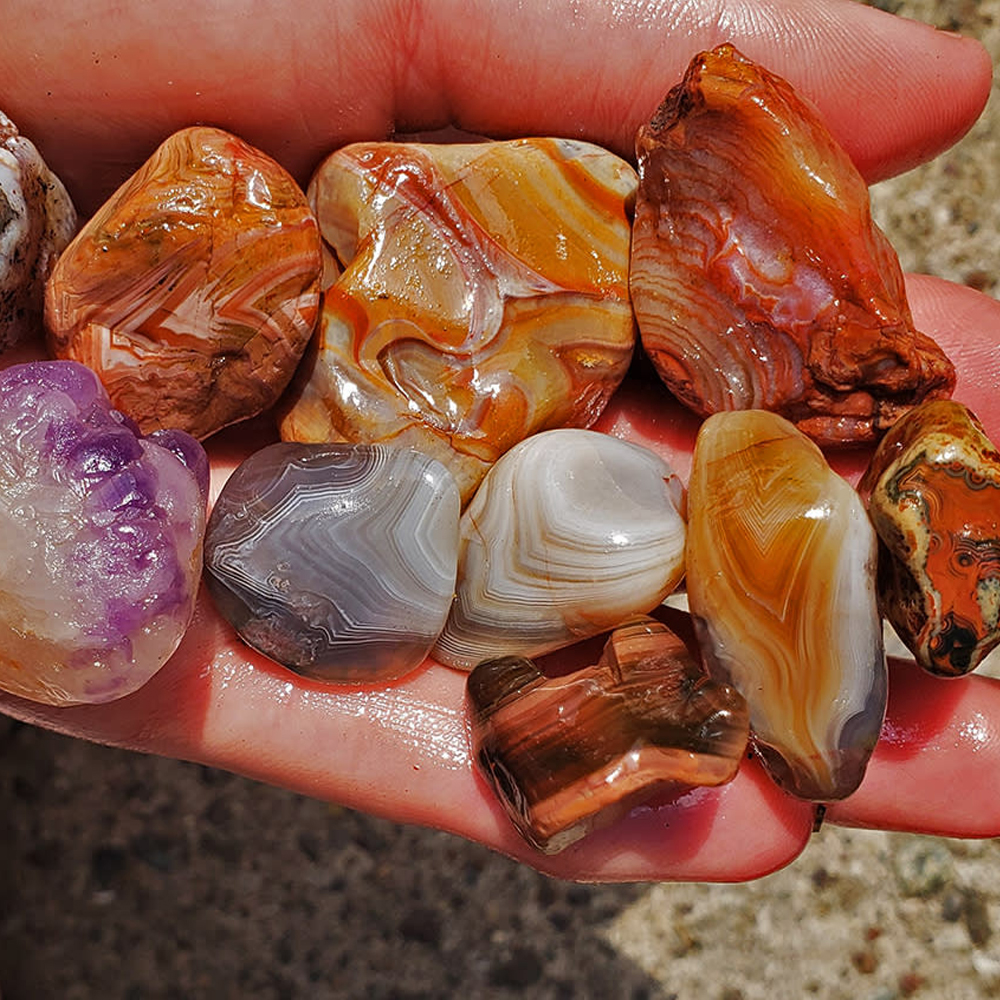 Lake Superior Agates are banded chalcedony nodules that formed in the gas vesicles of ancient Canadian lava flows. Glaciers then scoured them from their host rock and carried them south into the Great Lakes region of the United States. They are beautiful red, brown and often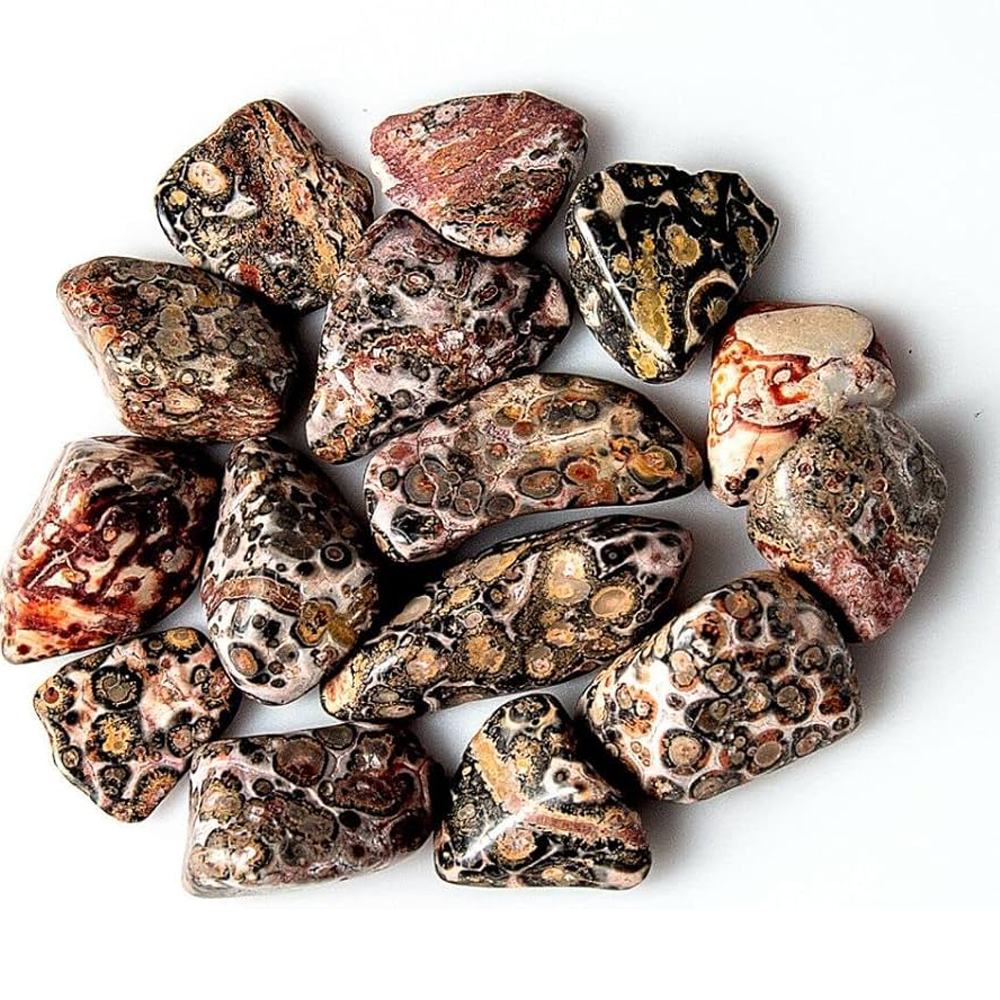
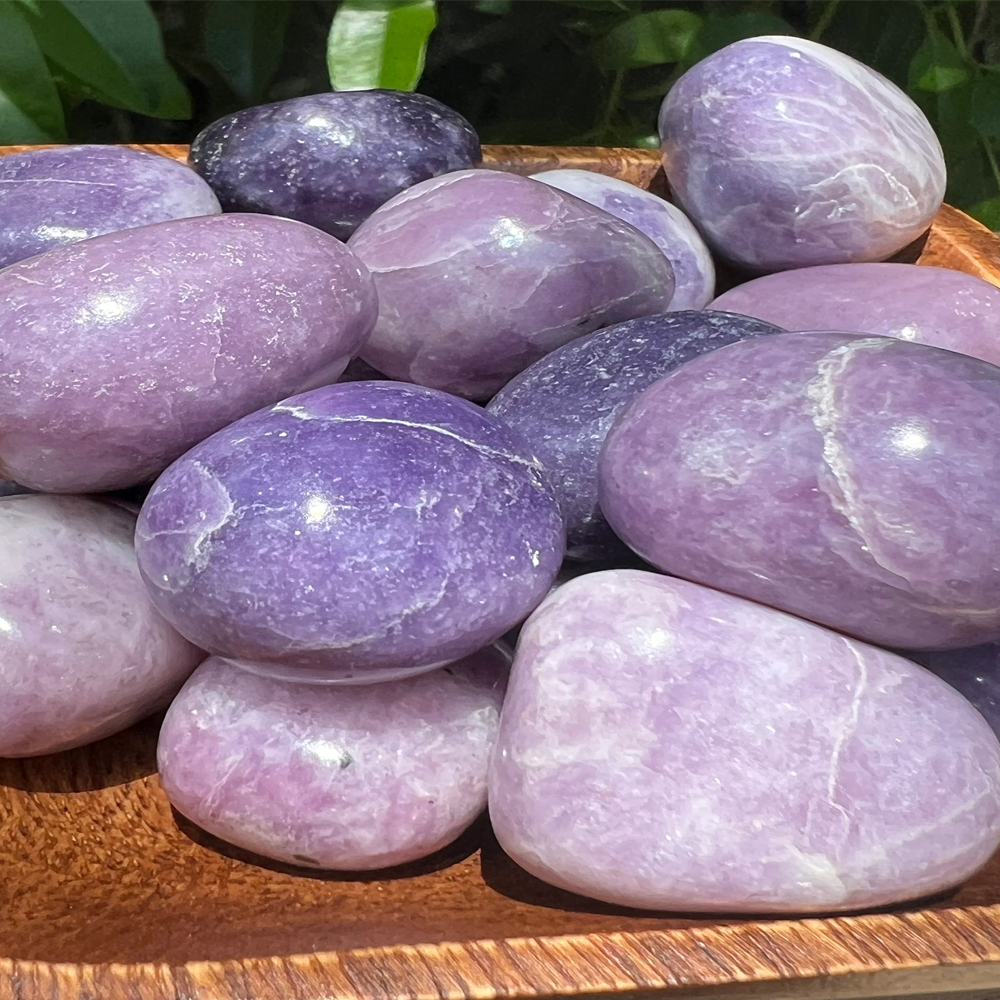
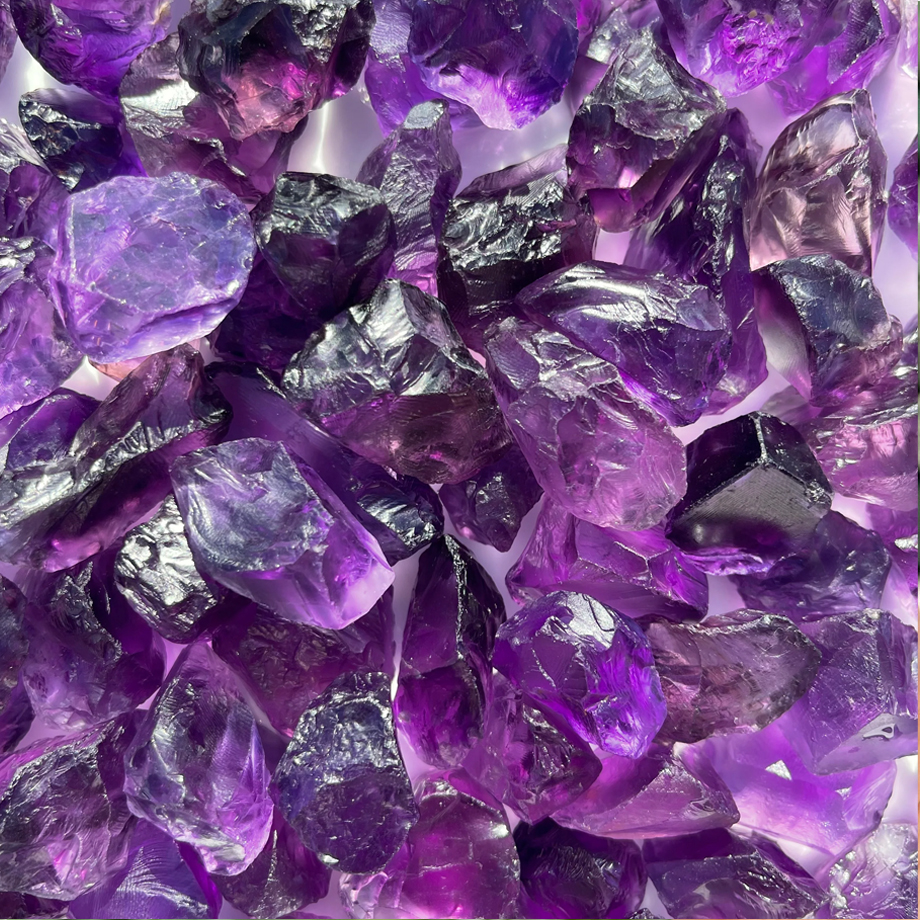
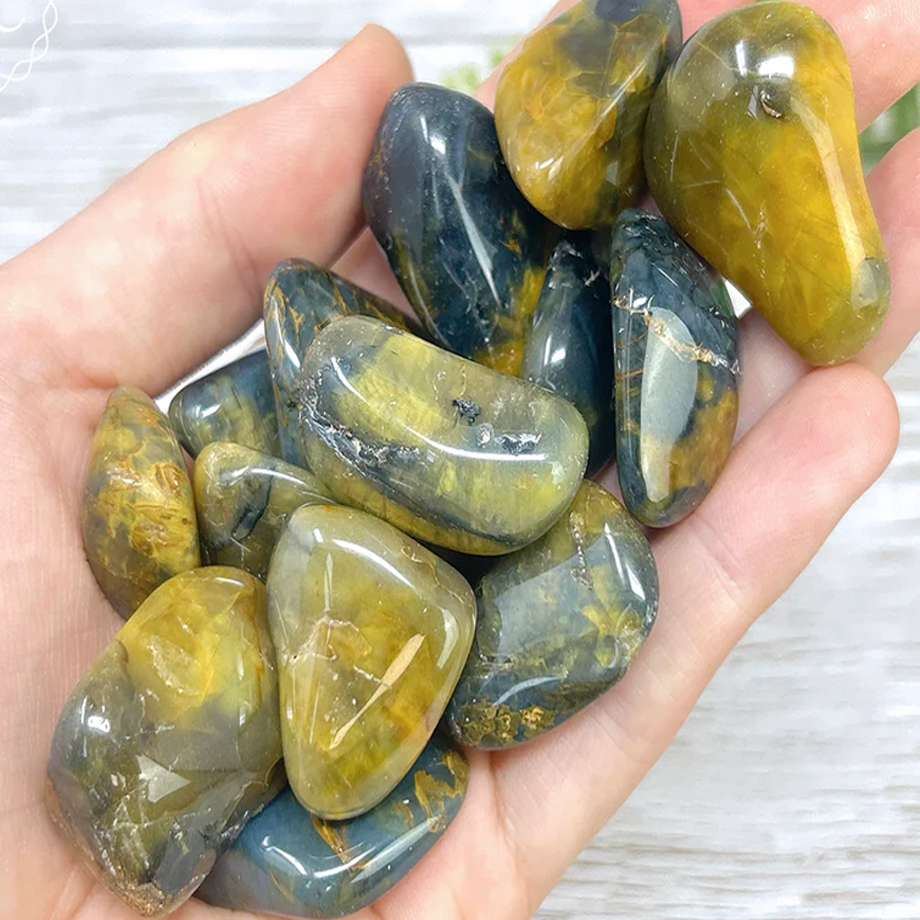 Lionskin - Lionskin is a rock that contains fragments of golden tiger's-eye and other material cemented in a clear quartz or milky agate matrix. It might be considered a "tiger's-eye breccia" because the tiger's-eye fragments are angular in shape. Many of the breccia fragments display the chatoyance that gives tiger's-eye its name.
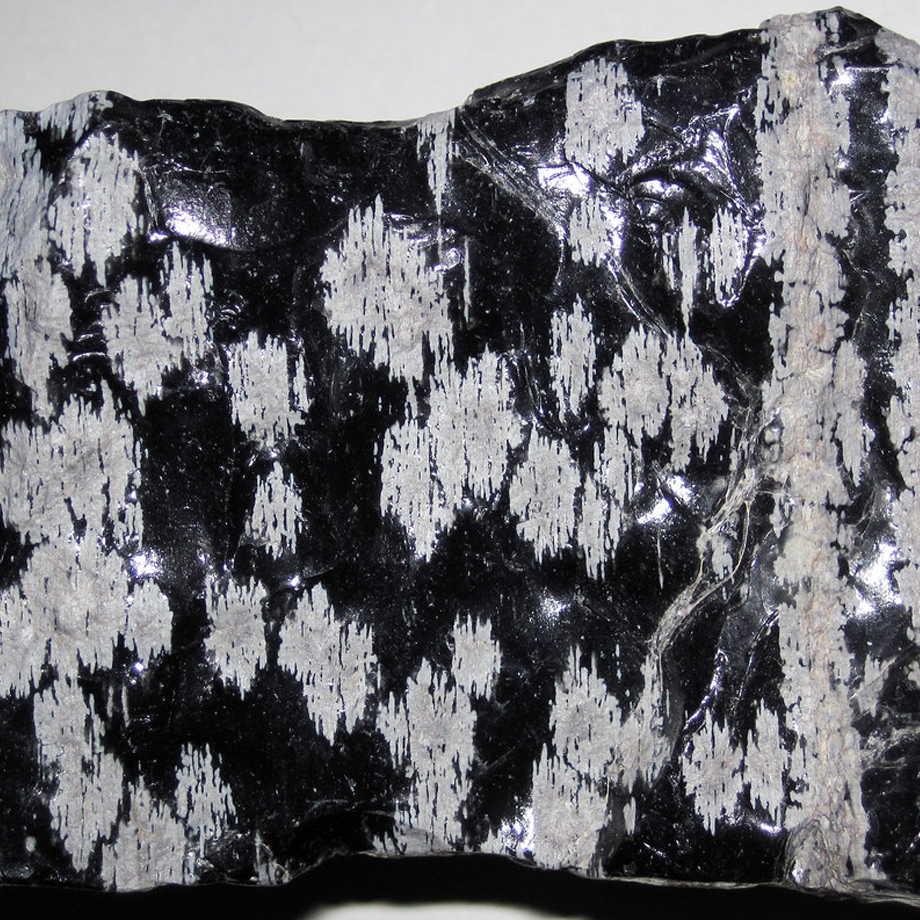
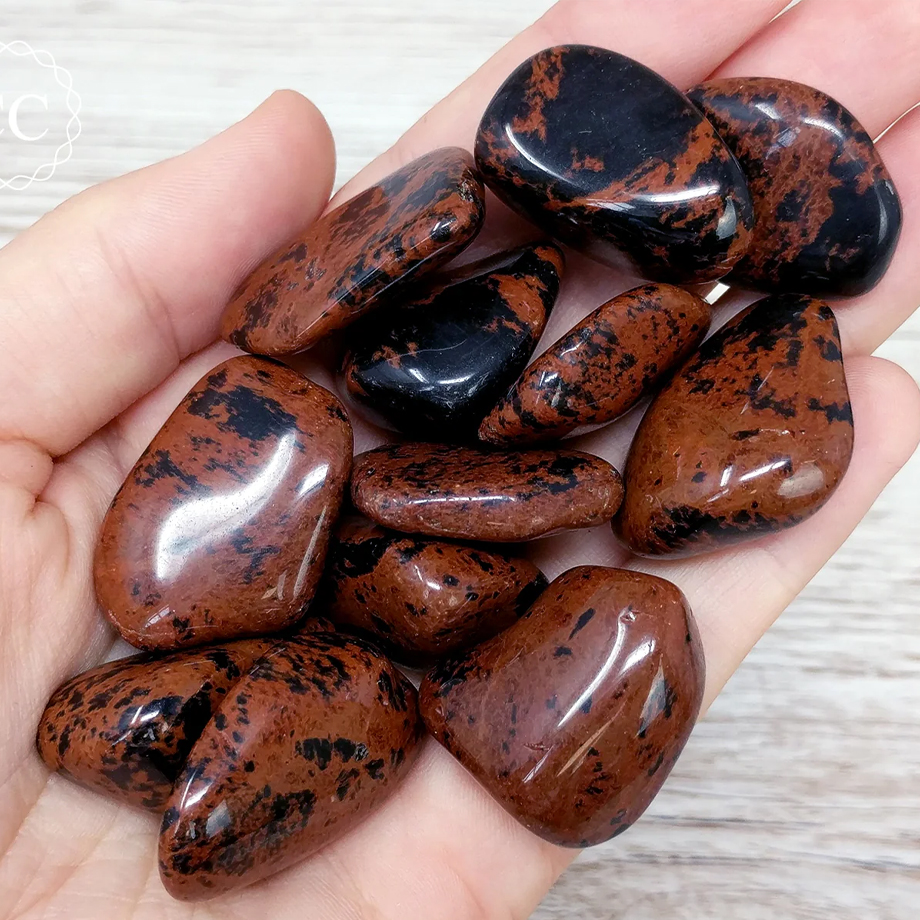 Mahogany Obsidian is a rare variety of obsidian (a natural volcanic glass) that gets its name from its brown color. It ranges from a "black obsidian with brown markings" to a solid brown material. It accepts a very bright polish and is very popular because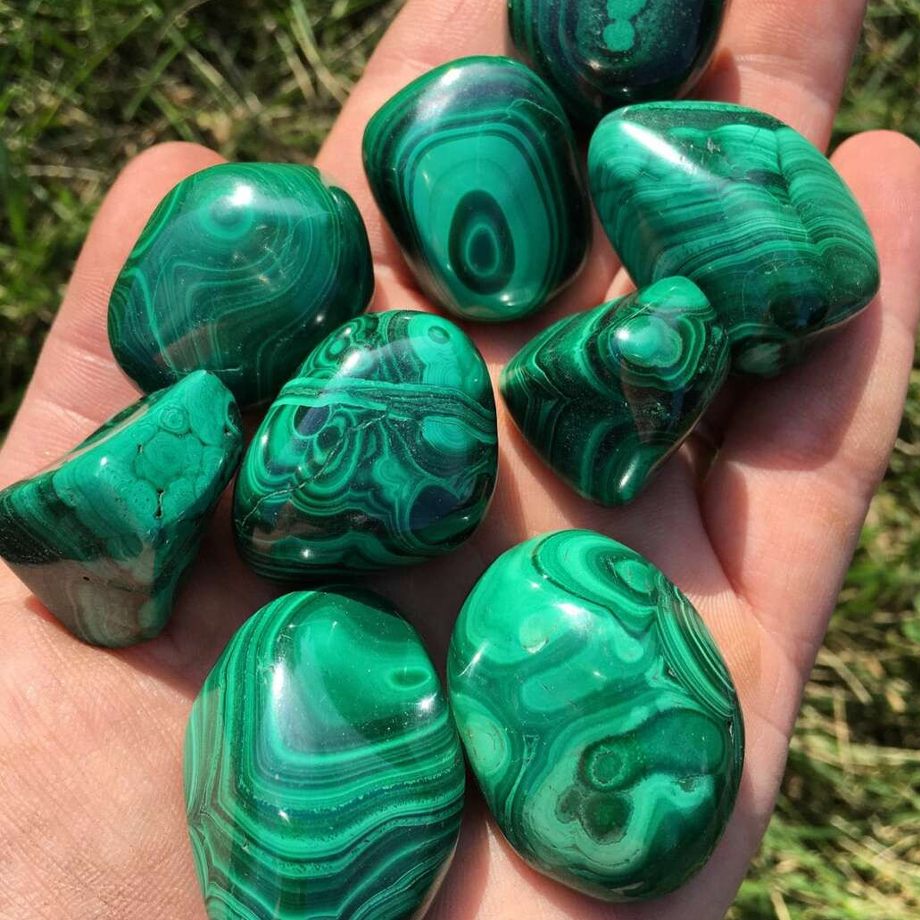
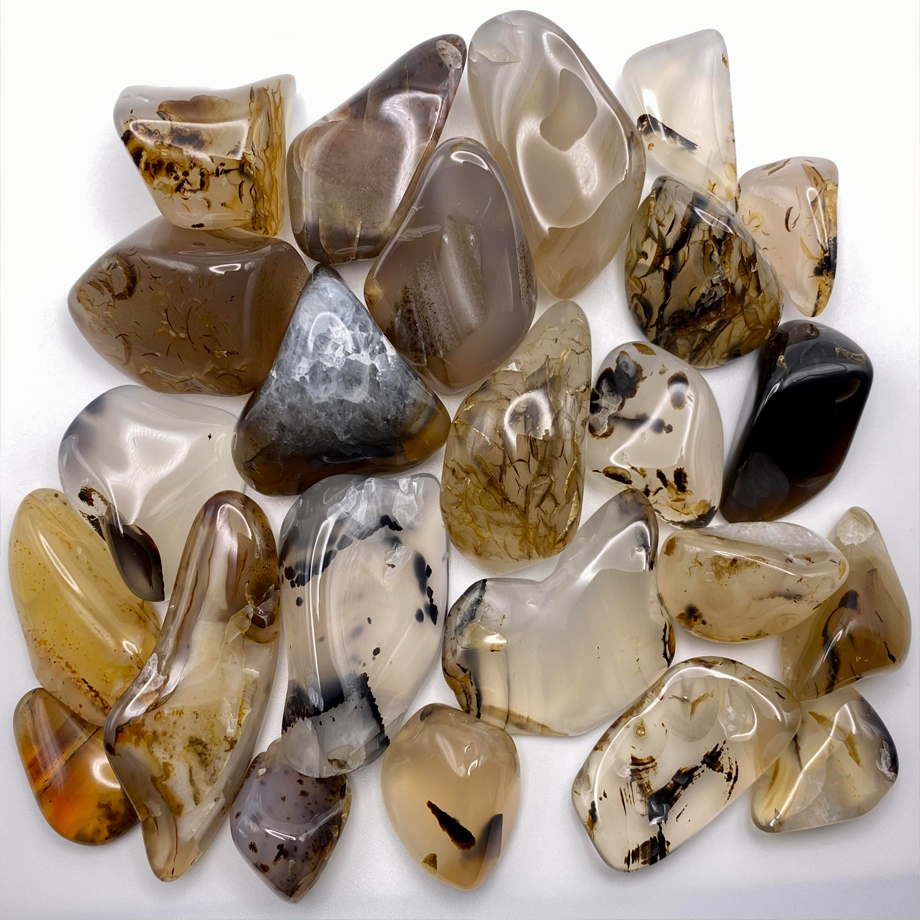 Montana Moss is a transparent to translucent agate with brown and black mossy inclusions. The base color ranges from clear through milky to amber brown. It is named after the State of Montana, where it is found at many locations and is a popular rough with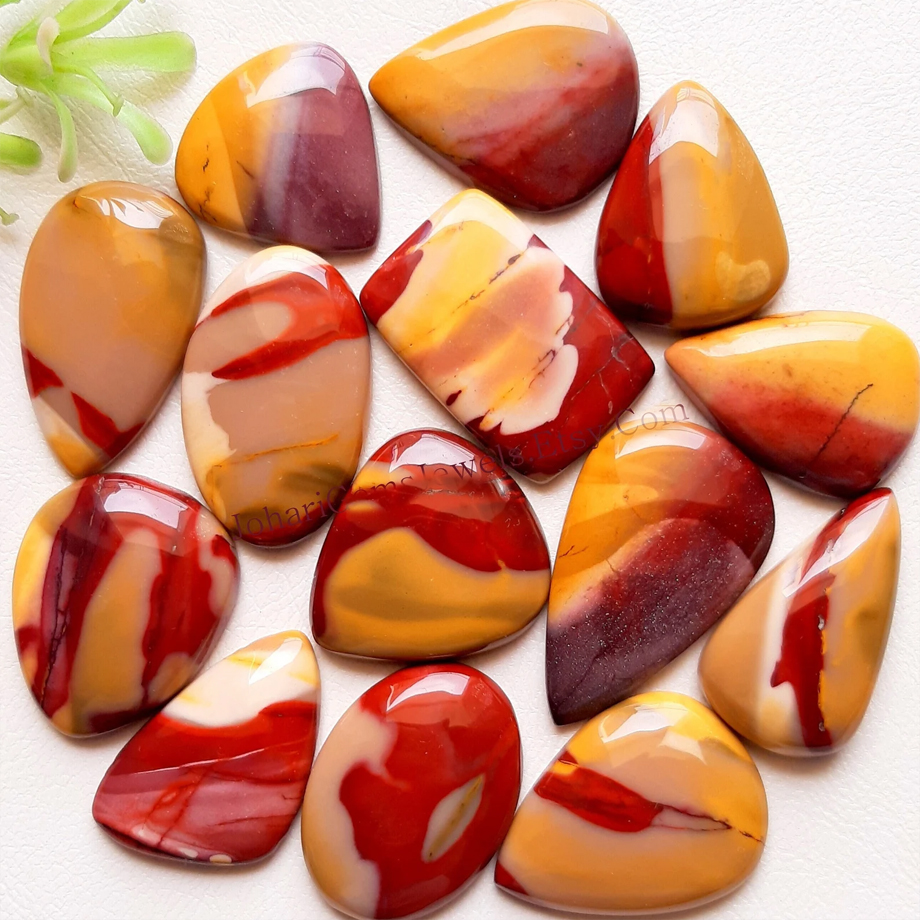
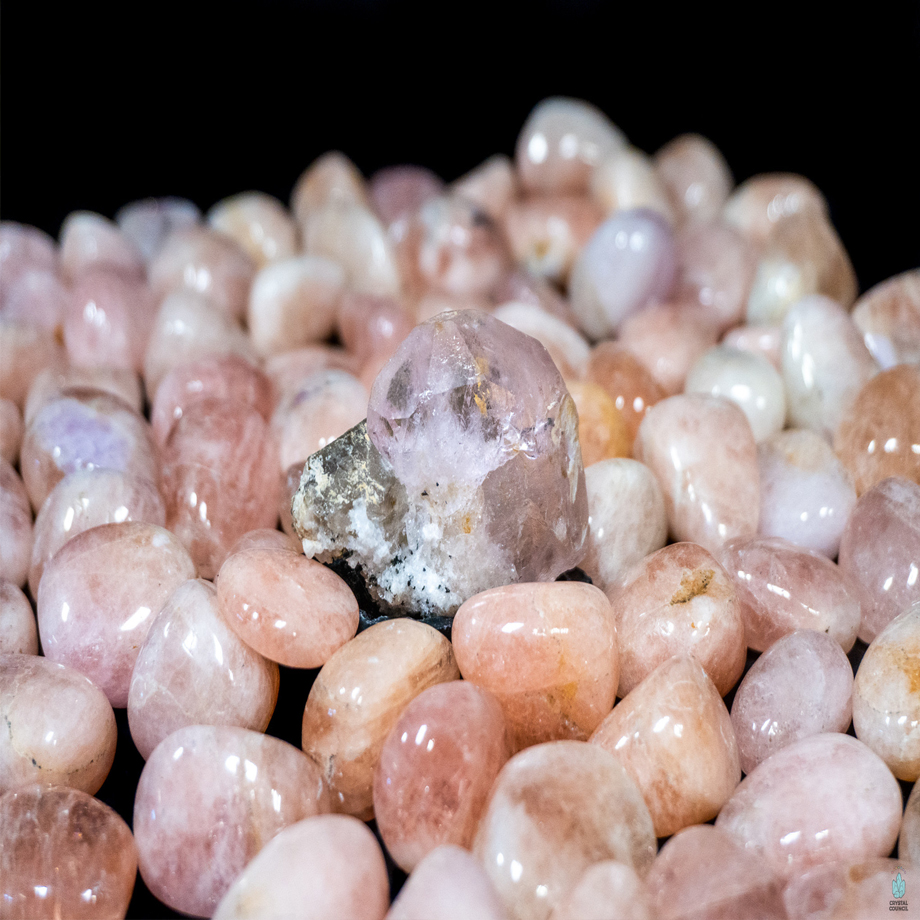
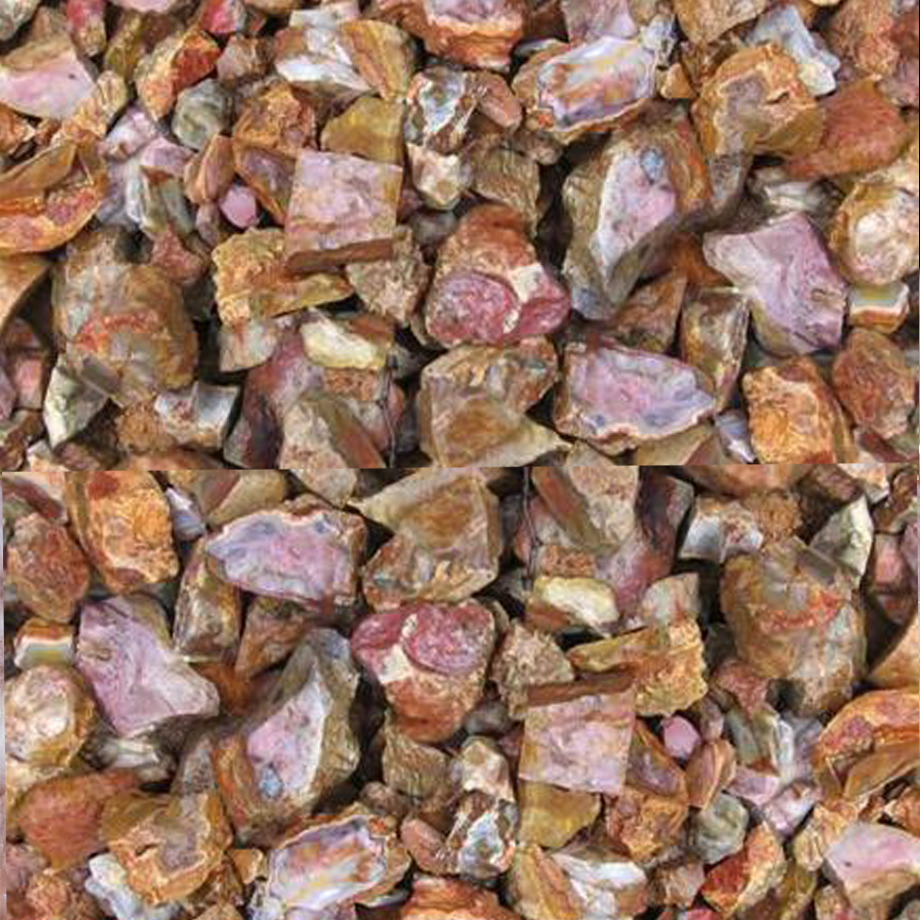
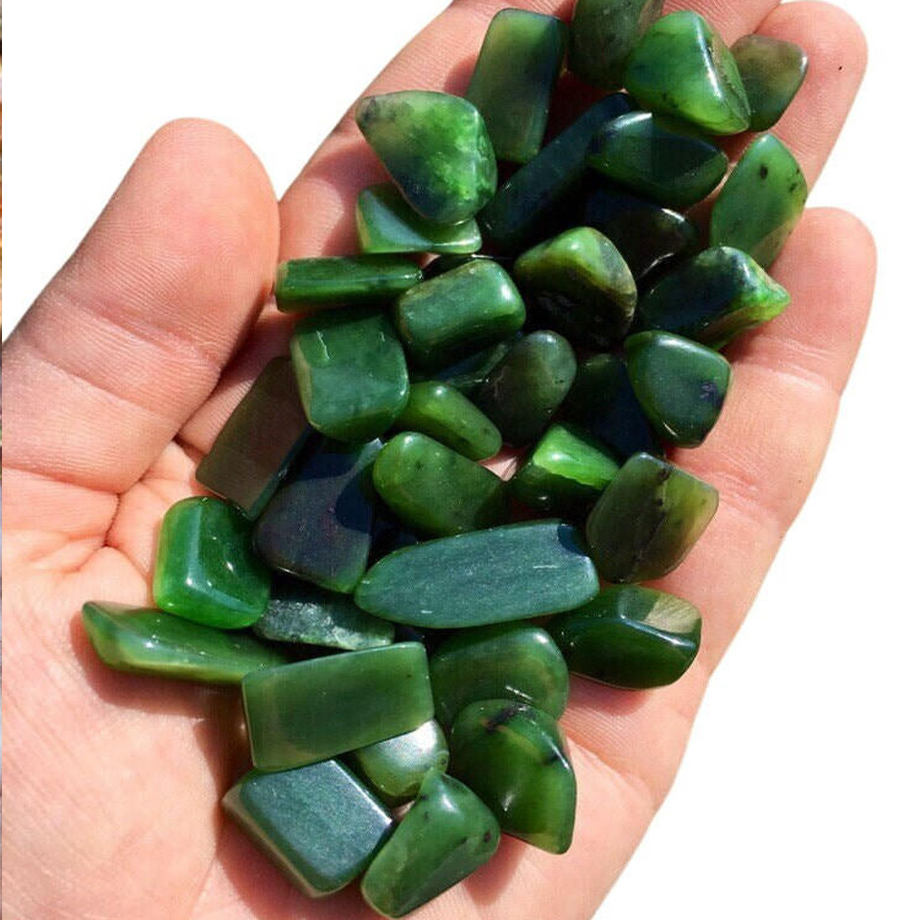
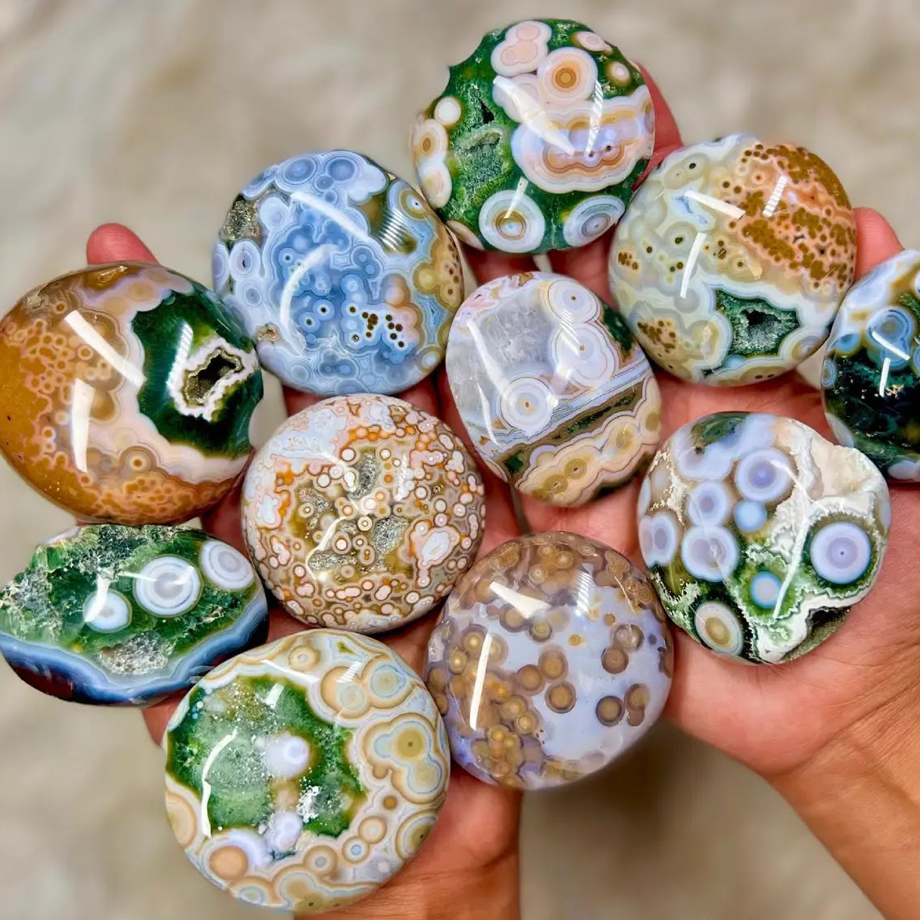
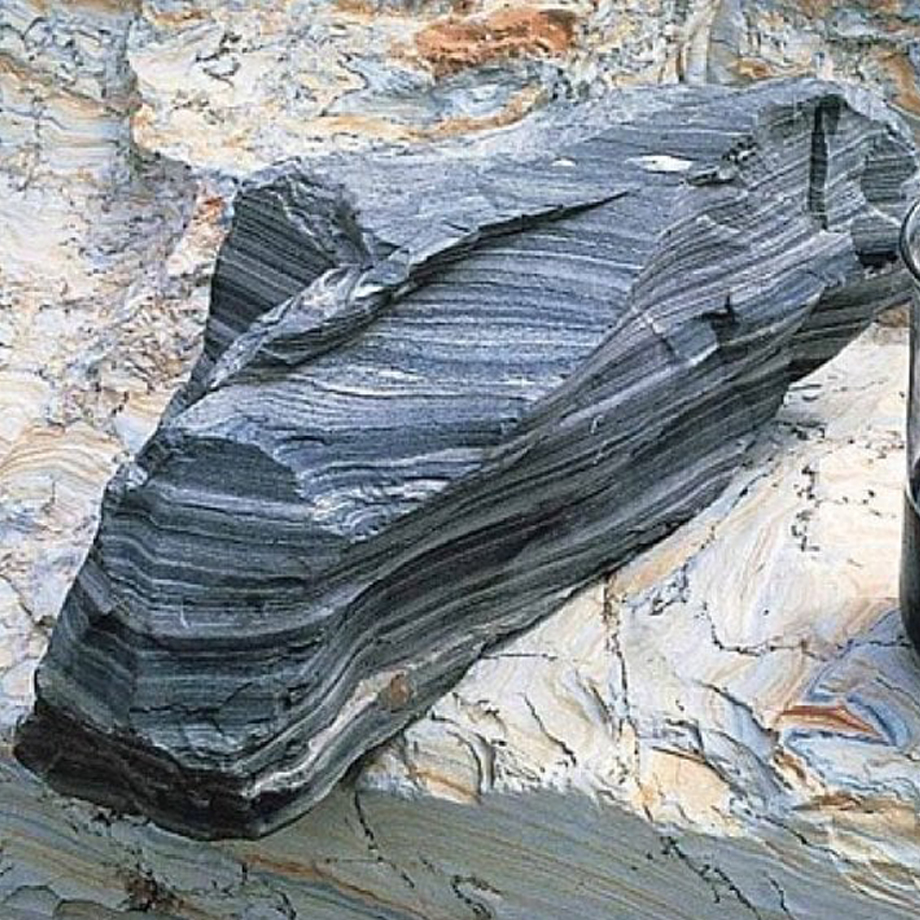
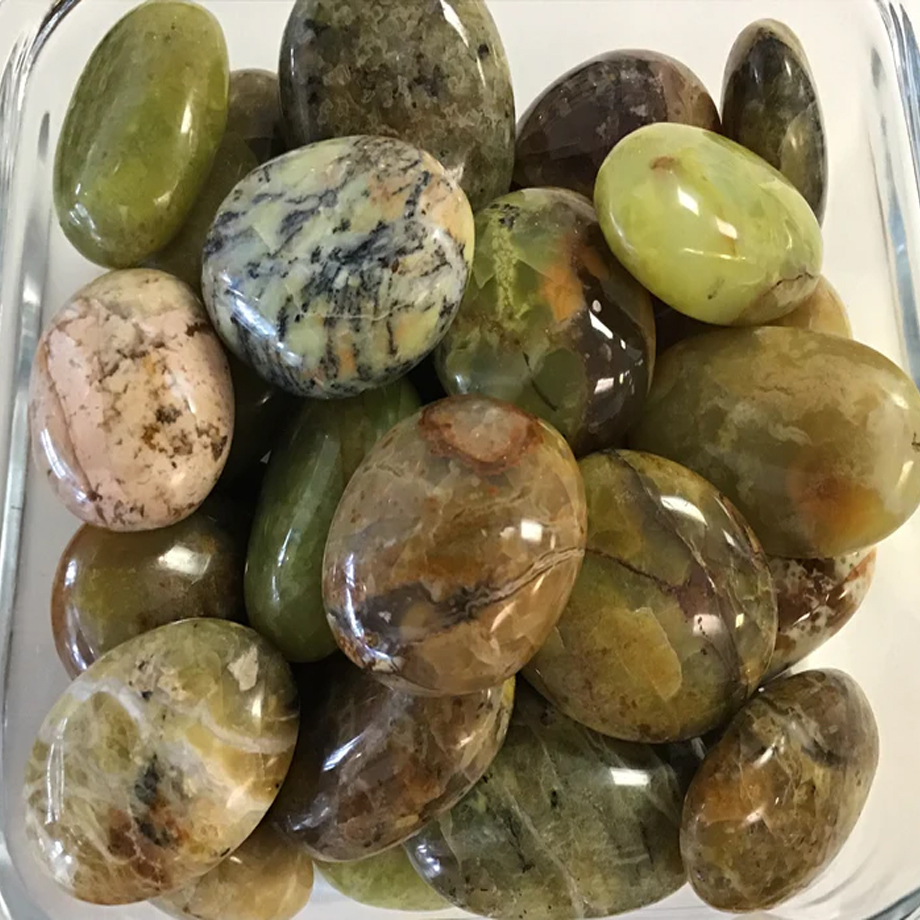
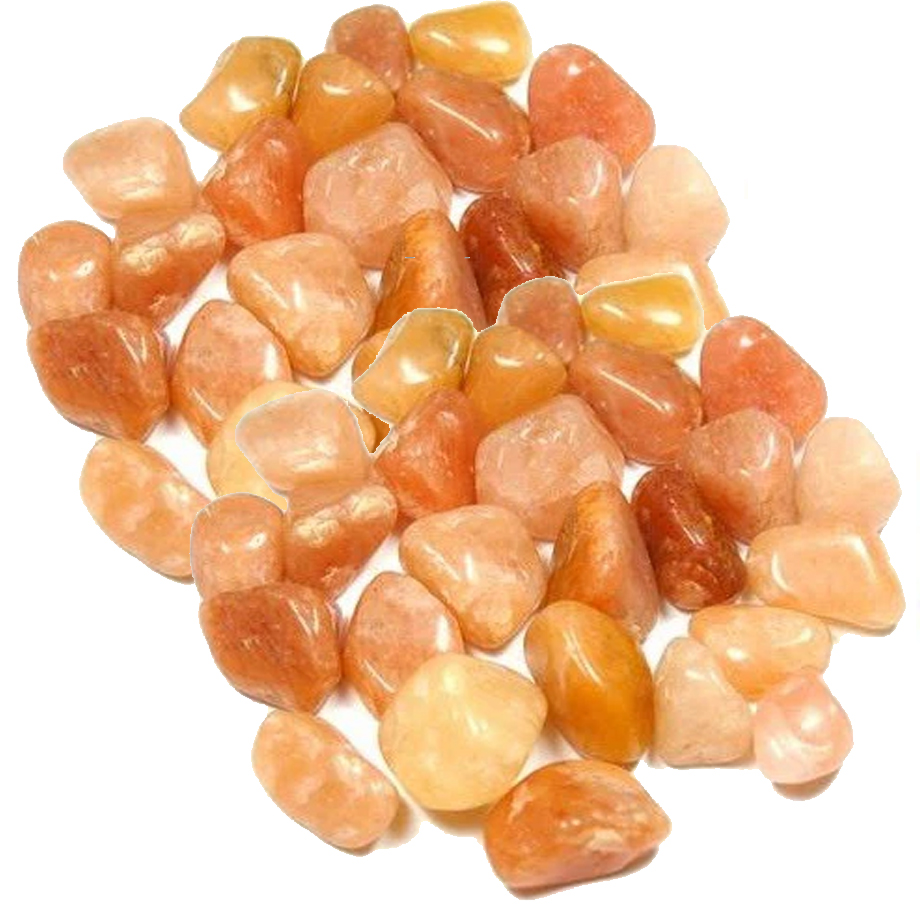
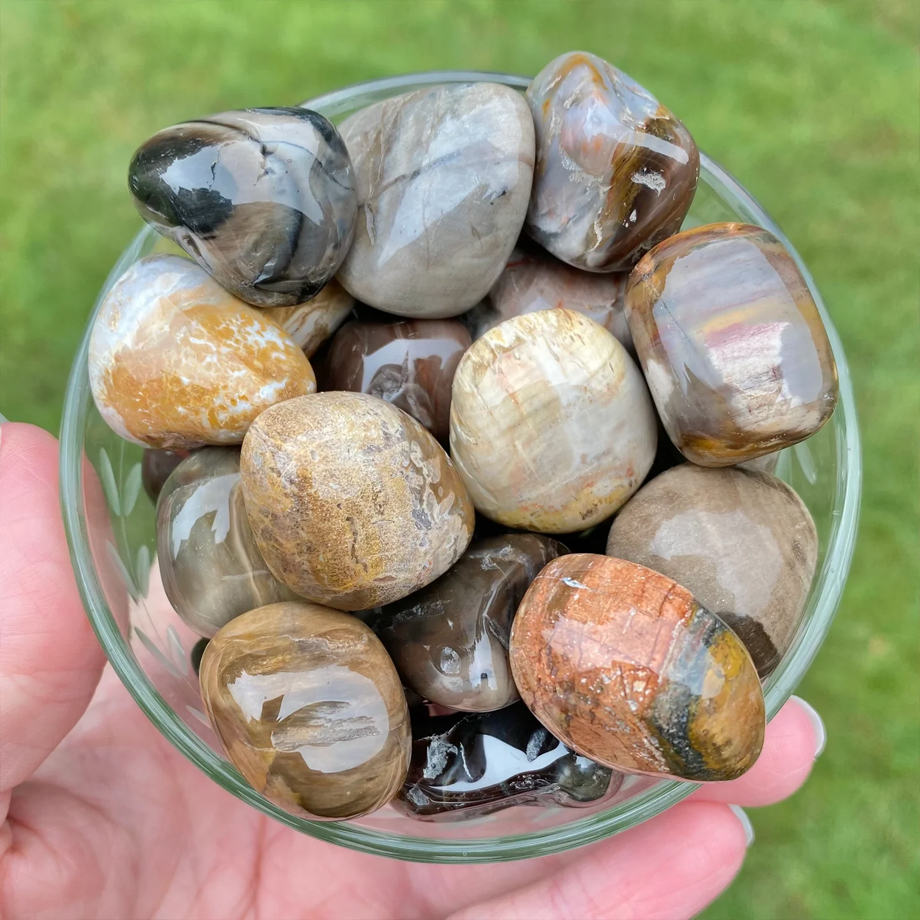 Petrified wood forms when plant debris is buried and then replaced by mineral material such as chalcedony or opal. This often occurs when a forest is buried under a volcanic ash fall. When polished, these pieces of wood often display interesting grain patterns that can sometimes be linked to a specific type of plant.
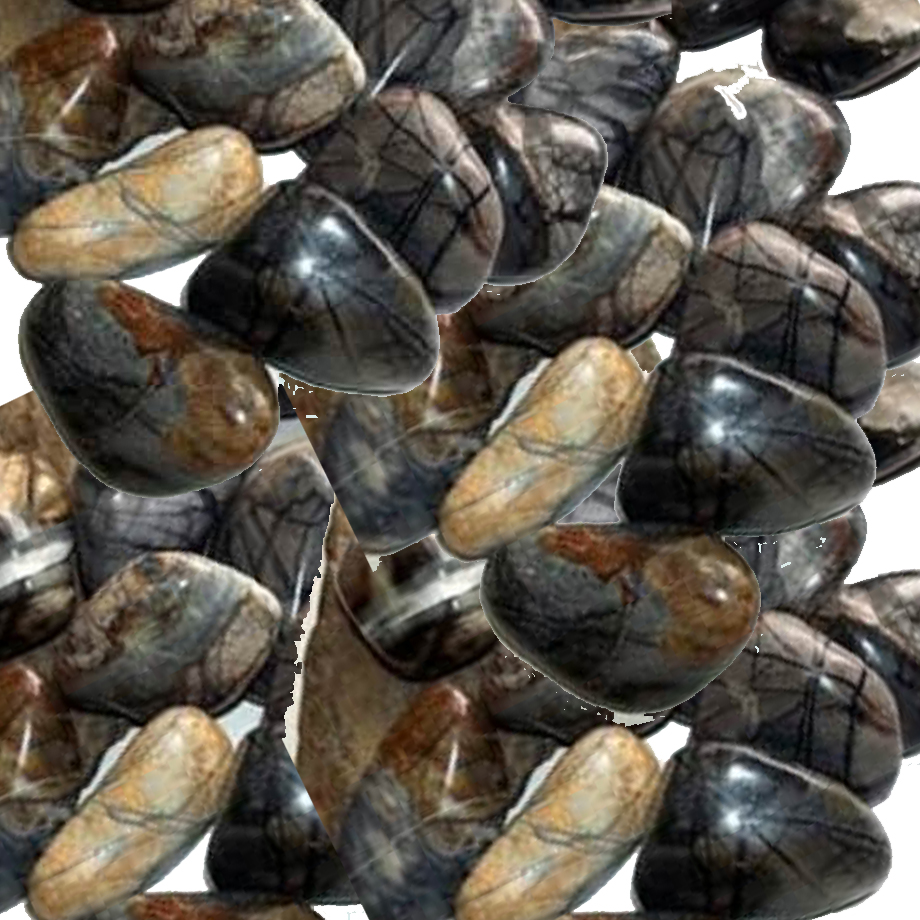
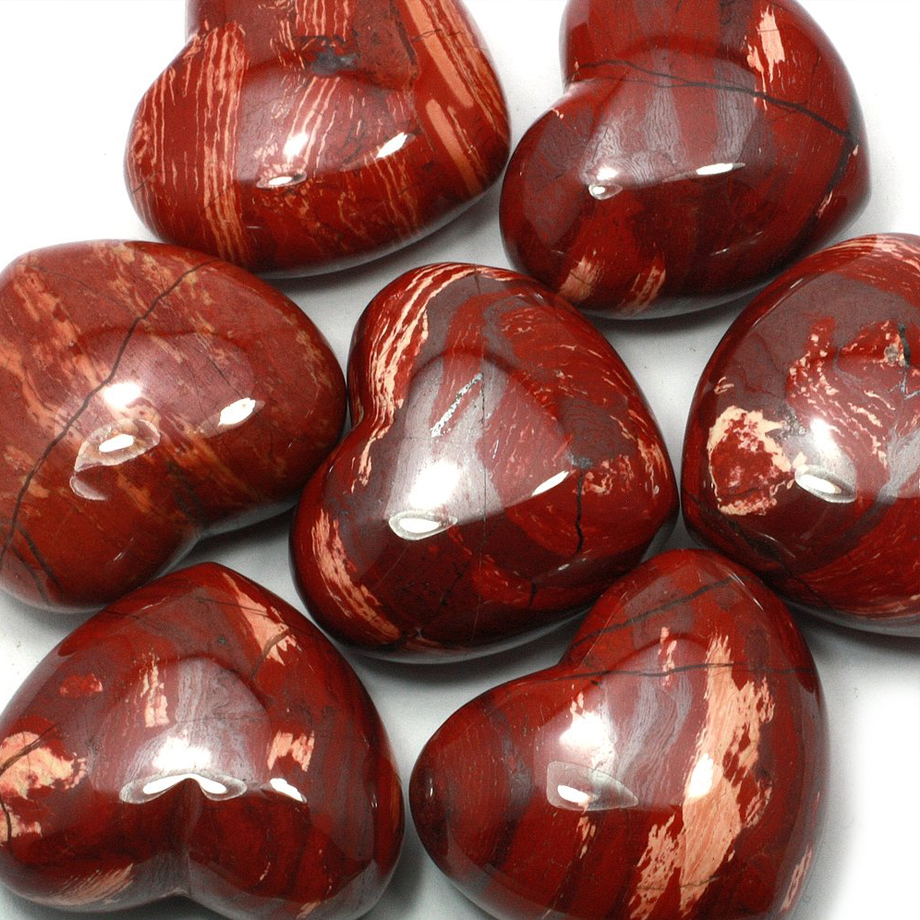 Picture Jasper is a material marked with colors and patterns that look like "landscape" scenes - thus the name "picture jasper." If you study a stone, you will often find interesting "pictures" of landscapes and deserts. These stones were produced from material found in Namibia (Africa).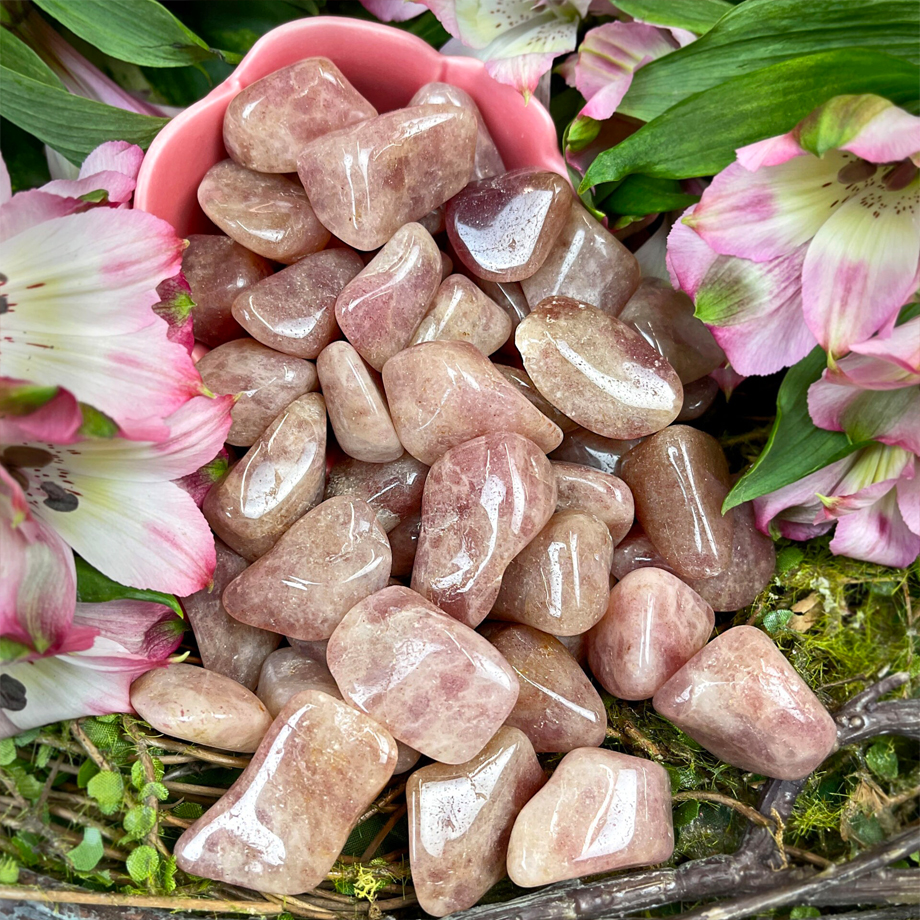
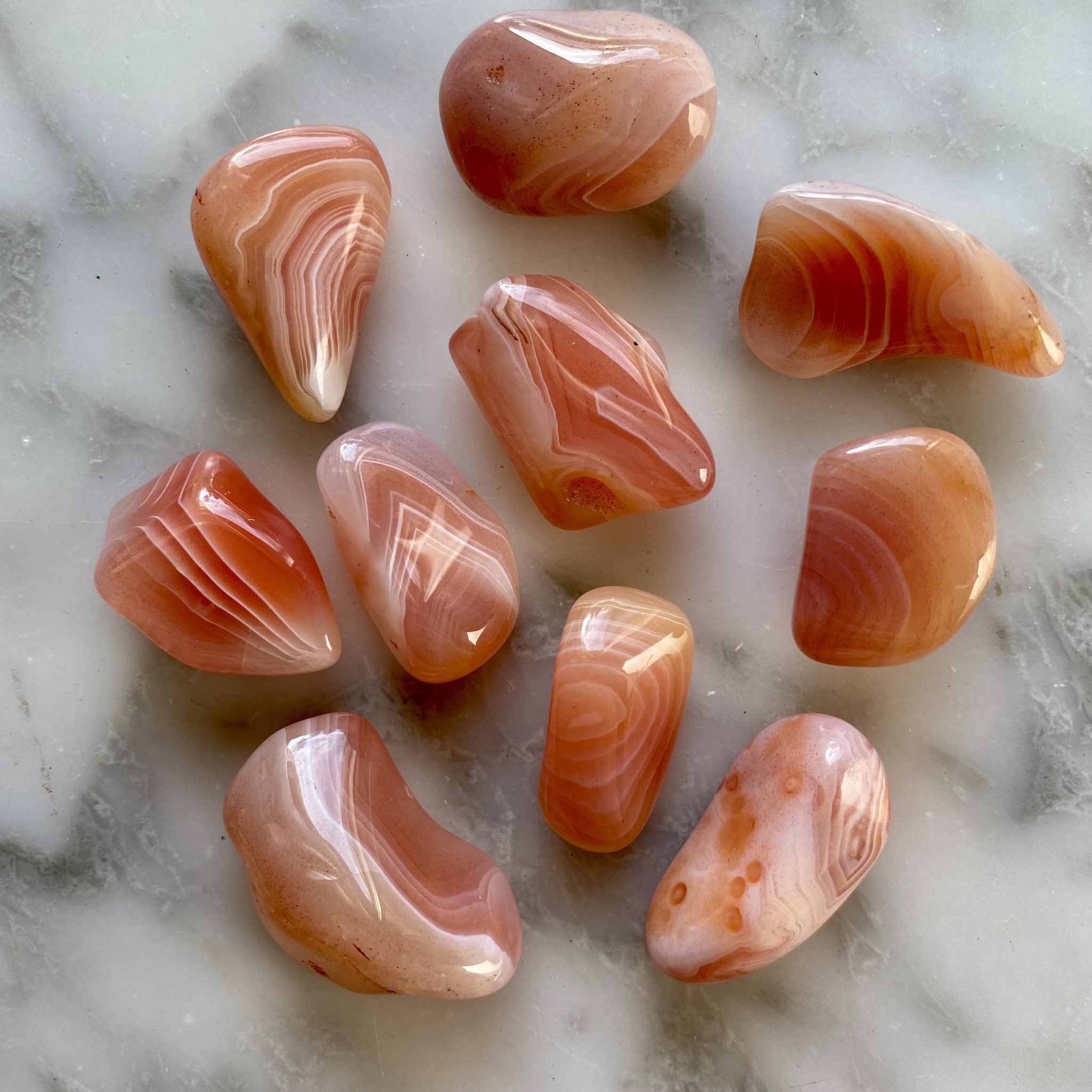
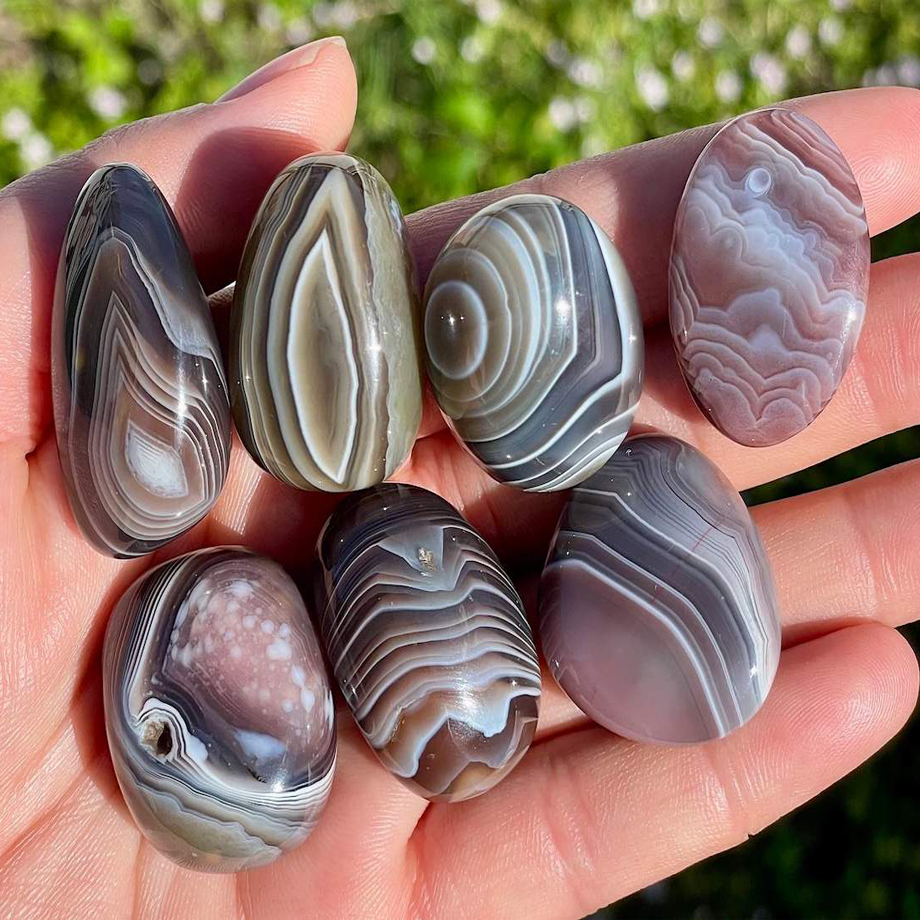
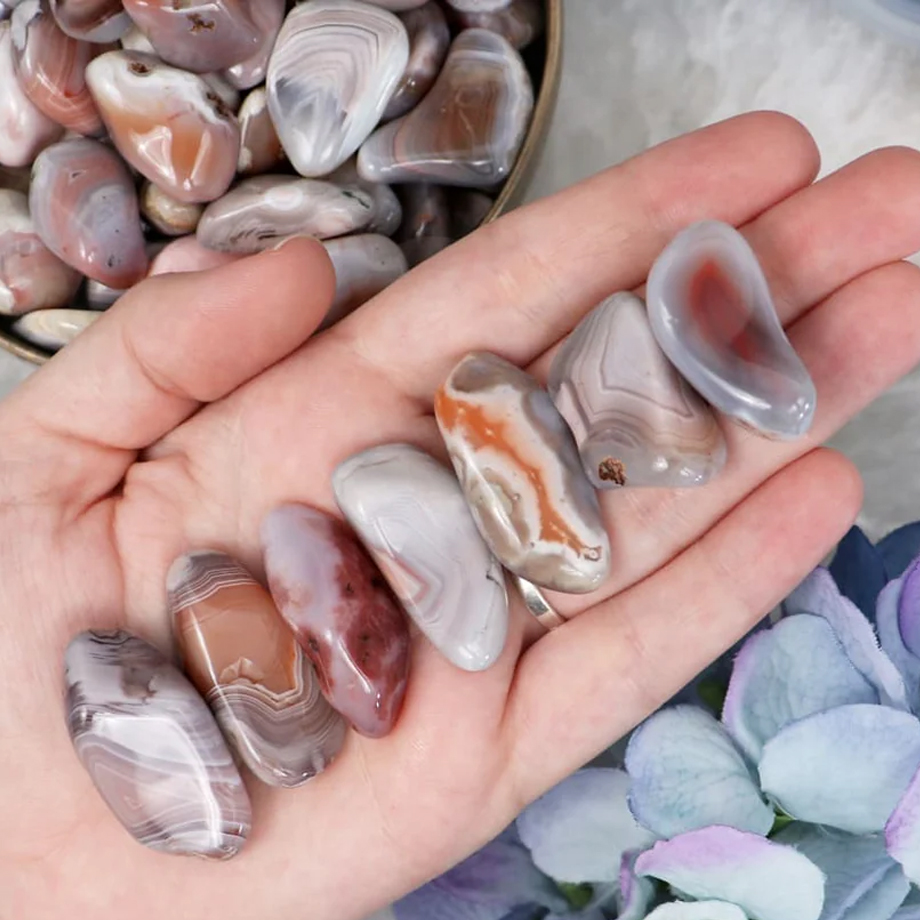 Pink "Botswana agate" is the name given to banded agates produced in the country of Botswana (Africa). Some of these stones occur in a gray through creamy pink color. These are known as "Pink Botswana."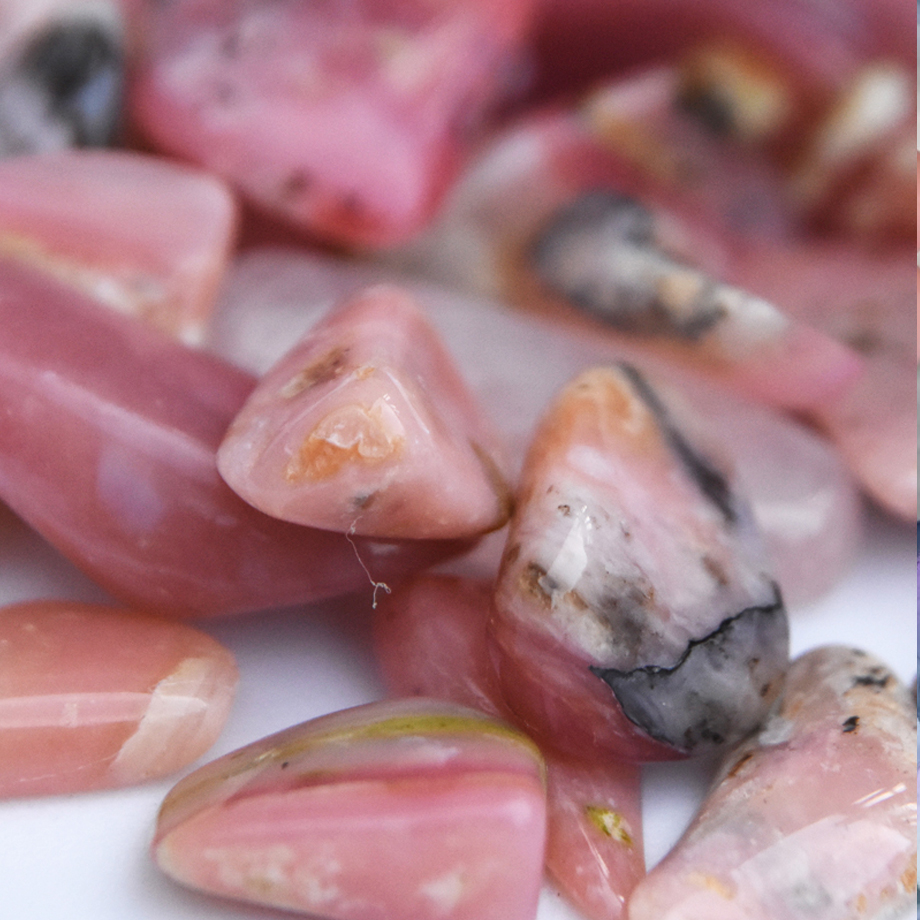
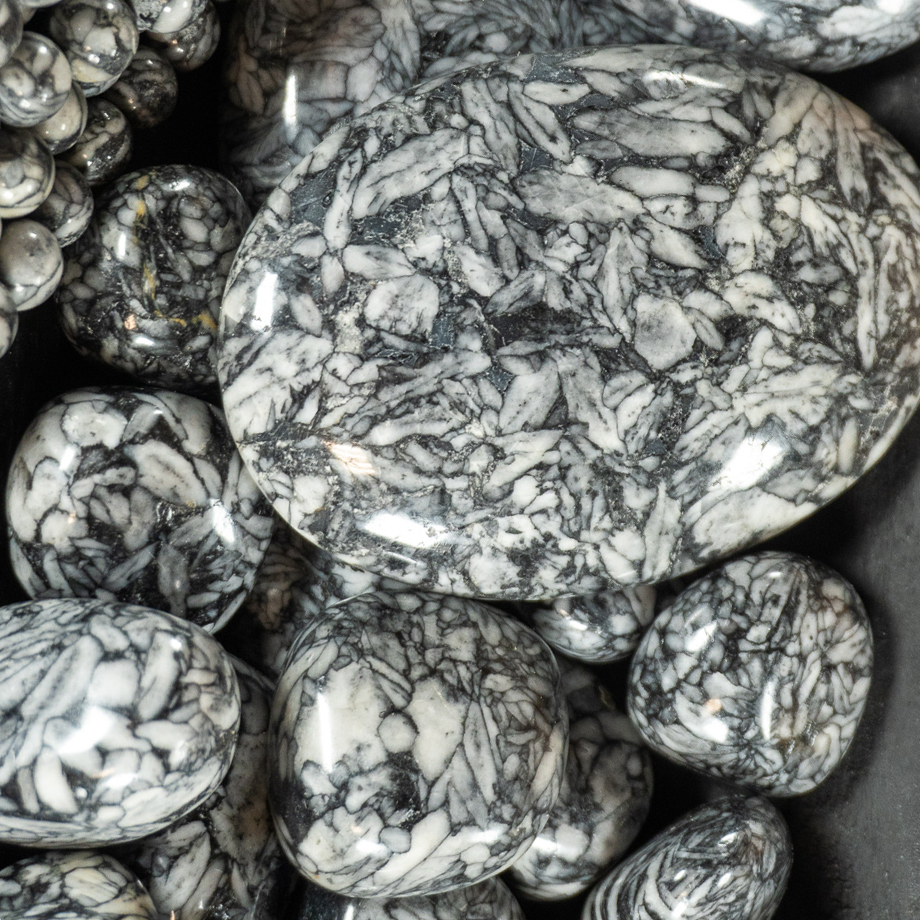
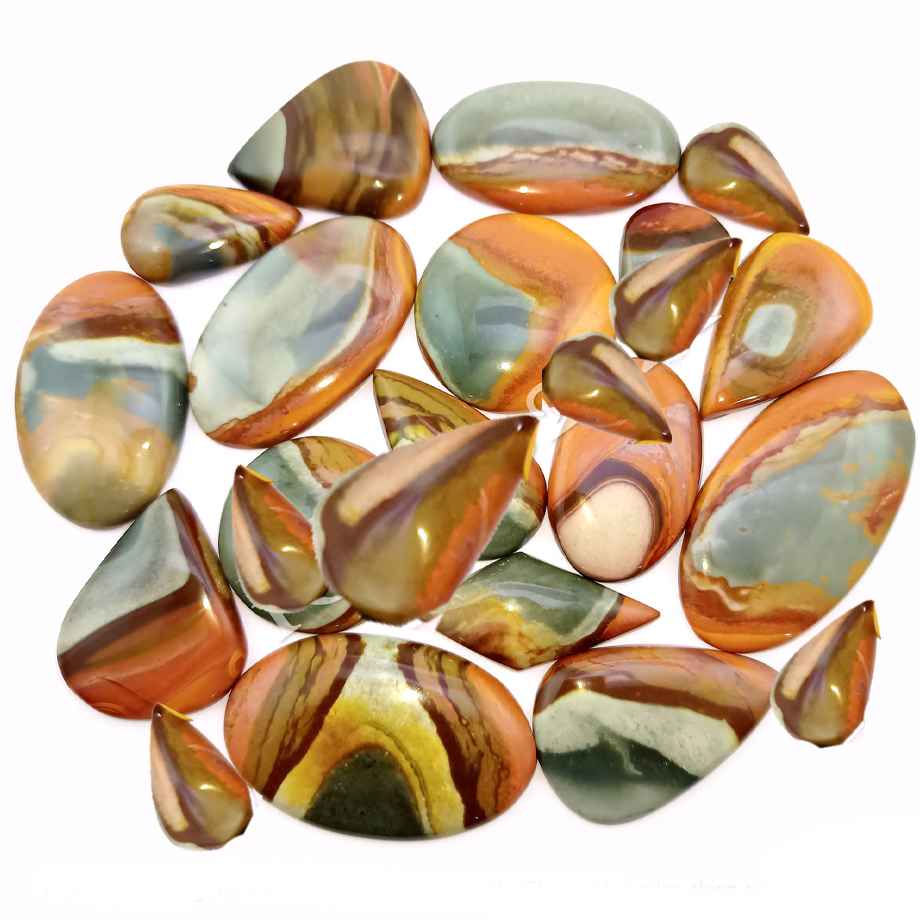
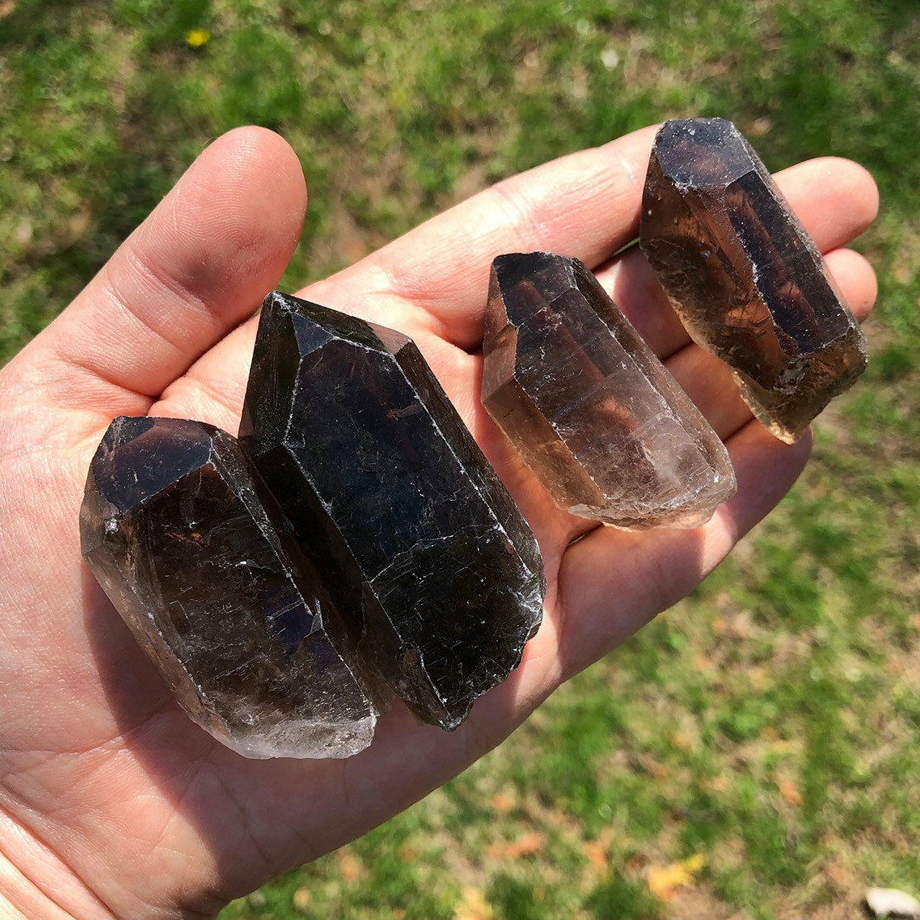
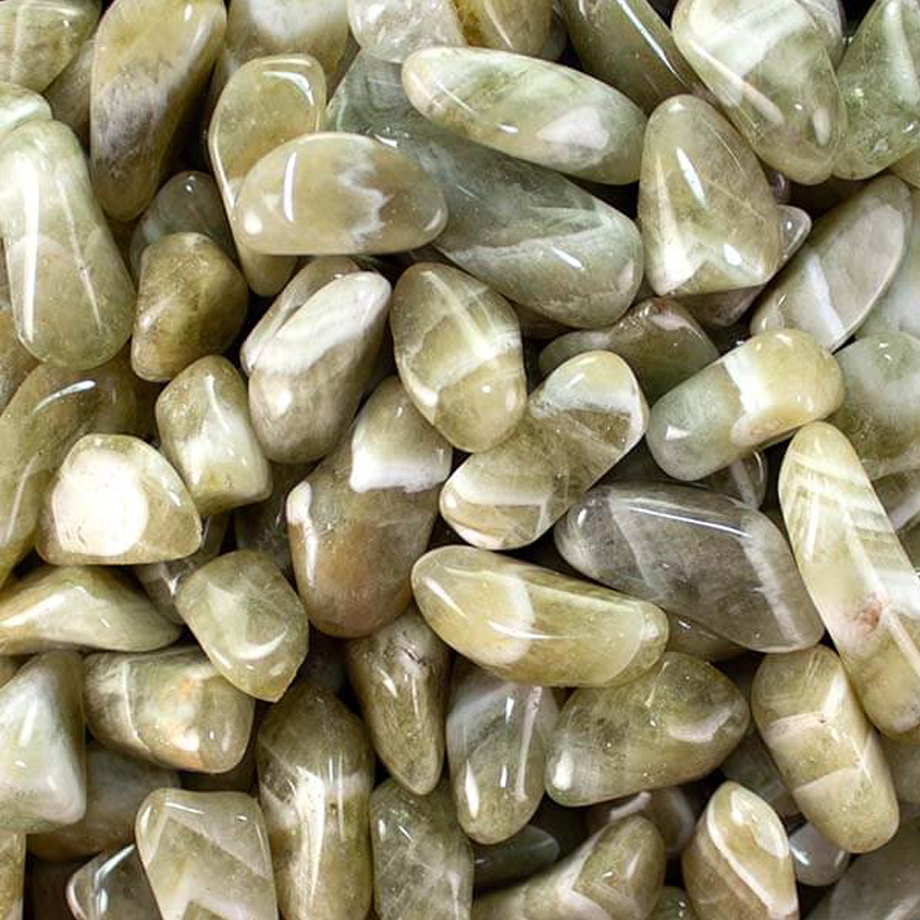 Prasiolite is a green quartz produced when amethyst is naturally heated, or, when amethyst is heated or irradiated by people. Color produced by people should be disclosed if the material is being sold. It is often called "green amethyst" but that name is a misnomer, considered to be deceptive or misleading.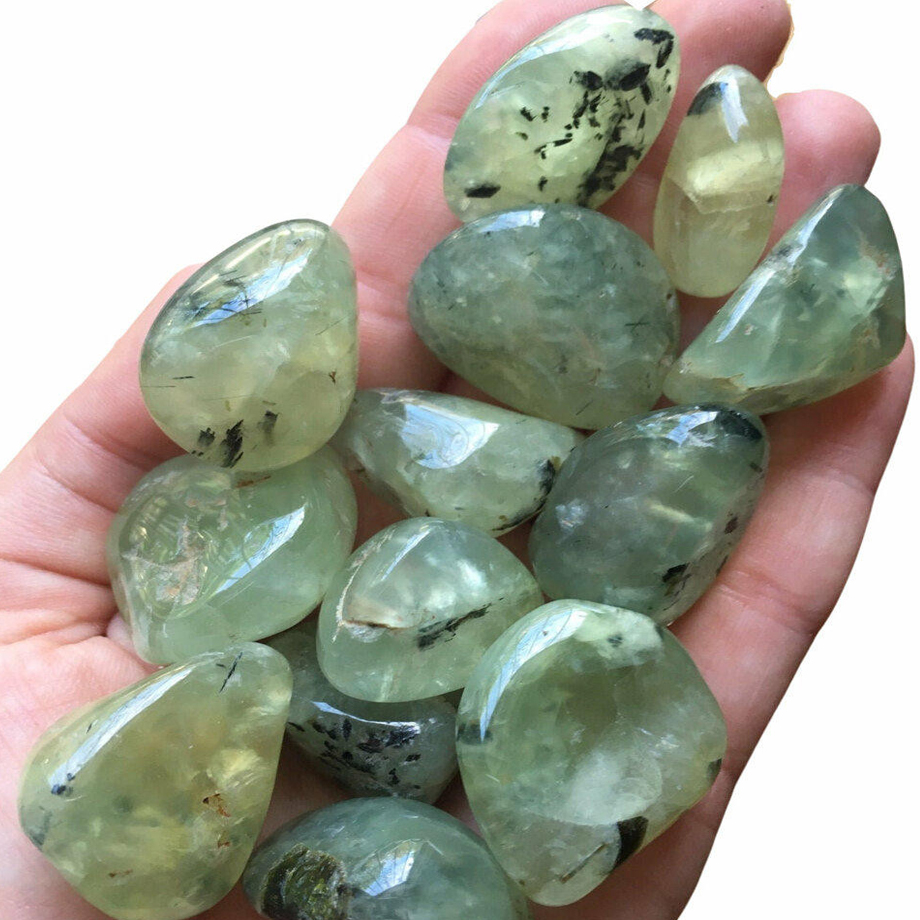
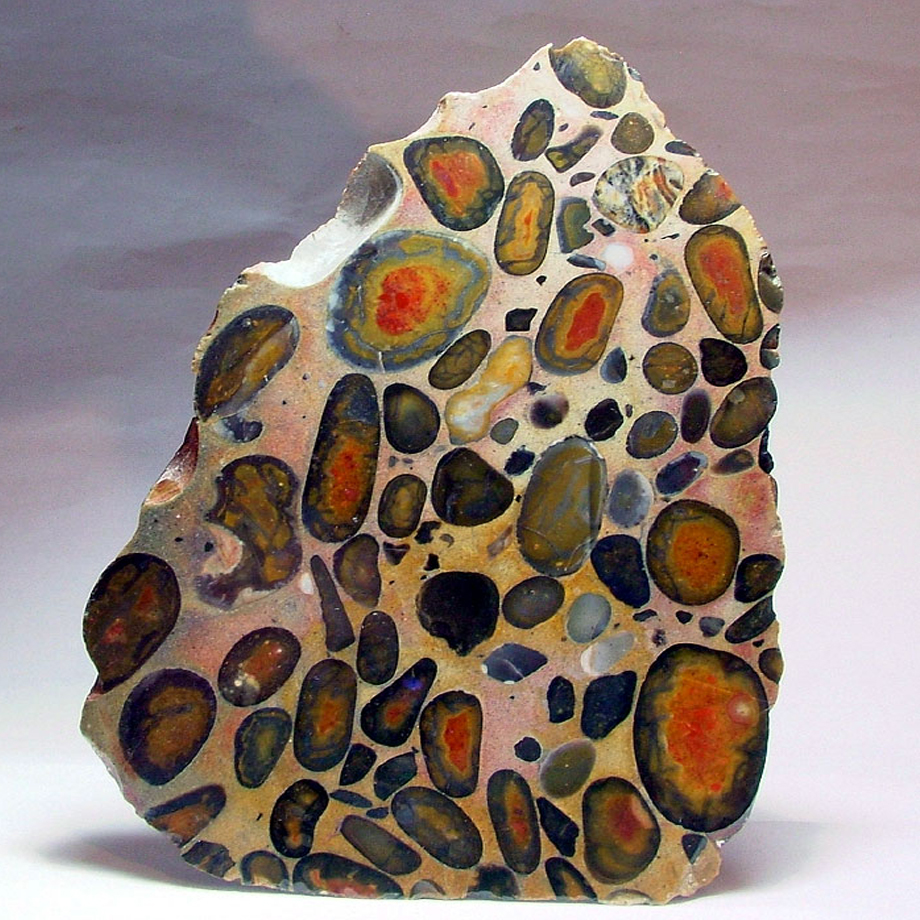
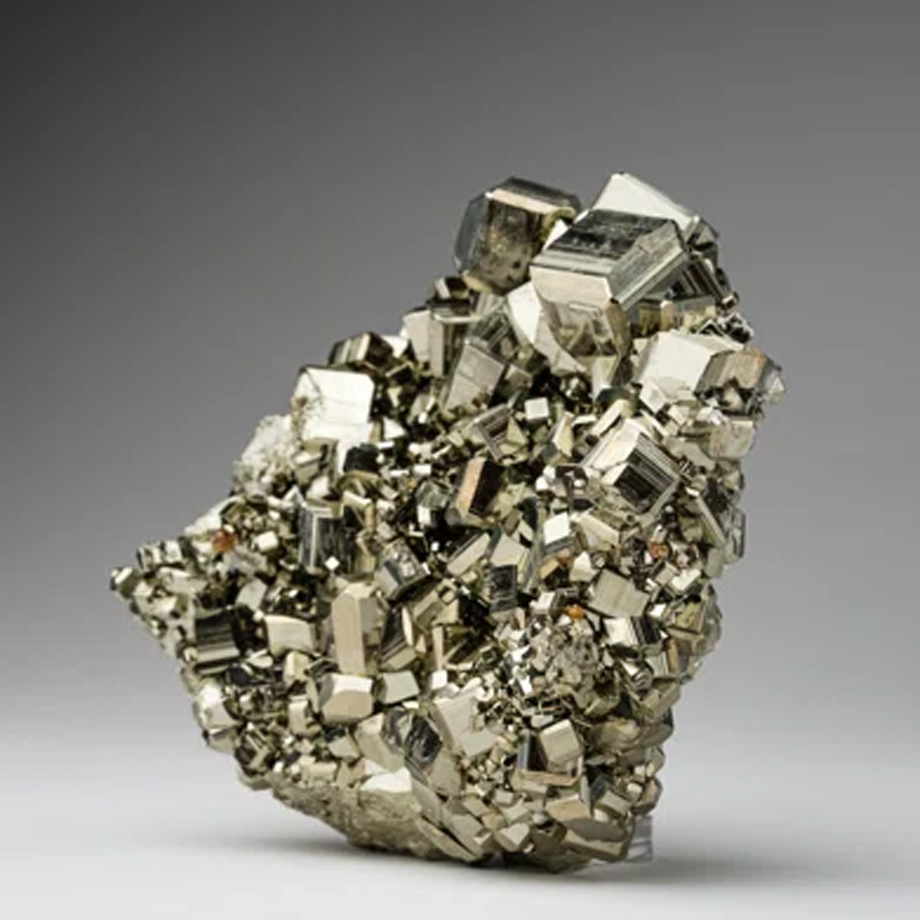
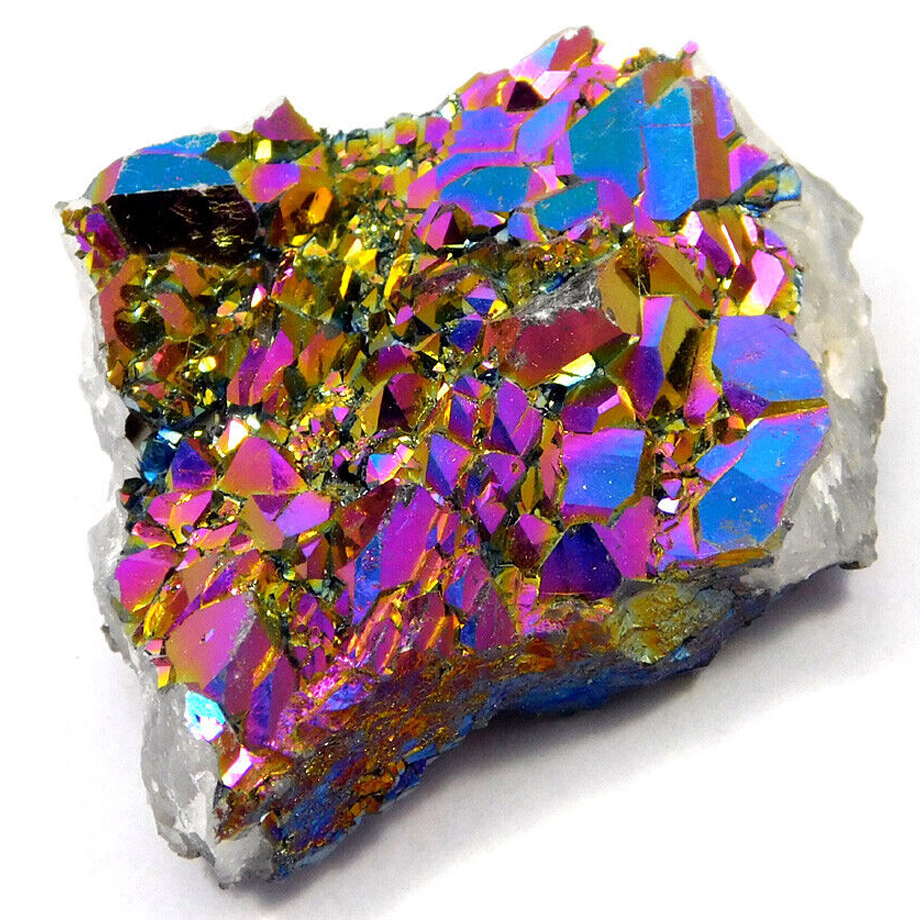
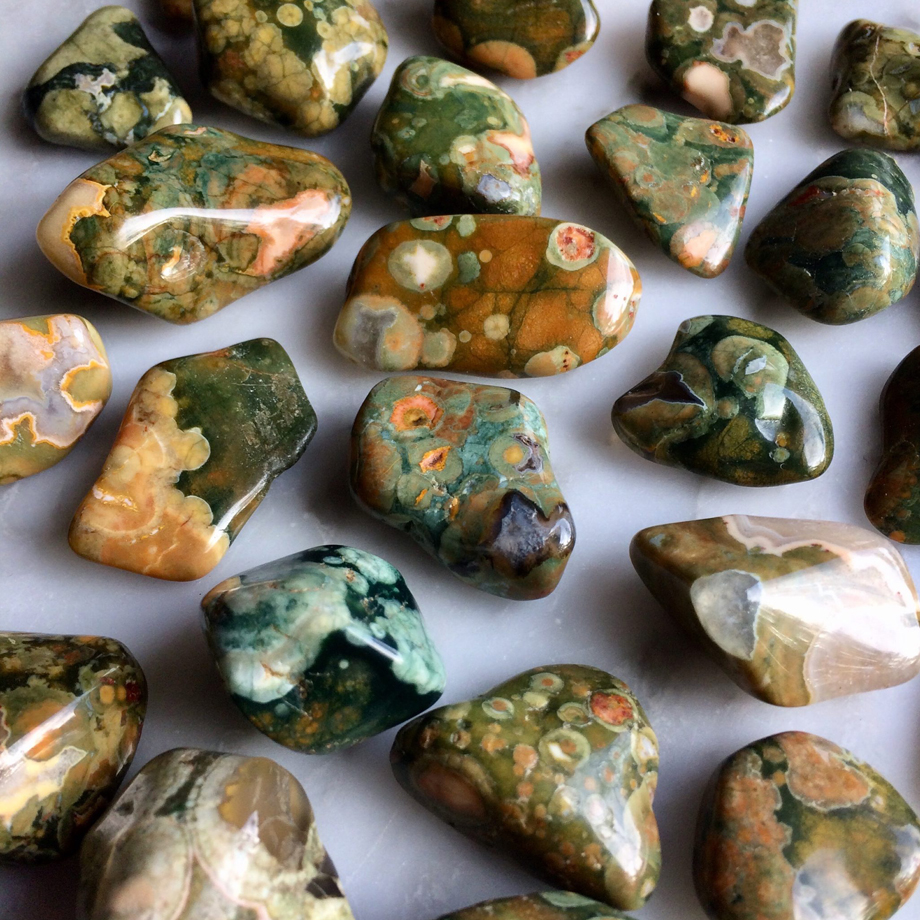
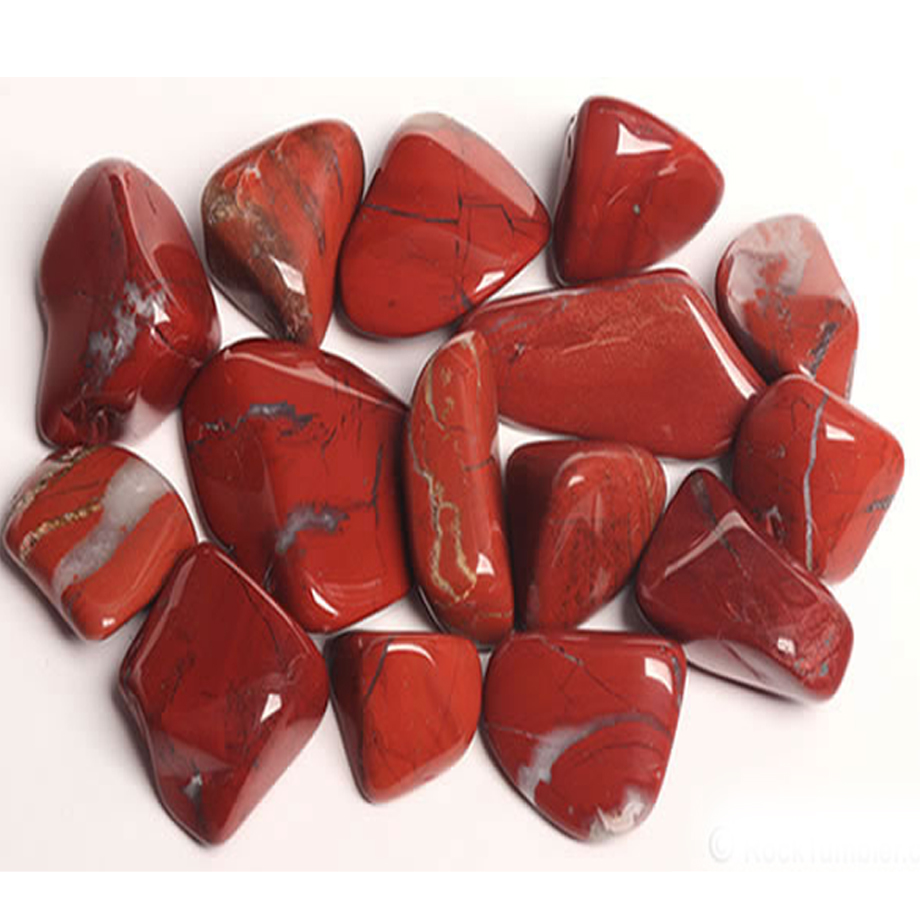
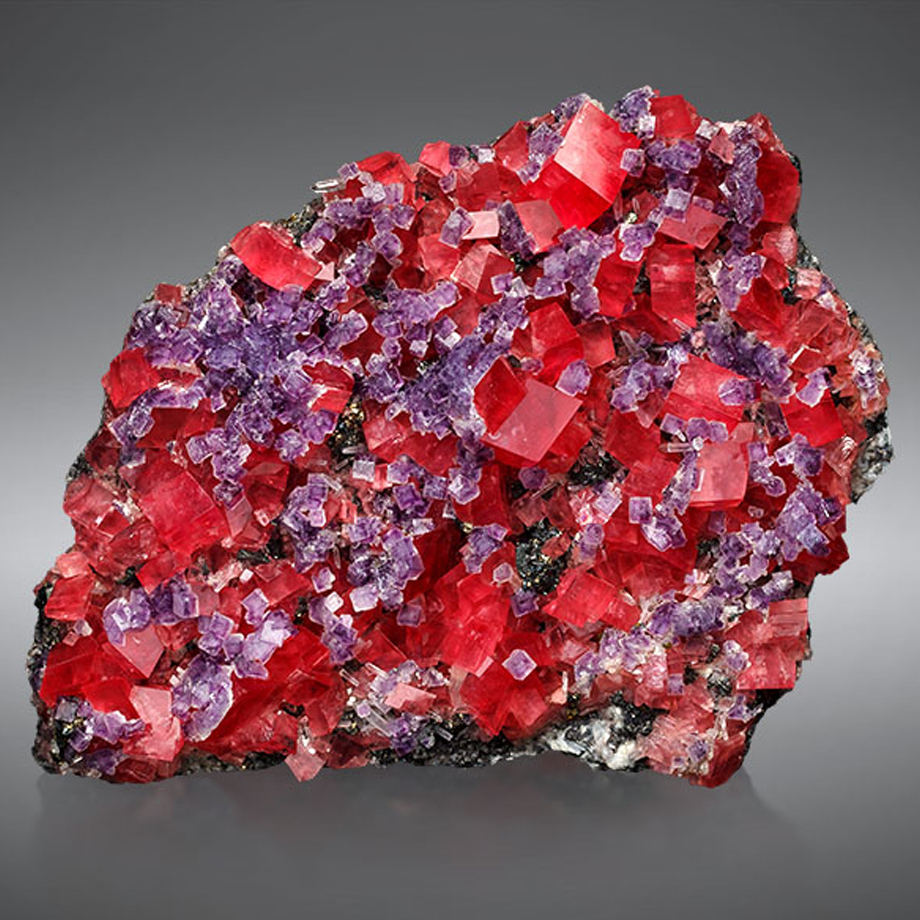
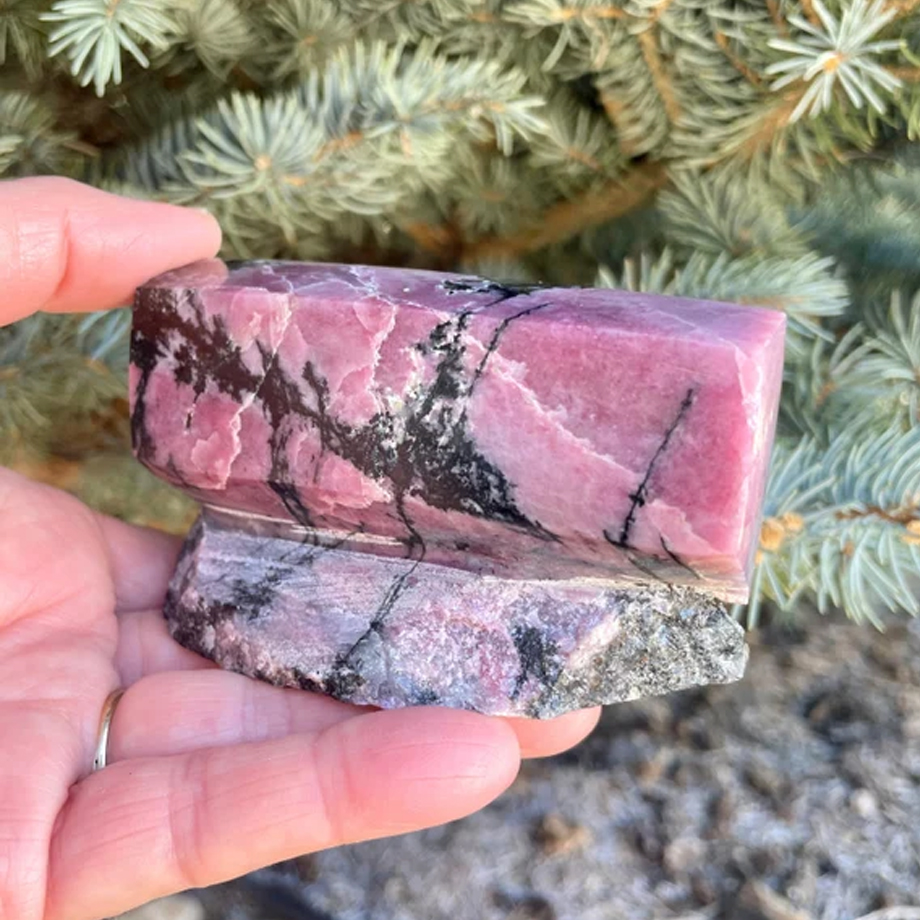
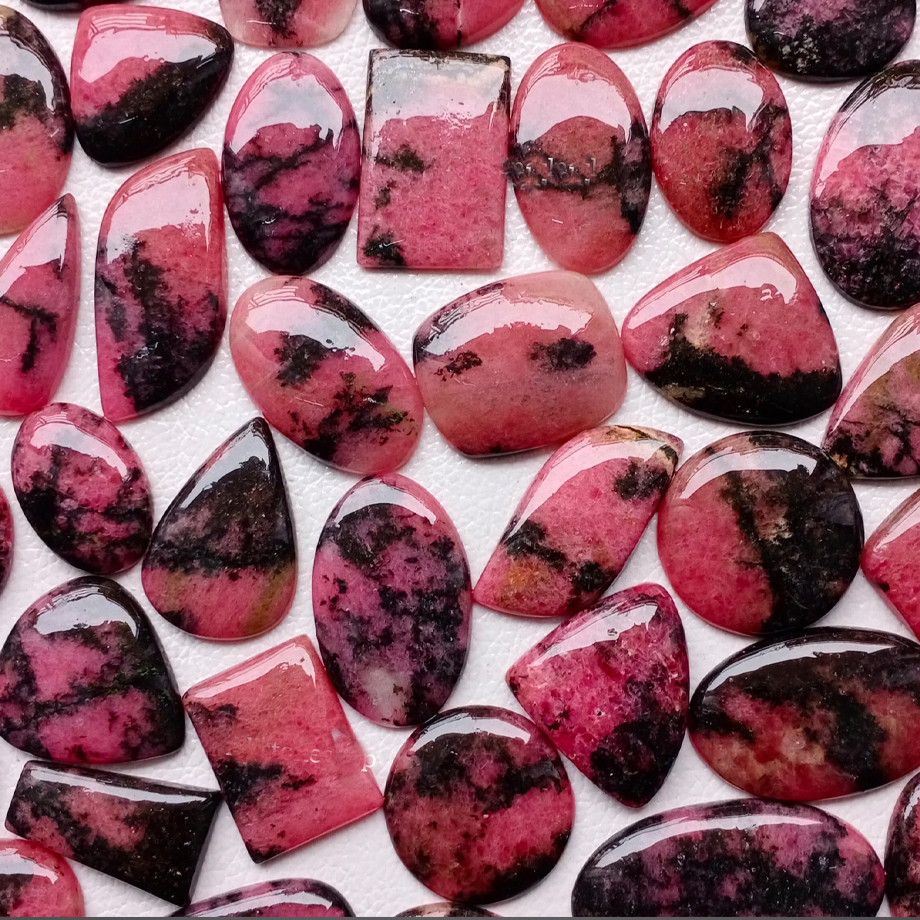 Raspberry rhodonite is a bright pink variety of the manganese mineral, rhodonite. It is a metamorphic mineral with a gemmy pink color that is often interrupted by veins of black manganese oxide. The specimens shown here were found in Madagascar.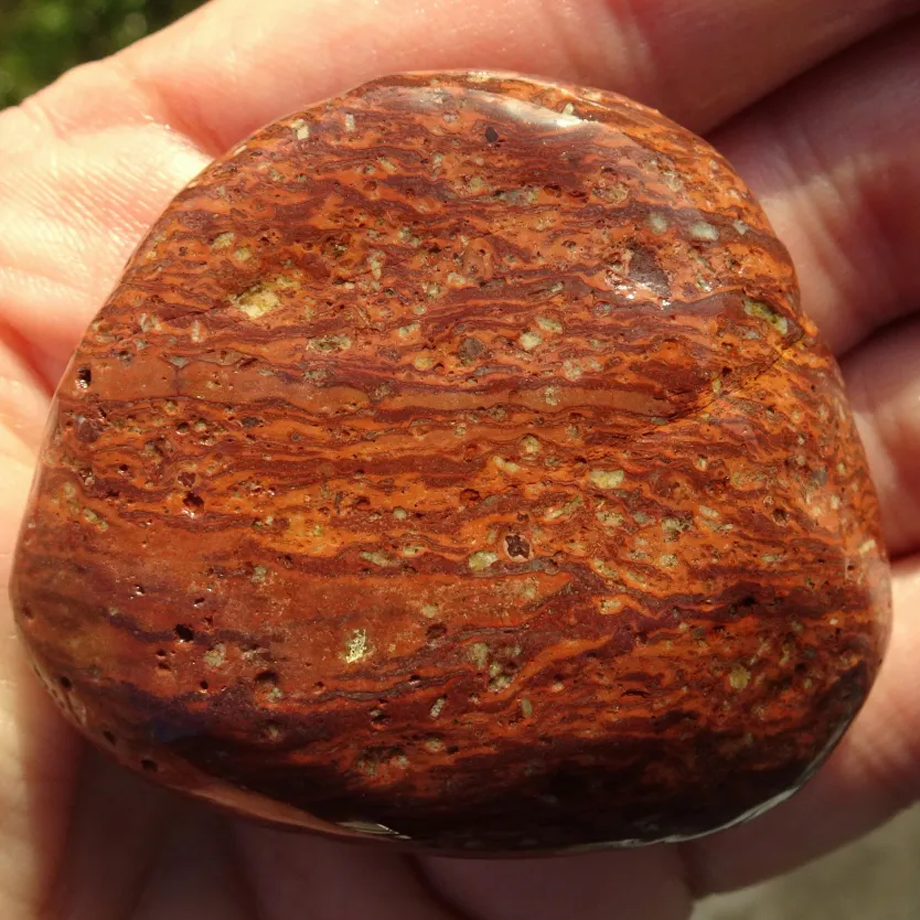
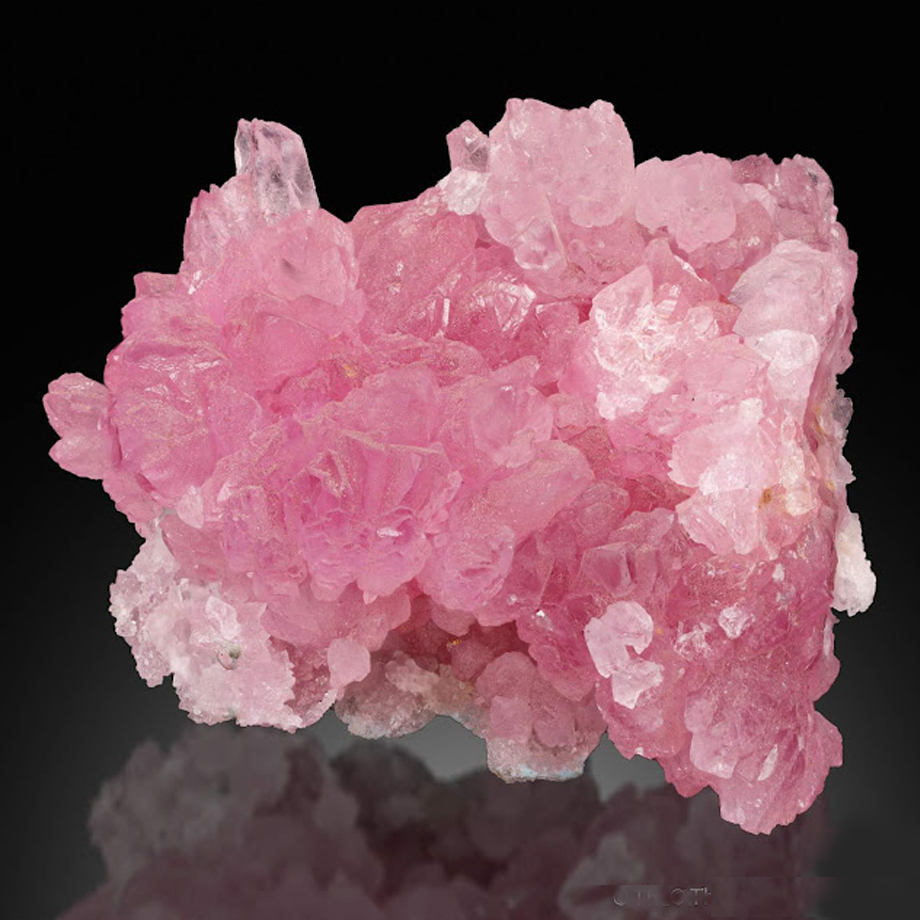
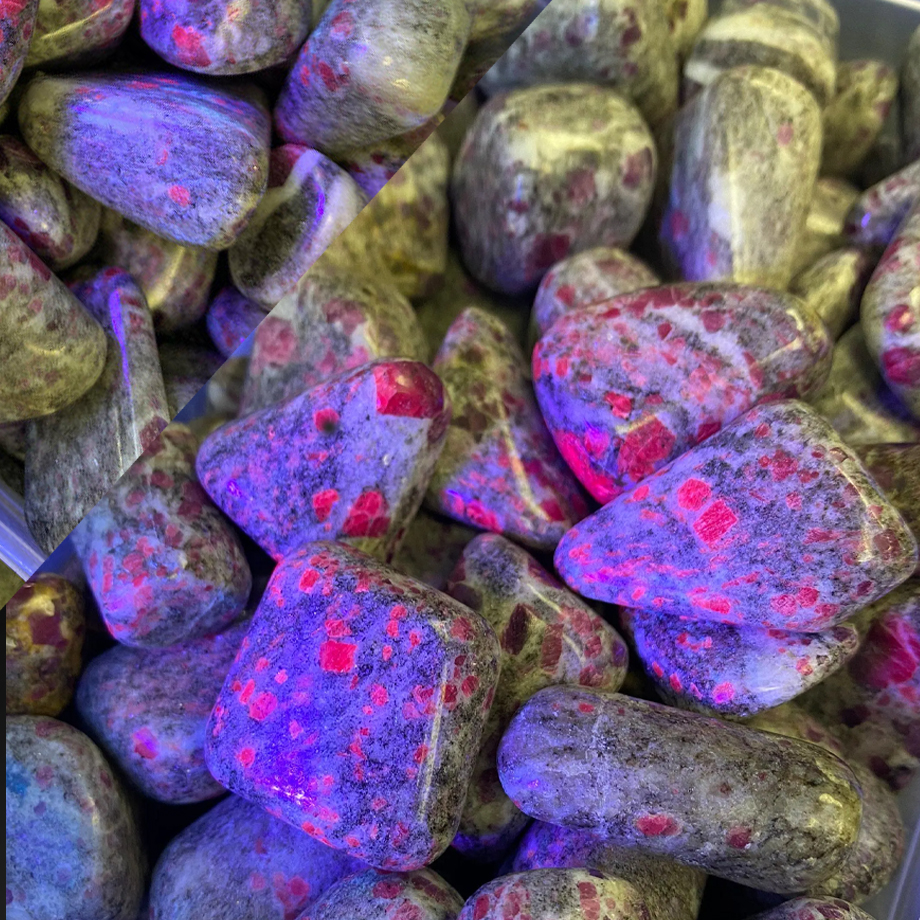
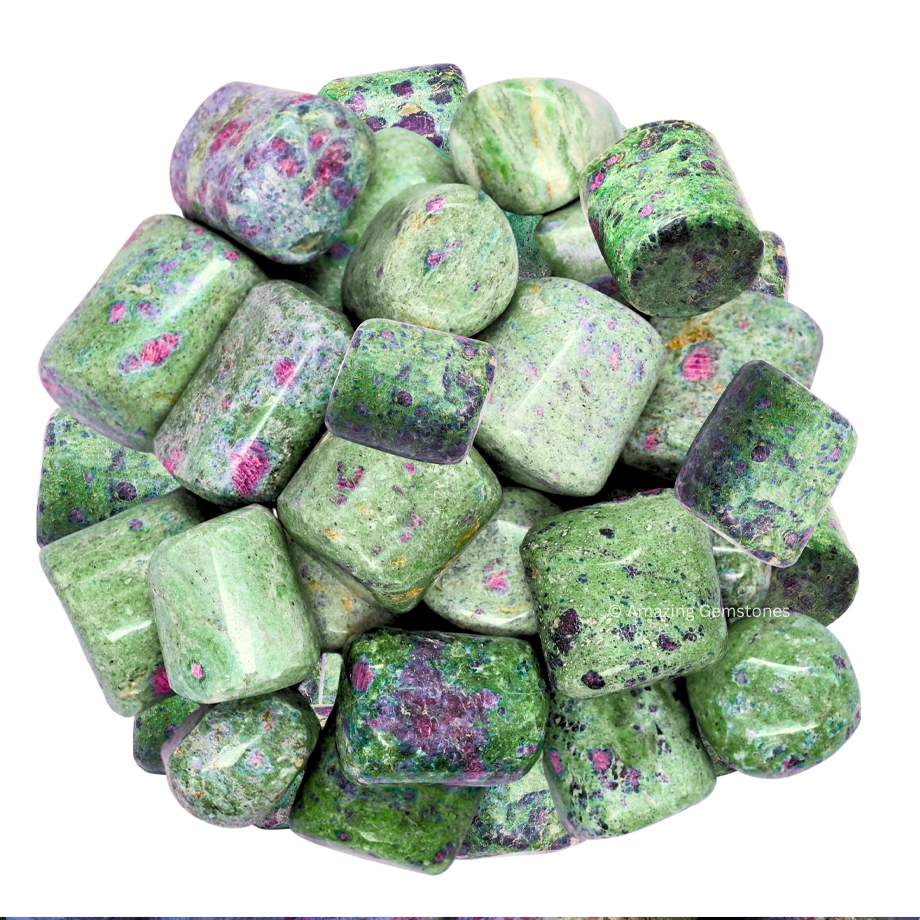
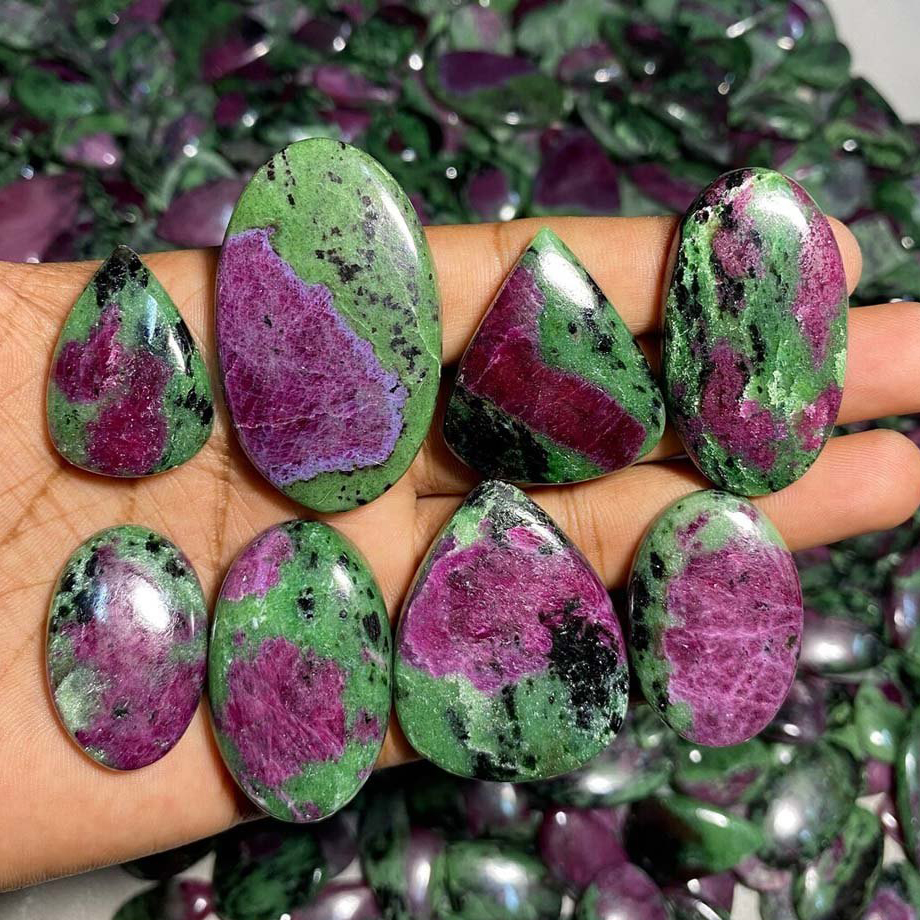
Zoisite is a mineral that is rarely found in metamorphic rocks. Even more rarely, it contains bright red corundum crystals (rubies). This bright green zoisite mined in Tanzania (Africa) contains occasional red rubies a few millimeters in diameter.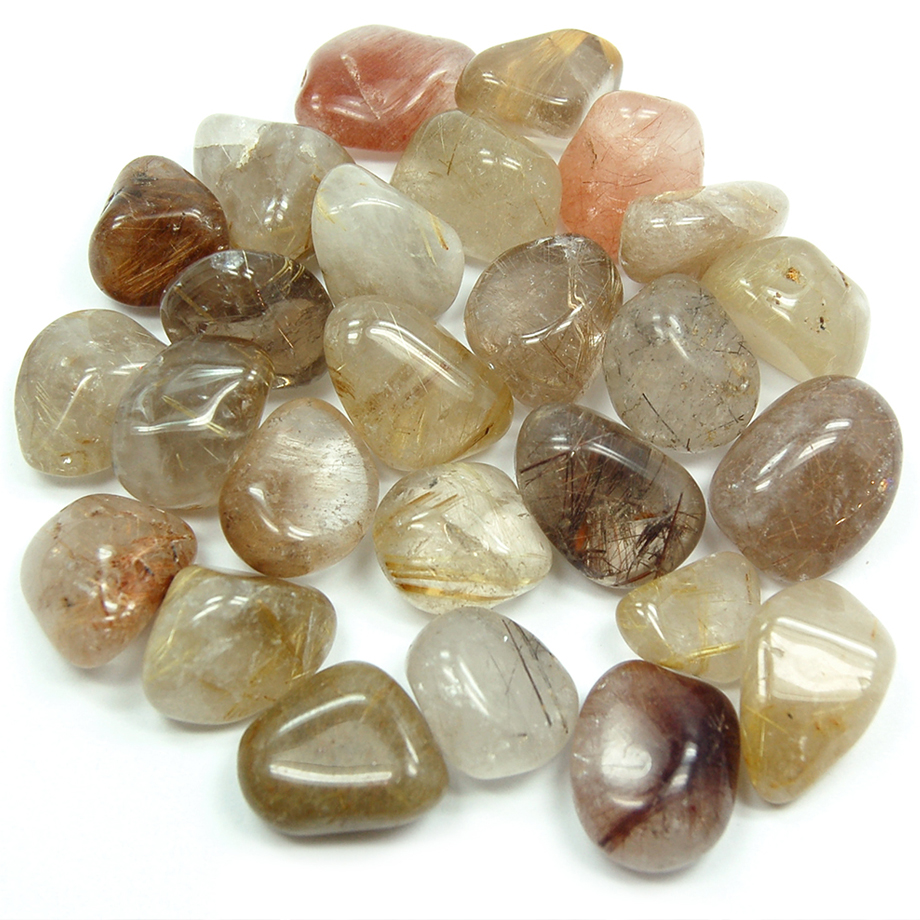
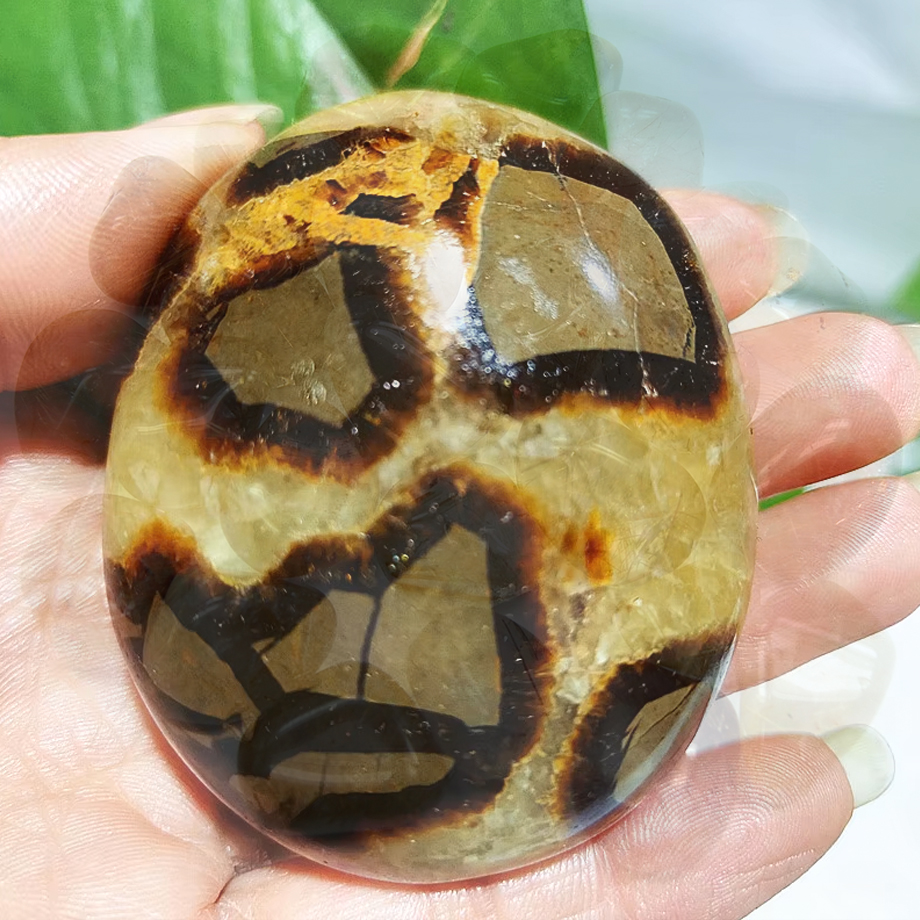
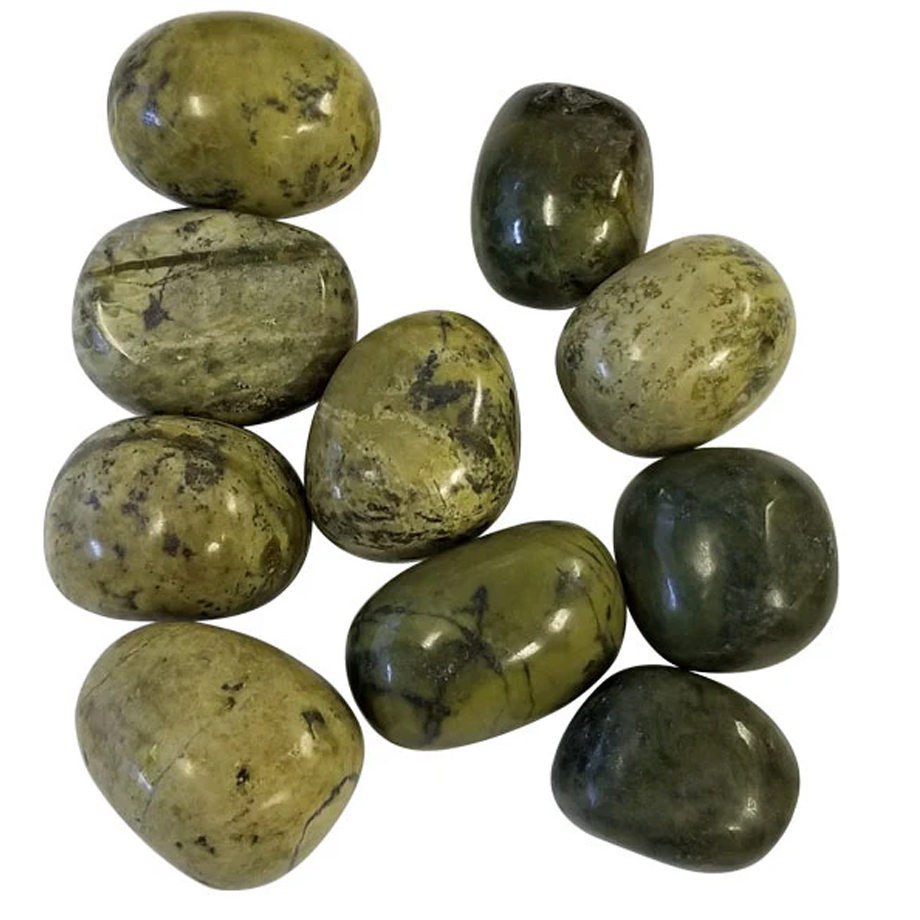
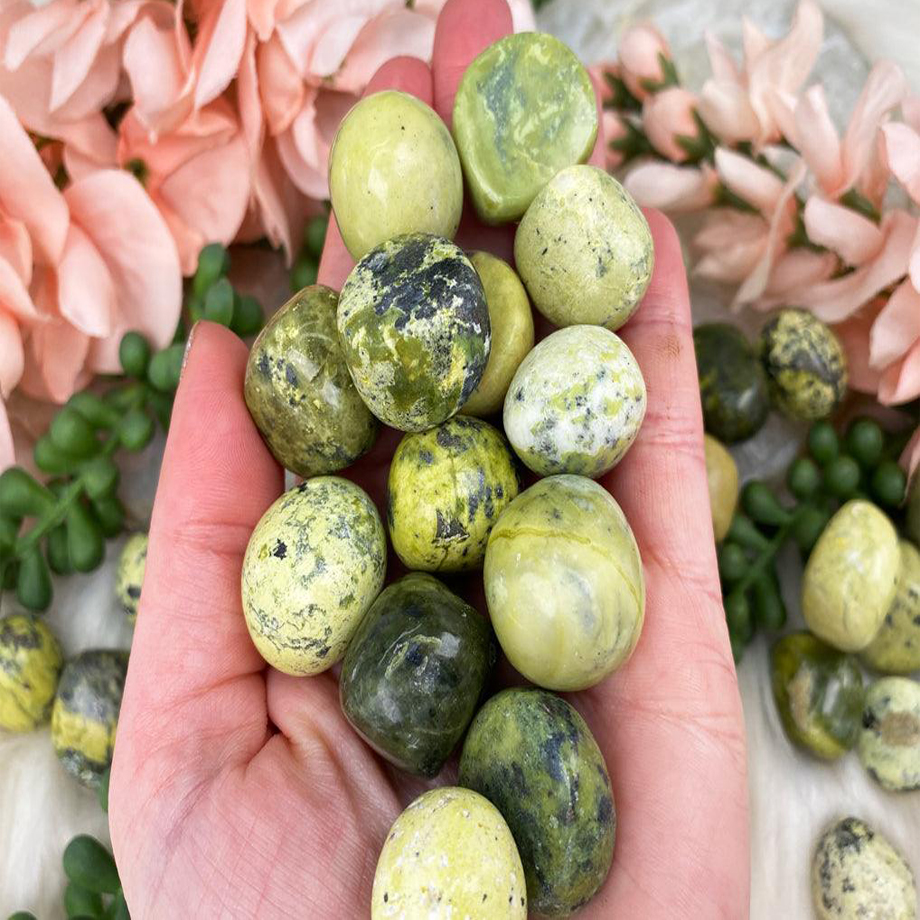
This is an unusual type of serpentine that sometimes contains a variety of metallic mineral inclusions. These can include pyrite, magnetite, and chromite. The color of the serpentine ranges from a pale yellowish green to a deep olive green. 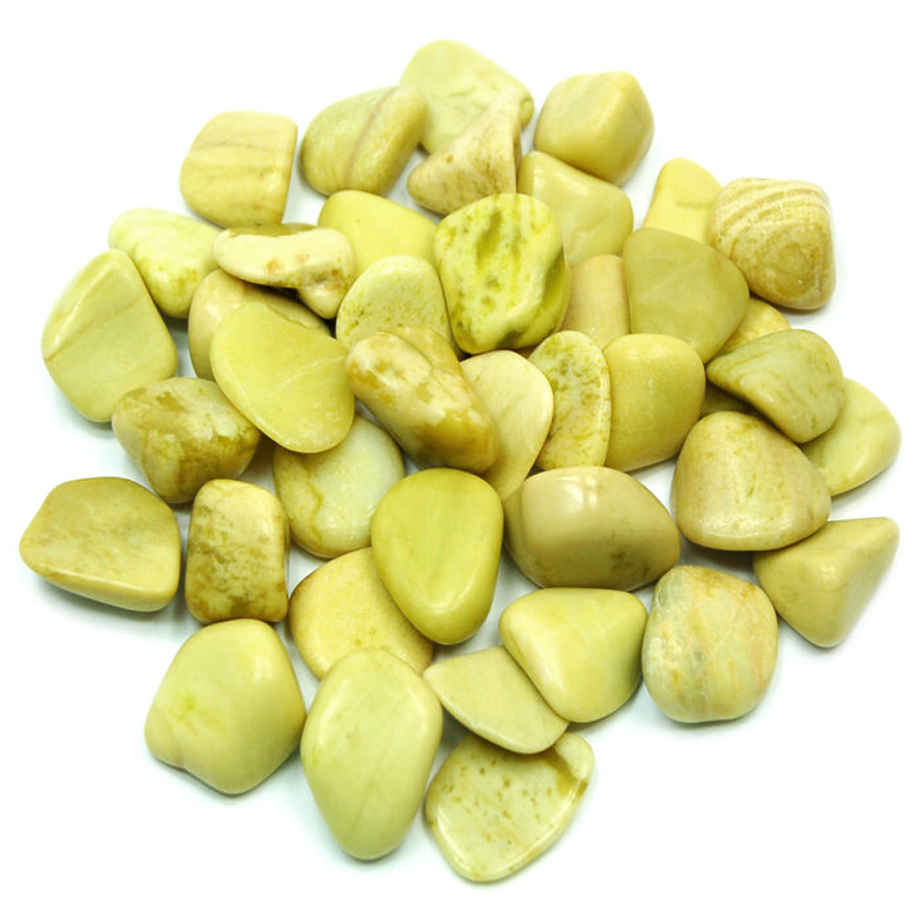
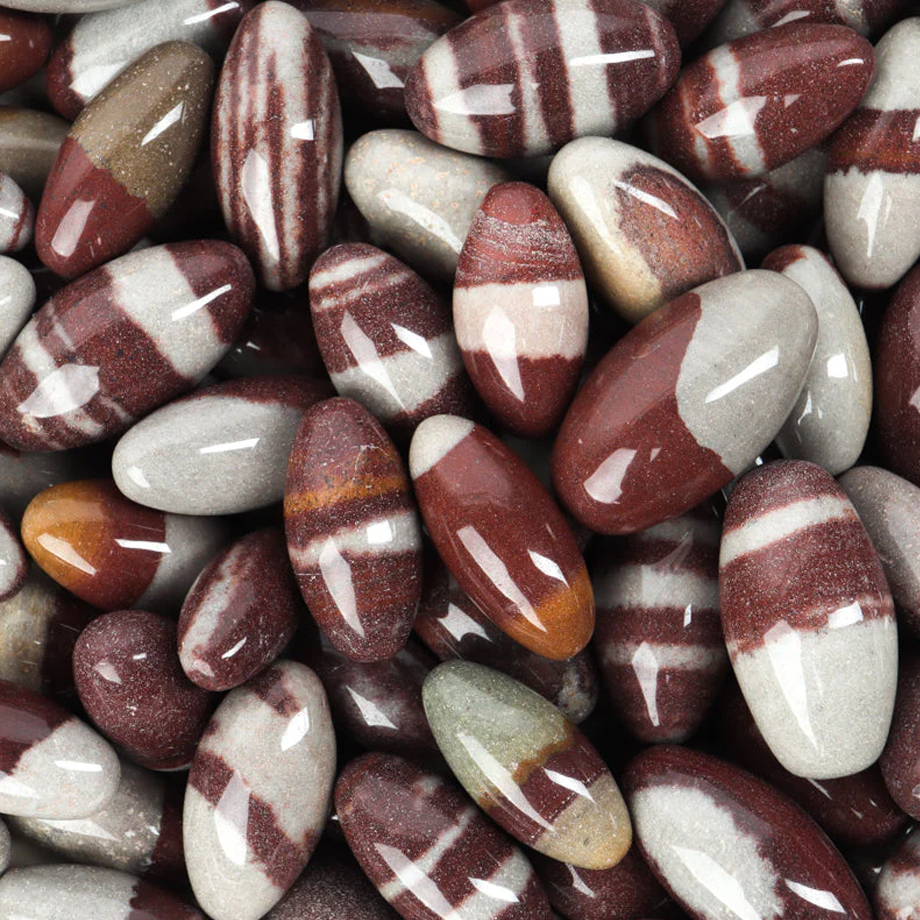


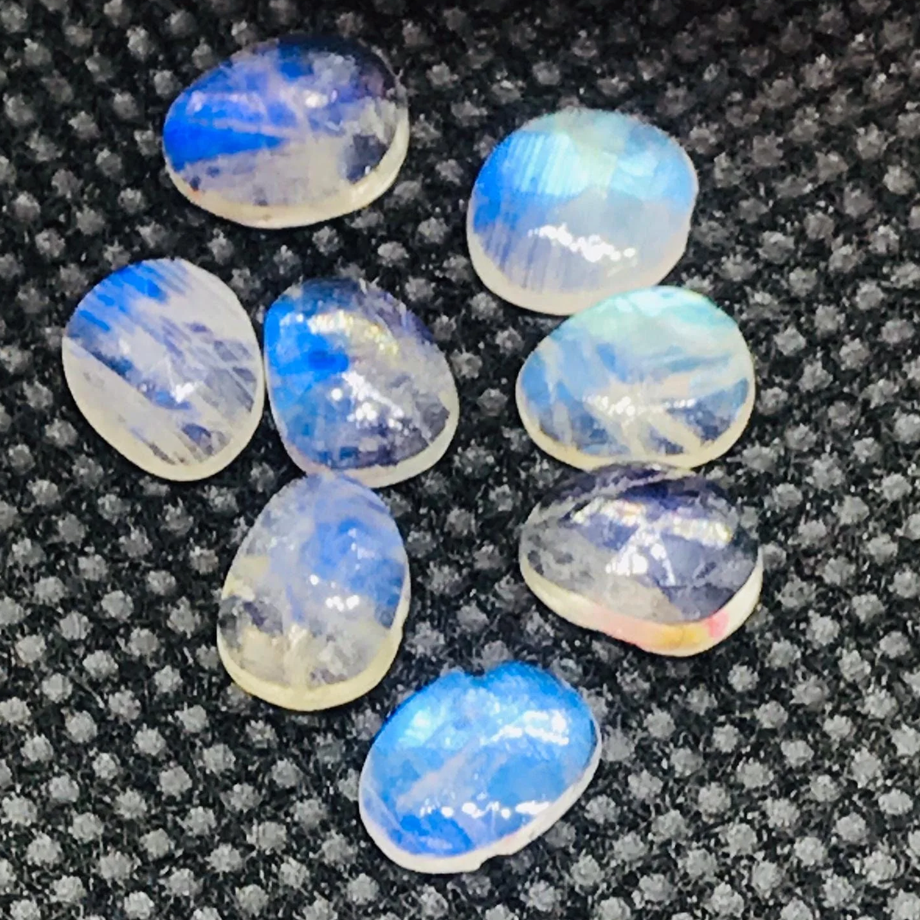
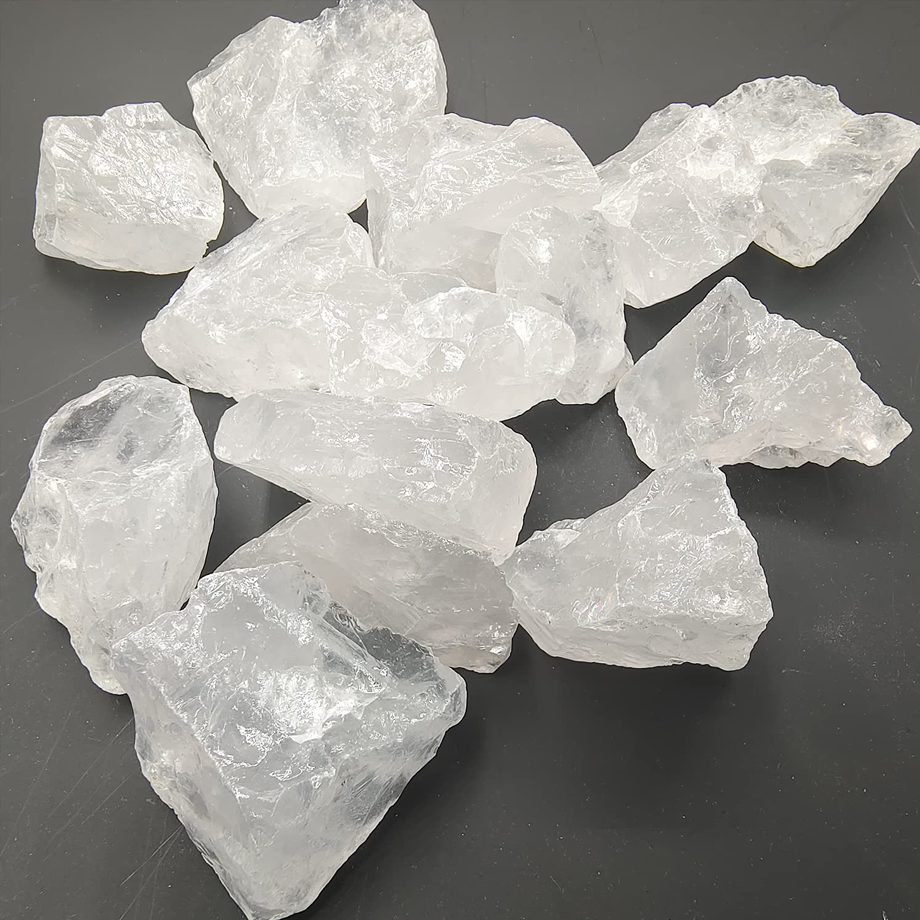
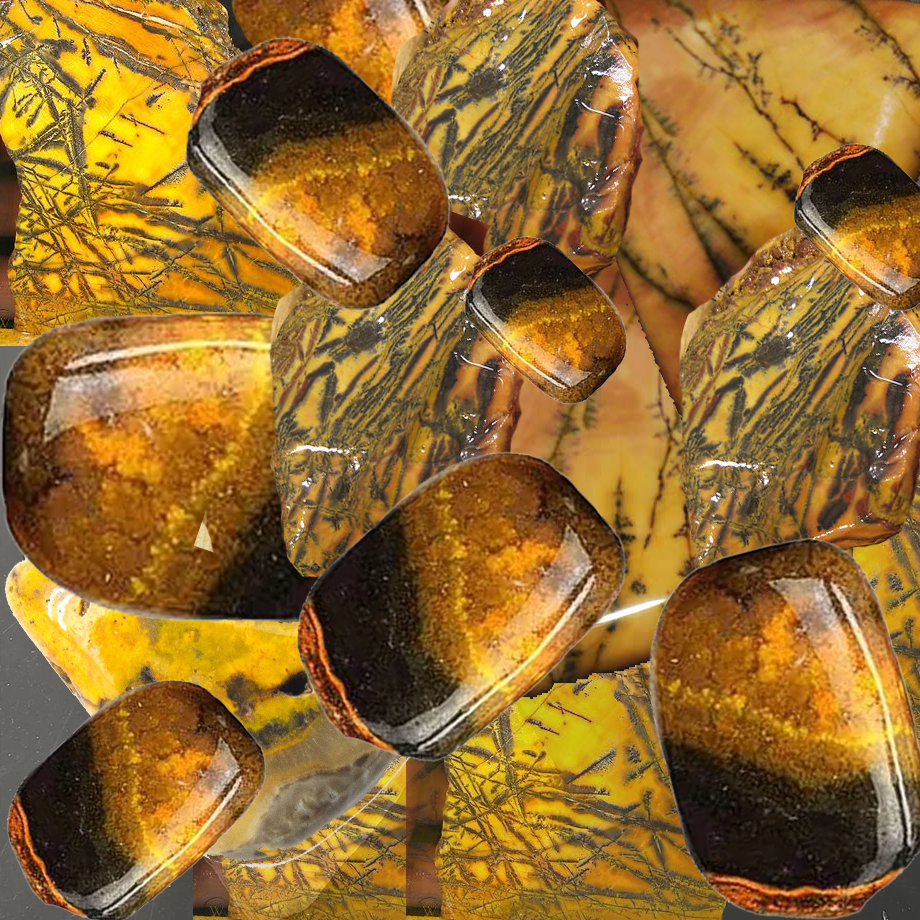 Yellow feather is a multi-color jasper found in Utah. The name "yellow feather" was inspired by dark feather-like markings that cut across a basecolor of yellow, brown or reddish orange. It is used to make interesting tumbled stones.
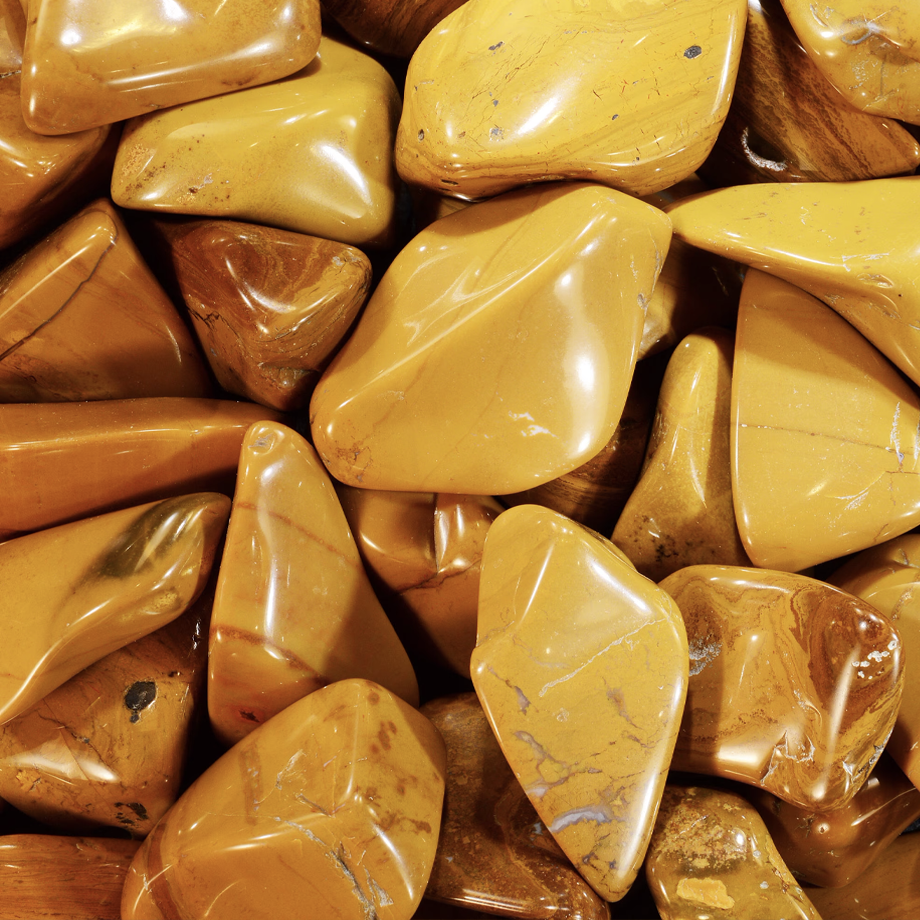 Yellow Jasper is an opaque yellow to yellow-brown-beige chalcedony that can be polished to a very high luster. These stones, produced from material mined in South Africa, show some dark brown to cream color zones that produce a scenic pattern.
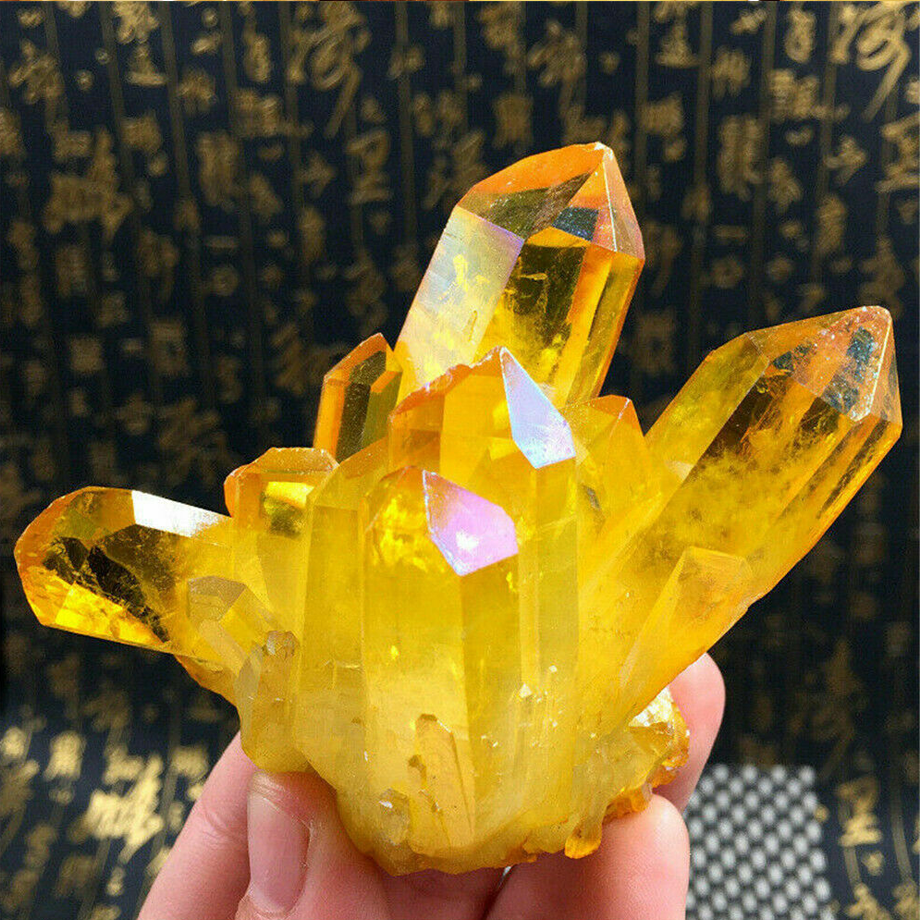 Yellow Quartz is a translucent to transparent quartz with a light to deep yellow color. These translucent stones were produced from material mined in India and have a very bright polish.